
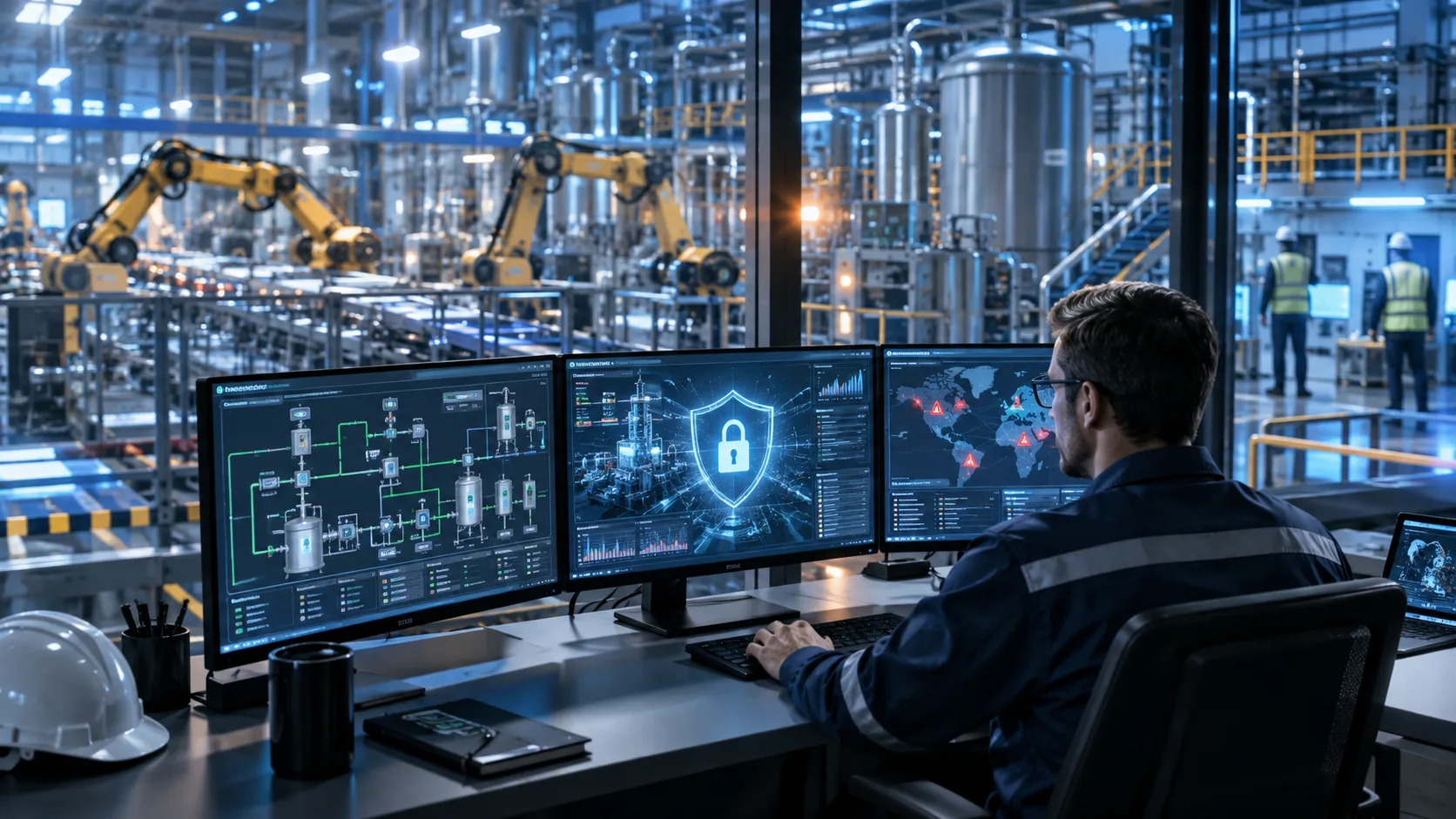
Operational technology has become an important part of modern manufacturing, energy, transportation, utilities, and other industrial environments. These systems control physical equipment and processes, which means a cyberattack can affect more than data alone. It may interrupt production, damage equipment, create safety risks, or stop essential services from operating normally.
Understanding what is OT cyber security helps explain how organisations protect industrial control systems, machines, sensors, and connected operational environments from digital threats. OT security differs from traditional IT security because availability, safety, and physical operations are often the highest priorities. Protecting these environments requires a combination of technology, monitoring, access control, network segmentation, and careful operational planning.
What Is OT Cyber Security?
OT cyber security is the practice of protecting operational technology systems from cyber threats, unauthorised access, disruption, and manipulation. Operational technology includes hardware and software that monitor or control physical processes, machines, equipment, and industrial operations. These systems are commonly found in factories, power plants, water facilities, transportation networks, and other critical environments.
Unlike traditional office technology, OT systems often interact directly with physical equipment. A compromised business computer may expose data, while a compromised industrial controller could affect machinery or production processes. This makes OT cyber security especially important because digital attacks can potentially create operational, financial, environmental, and safety consequences.
OT security focuses on keeping industrial systems available, reliable, and safe while preventing unauthorised changes. Professionals may secure industrial networks, monitor suspicious traffic, manage access, protect engineering workstations, and reduce vulnerabilities. The goal is to maintain normal physical operations while limiting the opportunities attackers have to interfere with important equipment and processes.
What Does OT Stand for in Cyber Security?
OT stands for operational technology. It describes technology used to monitor, control, or automate physical devices and industrial processes. Examples include programmable logic controllers, industrial control systems, sensors, actuators, human-machine interfaces, and systems that manage equipment in factories, utilities, transportation, energy, and other operational environments.
Operational technology has existed for decades, but many older systems were originally designed to operate in isolated environments. As organisations connect OT systems with corporate networks, cloud platforms, remote access tools, and internet-connected devices, the cyber security risk can increase. Equipment that once had limited external exposure may now communicate with several digital systems.
This increased connectivity provides useful business benefits, including remote monitoring, automation, data analysis, and more efficient operations. However, it also creates new attack paths that security teams must manage. OT cyber security therefore focuses on protecting the connection between digital systems and the physical processes they control.
How Is OT Cyber Security Different From IT Security?
IT security primarily protects computers, business applications, networks, cloud services, and information. Confidentiality is often a major priority because organisations want to prevent sensitive data from being stolen or exposed. OT security also protects information, but its highest priorities often include system availability, operational continuity, reliability, and physical safety.
Another major difference is the lifespan of the technology. Business laptops and applications may be replaced or updated regularly, while industrial equipment can remain in service for many years. Some OT systems use older operating systems or specialised software that cannot be easily patched without affecting production or equipment compatibility.
OT environments also require greater coordination between security teams, engineers, operators, and maintenance staff. A security change that would be simple in an office network may cause unexpected operational problems in a factory. OT security therefore requires careful testing and an understanding of how cyber security controls may affect physical operations.
What Systems Are Protected by OT Cyber Security?
Industrial control systems are one of the main technologies protected by OT cyber security. These systems monitor and control industrial processes such as production lines, electrical systems, pipelines, and water treatment operations. They may include programmable logic controllers, distributed control systems, and supervisory control and data acquisition technologies.
Human-machine interfaces are also important because operators use them to monitor equipment and change process settings. Engineering workstations may configure industrial controllers, while historians store operational data for analysis. If these systems are compromised, attackers may gain valuable information or attempt to influence how industrial equipment operates.
Other protected technologies can include industrial sensors, connected machinery, building management systems, safety systems, remote terminal units, and industrial internet of things devices. Each device may have different security capabilities and operational requirements. OT security teams need visibility across the entire environment so they can understand what is connected and where weaknesses may exist.
Why Is OT Cyber Security Important?
OT cyber security is important because industrial systems often support essential business or public services. A successful attack against manufacturing equipment could stop production, while an incident involving energy or water infrastructure may affect much larger communities. Operational disruption can therefore create consequences that extend far beyond a normal computer security incident.
Safety is another major concern. Some industrial systems control processes involving electricity, chemicals, heavy machinery, temperature, pressure, or transportation. Unauthorised changes to these processes could potentially create dangerous conditions for employees, customers, or the surrounding environment. Security controls help reduce the likelihood that cyber threats can interfere with safety-critical operations.
Financial losses can also become significant when OT systems are unavailable. Businesses may lose production time, miss deliveries, damage equipment, or spend heavily on recovery and investigation. Understanding broader cyber security work can help beginners see how monitoring, access management, incident response, and vulnerability management also apply to operational environments.
What Are Common OT Cyber Security Threats?
Ransomware is a major concern because it can disrupt systems that support industrial operations. Attackers may initially compromise normal business networks and then affect systems connected to operational environments. Even when industrial equipment is not directly encrypted, organisations may stop production because supporting systems or network services become unavailable.
Malware designed to target industrial environments can create even greater risk. Attackers may attempt to manipulate controllers, change settings, interrupt communications, or collect information about industrial processes. The exact impact depends on the technology involved, the attacker’s access, and the protections already in place.
Phishing, stolen credentials, remote access abuse, insider threats, and unpatched vulnerabilities can also affect OT environments. Cybercriminals may not need highly specialised industrial malware if they can simply obtain a valid account or exploit an exposed service. Strong identity management and network protection are therefore important parts of OT security.
What Are the Biggest OT Security Challenges?
One major challenge is that many operational systems were not originally designed with modern cyber security threats in mind. Some equipment may have limited authentication, outdated software, or communication protocols that lack strong security features. Replacing these systems can be expensive and difficult because they may be closely connected to important physical operations.
Patching is another challenge because industrial systems cannot always be restarted or updated whenever a vulnerability appears. Production environments may operate continuously, and unexpected downtime can be costly. Security teams must often coordinate patches with maintenance windows while using temporary protections to reduce risk until updates can be safely installed.
Visibility can also be difficult in large operational environments. Organisations may have old devices, undocumented connections, third-party equipment, and systems managed by different teams. Without an accurate asset inventory, security professionals may struggle to understand which devices exist, what software they use, and which vulnerabilities require attention.
How Does Network Segmentation Improve OT Security?
Network segmentation separates systems into controlled areas rather than allowing every device to communicate freely. An organisation may keep the corporate IT network separate from the operational network and further divide important OT systems into smaller zones. This limits how easily attackers can move between different parts of the environment after gaining initial access.
Firewalls and access rules can control which devices and services are allowed to communicate across network boundaries. Only necessary connections should be permitted between business systems and industrial equipment. Reducing unnecessary communication decreases the number of paths attackers can use to reach sensitive operational technology.
Segmentation also makes security monitoring more effective because unusual communication between zones becomes easier to identify. If a device suddenly attempts to connect to systems it normally never uses, security teams can investigate the activity. Strong segmentation cannot eliminate every attack, but it can significantly reduce the potential spread and impact of a compromise.
How Is Access Controlled in OT Environments?
Access control helps ensure that only authorised people can interact with industrial systems. Organisations should limit user permissions according to job responsibilities and avoid giving unnecessary administrator access. Operators, engineers, vendors, and maintenance teams may each need different levels of access depending on the tasks they perform.
Remote access requires particular attention because third-party technicians and employees may need to manage industrial systems from outside the facility. Secure authentication, controlled remote connections, session monitoring, and time-limited permissions can reduce the risk. Remote access should be enabled only when necessary rather than remaining permanently open for convenience.
Multi-factor authentication can provide another layer of protection for important accounts and remote access systems. Organisations should also regularly review accounts and remove access when employees or vendors no longer need it. Strong identity controls reduce the chance that stolen credentials can provide attackers with direct access to operational environments.
How Do Organisations Monitor OT Security?
OT security monitoring helps organisations detect unusual activity before it causes serious disruption. Security tools may observe network traffic, device communication, user activity, and changes in industrial systems. The goal is to understand normal behaviour so unexpected connections or commands can be identified and investigated quickly.
Monitoring needs to be designed carefully because some industrial devices cannot handle aggressive scanning or security testing. Passive monitoring is often useful because it can observe network activity without directly interacting heavily with sensitive equipment. Security teams can use this visibility to detect new devices, unusual protocols, suspicious connections, or unexpected changes.
Logs from firewalls, servers, engineering systems, authentication platforms, and industrial devices can also support investigations. When suspicious activity appears, analysts compare multiple sources to understand what happened. Good monitoring provides security teams with the evidence they need to respond without unnecessarily interrupting normal industrial operations.
How Can Organisations Improve OT Cyber Security?
The first step is developing an accurate inventory of OT assets. Organisations should know which controllers, workstations, sensors, servers, network devices, and applications exist in the environment. Asset information should include software versions, network connections, owners, and operational importance whenever possible.
Next, organisations should reduce unnecessary exposure through segmentation, secure configurations, controlled remote access, and strong authentication. Vulnerabilities should be prioritised according to operational risk rather than treated as identical. Where patching is difficult, additional protections such as access restrictions and network controls may help reduce exposure until updates can be applied safely.
Incident response planning is also essential because OT incidents can affect physical operations. Security teams, engineers, operations staff, management, and safety personnel should understand their responsibilities before an attack occurs. Practising response procedures helps organisations contain threats while making careful decisions about production, equipment safety, and system recovery.
What Skills Are Needed for OT Cyber Security?
OT cyber security professionals need strong networking and security fundamentals. They should understand IP addressing, firewalls, protocols, authentication, segmentation, vulnerabilities, incident response, and monitoring. Knowledge of Windows and Linux is useful because industrial environments often include traditional computer systems alongside specialised operational equipment.
Understanding industrial technology is equally important. Professionals should learn about PLCs, SCADA systems, HMIs, industrial protocols, engineering workstations, and operational processes. They do not necessarily need to become industrial engineers, but they must understand how security decisions can affect production, reliability, and safety.
Communication is particularly valuable because OT security requires collaboration between technical security teams and operational staff. Security professionals need to explain risks without ignoring production requirements, while engineers need to communicate operational limitations. Successful OT security depends on both groups understanding each other’s priorities and working together to manage risk.
Conclusion
Understanding what is OT cyber security means recognising that operational technology connects cyber systems with real physical processes. OT security protects industrial equipment, control systems, networks, and supporting technologies from unauthorised access and disruption. Its priorities often include availability, reliability, safety, and maintaining continuous operations.
OT environments face challenges including older systems, difficult patching, remote access, weak visibility, and increasing connectivity with normal business networks. Strong protection therefore requires asset inventories, network segmentation, access controls, monitoring, vulnerability management, and carefully planned incident response. These controls need to be implemented without creating unnecessary risks to industrial operations.
As factories, utilities, transportation systems, and other industries become more connected, OT cyber security continues to grow in importance. Organisations need professionals who understand both security principles and operational environments. A balanced approach helps protect digital technology while keeping the physical systems people depend on working safely and reliably.
FAQs
What does OT mean in cyber security?
OT stands for operational technology. It includes hardware and software used to monitor, control, and automate physical equipment and industrial processes in environments such as manufacturing, energy, utilities, and transportation.
What is the difference between OT and IT security?
IT security mainly protects data and business technology, while OT security protects systems that control physical processes. OT environments place particularly strong emphasis on safety, availability, reliability, and operational continuity.
What are examples of OT systems?
Examples include PLCs, SCADA systems, human-machine interfaces, industrial control systems, sensors, engineering workstations, distributed control systems, and connected machinery used in industrial environments.
Why is OT cyber security important?
OT cyber security helps prevent attacks from disrupting production, damaging equipment, affecting essential services, or creating safety risks. Industrial systems can have physical consequences when compromised, making their protection especially important.
How can companies improve OT security?
Companies can improve OT security through asset inventories, network segmentation, strong authentication, restricted remote access, vulnerability management, continuous monitoring, employee training, and well-tested incident response procedures.