
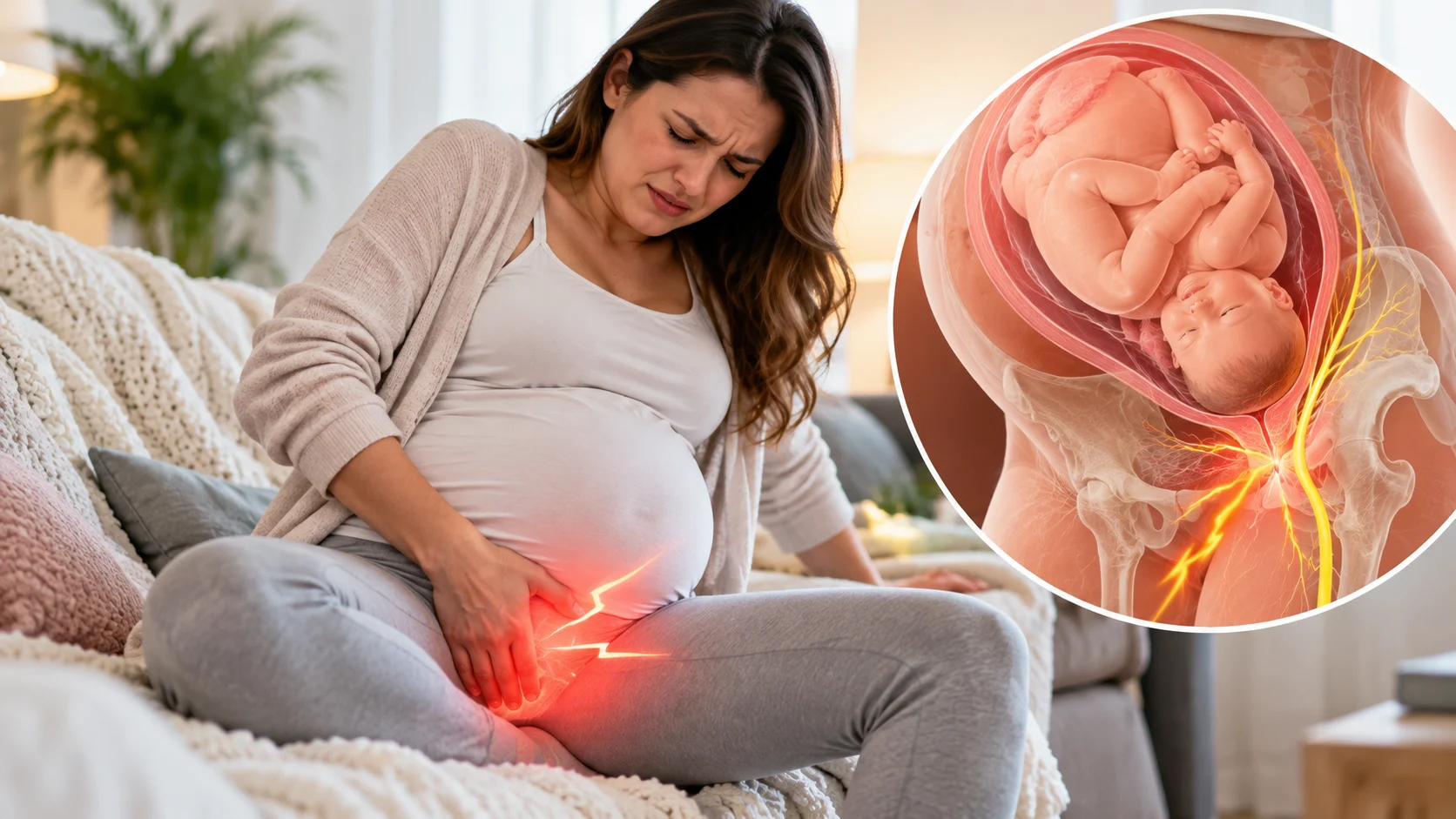
What Does Lightning Crotch Feel Like?
Lightning crotch usually feels like a sudden, sharp, electric jolt deep in the pelvis during pregnancy. The sensation may shoot through the vagina, cervix, rectum, or lower pelvic area and disappear almost as quickly as it started. Some people describe it as a quick stabbing, zapping, or needle-like pain that makes them stop moving for a moment.
Unlike a persistent ache, lightning crotch usually happens in brief bursts lasting only a few seconds. It may happen once or several times close together before settling. The intensity varies, so one person may experience a mild shock-like sensation while another feels a surprisingly strong jolt that temporarily interrupts walking or another activity.
The term “lightning crotch” is informal rather than a medical diagnosis. It describes the character and location of the sensation rather than a specific disease. Although it can feel alarming, brief episodes later in an otherwise uncomplicated pregnancy are commonly associated with pressure on nerves and structures in the pelvis.
Where Is Lightning Crotch Usually Felt?
The sensation is commonly felt deep inside the vagina or around the cervix rather than on the skin. Some people feel the pain lower in the pelvis or near the rectal area. It may seem as though the discomfort shoots downward suddenly before disappearing without leaving a lasting ache.
The exact location can change depending on fetal position and which pelvic structures are under pressure. One episode might feel centered deep within the pelvis, while another may seem closer to the groin. Pregnancy changes the position and pressure of many tissues, so sensations can be difficult to pinpoint precisely.
Lightning crotch generally feels different from ordinary muscle soreness because it is sudden and electrical rather than dull and tender. If pain stays constant, spreads widely, or becomes progressively more intense, another problem may be involved. Persistent pain deserves professional assessment rather than being automatically labeled lightning crotch.
Why Does Lightning Crotch Happen?
One likely explanation is pressure on nerves in and around the pelvis. As the baby grows and changes position, the head or body may briefly press against sensitive nerves near the cervix or pelvic floor. This sudden pressure can create the quick, electric sensation many pregnant people describe.
Changes in the cervix and pelvic tissues may also contribute. As pregnancy progresses, ligaments become more flexible and the body prepares for birth. Increased pressure lower in the pelvis can make ordinary movements of the baby feel sharper or more noticeable than they did earlier in pregnancy.
There is not always one clear cause for every episode. Baby position, pelvic anatomy, activity, and gestational stage may all influence how the sensation feels. Lightning crotch is therefore better understood as a common symptom pattern rather than a single condition with one universal explanation.
When Does Lightning Crotch Usually Start?
Lightning crotch is most often reported during the third trimester when the baby is larger and may begin settling deeper into the pelvis. As the due date approaches, pressure around the cervix, pelvic floor, and nearby nerves can increase. This can make sharp pelvic zaps more noticeable during everyday movement.
Some people may experience similar sensations earlier in pregnancy, although this is less typical. Earlier pelvic pain can have many possible explanations, so severe or persistent symptoms should be discussed with a maternity healthcare professional. The timing alone cannot confirm that a symptom is ordinary lightning crotch.
Not everyone experiences lightning crotch at all. Some people have frequent episodes while others reach full term without feeling anything similar. Both can occur during normal pregnancies, so the presence or absence of this sensation does not indicate whether pregnancy is progressing properly.
Lightning Crotch vs. Labor Contractions
Lightning crotch usually comes as a quick, unpredictable jolt rather than a regular tightening pattern. The sensation may last only seconds and then disappear completely. It does not usually become progressively longer, stronger, and closer together the way established labor contractions often do.
Labor contractions typically involve tightening across the uterus or abdomen and may spread into the back or pelvis. As labor progresses, they often develop a recognizable rhythm. Lightning crotch, by comparison, can happen suddenly during walking, fetal movement, or position changes without following a timed pattern.
If pelvic pain begins repeating regularly or is accompanied by fluid leakage, bleeding, increasing pressure, or other possible labor signs, contact your maternity care provider. This is particularly important before full term. When symptoms are changing noticeably, professional guidance is more useful than trying to diagnose labor based on one sensation alone.
Lightning Crotch vs. Round Ligament Pain
Round ligament pain usually causes pulling, aching, or sharp discomfort along the lower abdomen or groin. It commonly appears when standing quickly, coughing, sneezing, rolling over, or making sudden movements. The sensation is related to structures supporting the uterus rather than the quick nerve-like feeling associated with lightning crotch.
Lightning crotch tends to feel deeper and more electrical. Many people describe a brief jolt through the vagina or cervix rather than a pulling feeling along the sides of the abdomen. This difference in location and sensation can help distinguish the two, although pregnancy discomfort does not always fit perfectly into one category.
Both types of discomfort may occur in the same pregnancy. Gentle movement and slower position changes can sometimes reduce symptoms, but persistent or severe pain should still be discussed with a healthcare professional. Not every sharp sensation around the pelvis can be safely explained by normal ligament or nerve changes.
Lightning Crotch vs. Pelvic Girdle Pain
Pelvic girdle pain usually produces more persistent discomfort around the pubic bone, hips, lower back, groin, or sacroiliac joints. Walking, climbing stairs, standing on one leg, or rolling in bed may aggravate it. The pain often lasts longer than the sudden jolt associated with lightning crotch.
Lightning crotch usually comes and goes quickly. A person may experience one intense zap and then feel almost normal again. Pelvic girdle pain tends to affect movement more consistently and can make daily activities uncomfortable for longer periods, although both problems can occur together.
If pelvic discomfort regularly changes the way you walk, a broader lower-body assessment can be useful. Pregnancy can also make unrelated leg or ankle conditions more noticeable, including problems such as posterior tibial tendonitis. Persistent symptoms should be evaluated based on their specific location and pattern rather than grouped together automatically.
What Can Trigger Lightning Crotch?
Walking can sometimes trigger lightning crotch because each step changes pressure through the pelvis. When the baby sits low, movement may briefly increase contact with sensitive nerves or cervical structures. Some people notice symptoms more frequently after being on their feet for a long time.
Changing position can also provoke a quick jolt. Standing from a chair, rolling over in bed, getting out of a car, or bending may shift the baby slightly and alter pelvic pressure. Moving more slowly can sometimes make these transitions feel more comfortable, although it may not prevent every episode.
Fetal movement itself can be a trigger. A kick, stretch, turn, or downward shift may briefly press on a sensitive area and produce the characteristic electric sensation. Because the baby continually changes position, lightning crotch can sometimes appear without any obvious activity on your part.
How Can You Ease Lightning Crotch?
Changing position is often the simplest thing to try when symptoms occur frequently. If you have been standing, sit or lie comfortably for a short period. If prolonged sitting seems to increase pressure, gentle walking or another comfortable position may help redistribute that pressure through the pelvis.
Pregnancy support garments may help some people feel more supported during walking or standing. A maternity belt can reduce the sensation of heaviness for certain individuals, although it will not eliminate nerve pressure in every case. The support should feel comfortable and should never make breathing or movement difficult.
Warm baths or gentle warmth around surrounding muscles may also improve general pelvic or lower-back comfort. Avoid excessively hot temperatures during pregnancy. Because lightning crotch usually lasts only seconds, relief strategies are mainly aimed at reducing frequency and overall pelvic discomfort rather than stopping an individual episode instantly.
Can Exercise Help With Lightning Crotch?
General pregnancy exercise may help maintain hip strength, mobility, and overall comfort when your maternity provider has not recommended restrictions. Walking, strength training, and gentle mobility can support physical function as your body changes. However, there is no specific exercise guaranteed to stop lightning crotch because nerve pressure from fetal position can occur unpredictably.
Pelvic floor exercises should include the ability to relax as well as contract. Constantly squeezing these muscles is not necessarily helpful, particularly when the pelvic area already feels tense. Gentle breathing that coordinates the diaphragm, abdominal wall, and pelvic floor may help promote more comfortable movement.
If a particular exercise repeatedly triggers sharp pelvic pain, reduce the range, resistance, or intensity. Pregnancy is not the time to push through increasingly uncomfortable symptoms simply to maintain a previous fitness level. A pelvic health physiotherapist can provide individualized guidance when pain limits walking, exercise, or daily activities.
Does Sex Affect Lightning Crotch?
Sex can sometimes change pelvic sensations during pregnancy because blood flow, uterine activity, and pressure around the cervix temporarily increase. Some people notice brief sharp sensations during or after intercourse, particularly later in pregnancy. Changing position or reducing penetration depth may improve comfort when the cervix or pelvis feels sensitive.
Orgasm can also cause short-lived uterine contractions. These are often temporary during an uncomplicated pregnancy and are different from lightning crotch, although both sensations may occur around the same time. If sexual activity creates persistent or increasingly painful symptoms, stop and discuss them with your maternity provider.
People who have been advised to avoid intercourse because of placenta problems, bleeding, membrane rupture, cervical concerns, or premature labor risk should follow that medical advice. General pregnancy information cannot replace individualized recommendations when specific complications have already been identified.
When Should You Contact Your Healthcare Provider?
Contact your maternity provider if pelvic pain becomes persistent, severe, or clearly different from your usual brief lightning crotch episodes. Constant pain is not the typical pattern. A clinician can consider the stage of pregnancy, fetal position, and whether another pelvic, urinary, or obstetric condition could be responsible.
Seek prompt advice for vaginal bleeding, fluid leakage, fever, painful urination, regular contractions, or decreased fetal movement. These symptoms should not be assumed to be ordinary lightning crotch simply because sharp pelvic pain is also present. They may require examination or monitoring depending on how far along the pregnancy is.
Urgent care may be needed for heavy bleeding, severe abdominal or pelvic pain, fainting, difficulty breathing, or other serious symptoms. Pregnancy produces many new sensations, but dramatic changes should be evaluated promptly. When something feels significantly different from your normal pattern, contacting your maternity care team is appropriate.
Conclusion
Lightning crotch usually feels like a brief, sharp, electric or stabbing sensation deep within the pelvis, vagina, or cervix. It is particularly common later in pregnancy as the baby becomes larger and may move lower. Episodes are usually sudden and short rather than constant or rhythmic.
Pressure on nerves and pelvic structures is thought to contribute, and triggers may include walking, fetal movement, or changing position. Slower movements, comfortable positioning, pregnancy support, and general pelvic care may make symptoms easier to manage. There is no guaranteed way to prevent every episode.
Persistent or severe pelvic pain should not automatically be labeled lightning crotch. Bleeding, fluid leakage, fever, regular painful contractions, or reduced fetal movement require professional attention. Knowing the typical quick, electric pattern can help you recognize when symptoms are changing enough to deserve medical evaluation.
FAQs
How long does lightning crotch usually last?
A typical episode lasts only a few seconds, although several brief jolts may occur close together. Pain that remains constant or continues for long periods is less typical and should be assessed.
Does lightning crotch mean labor is near?
Not necessarily. Lightning crotch can occur days or weeks before labor. Regular contractions, fluid leakage, cervical changes, and other maternity signs are more useful indicators that labor may be starting.
Where do you feel lightning crotch?
It is commonly felt deep in the vagina, cervix, rectum, or central pelvic region. The sensation is usually sudden and electric rather than a persistent ache across the entire lower abdomen.
Can lightning crotch happen when walking?
Yes. Walking can change pressure within the pelvis and may trigger brief sharp sensations, especially when the baby sits lower. Resting or changing position may reduce how frequently the episodes occur.
When should lightning crotch worry me?
Contact your healthcare provider if pain is severe, constant, or accompanied by bleeding, fluid leakage, fever, regular contractions, or reduced fetal movement. These symptoms require more than routine home comfort measures.