
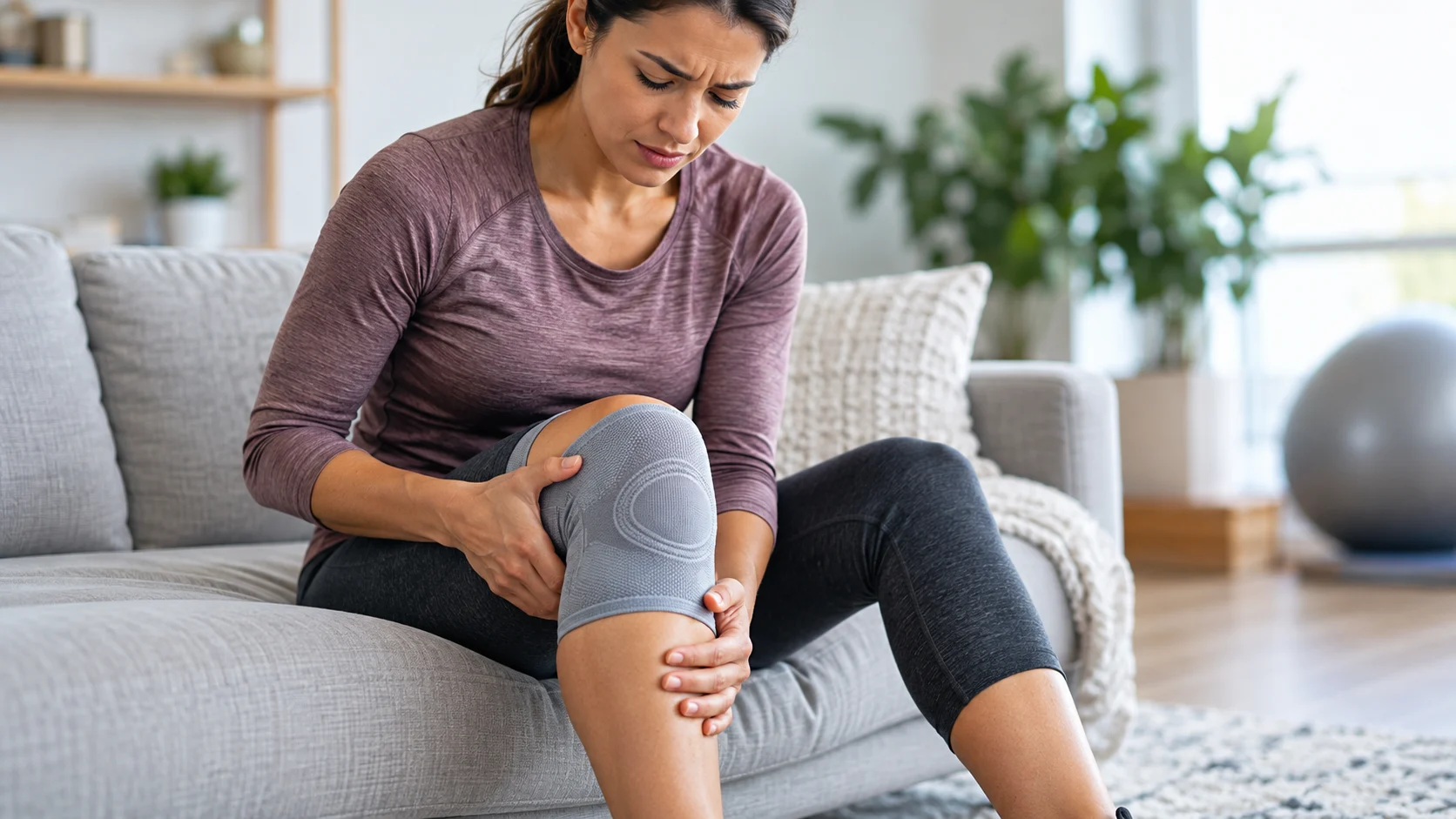
What Does a Locked Knee Mean?
A locked knee describes a situation where the knee becomes difficult or impossible to fully bend or straighten. Some people experience a true mechanical block inside the joint, while others feel that pain, muscle guarding, or stiffness prevents normal movement. The sensation may develop suddenly after an injury or appear gradually alongside an existing knee problem.
True knee locking usually means something physically interferes with normal joint movement. A person may try to straighten the leg but feel as though the knee stops at a certain angle. This can be different from temporary stiffness after sitting, where movement gradually returns once the joint begins moving again.
A locked knee should be taken seriously when movement remains restricted, particularly after twisting or trauma. Meniscus injuries, loose pieces of cartilage or bone, arthritis, and other joint problems can sometimes create mechanical symptoms. Persistent locking deserves professional assessment rather than repeatedly forcing the knee through the blocked position.
True Locked Knee vs. Pseudo-Locking
True locking happens when a physical structure inside the knee prevents normal movement. A torn piece of meniscus or loose body may become trapped between joint surfaces, making extension or flexion difficult. The knee may suddenly become stuck during walking, squatting, twisting, or another activity.
Pseudo-locking feels similar but occurs because pain, swelling, or muscle spasm makes someone reluctant or unable to move normally. There may not be a physical object blocking the joint. Instead, the body limits movement as a protective response to irritation around the knee.
Distinguishing between these patterns can be difficult without an examination. A knee that remains completely stuck or repeatedly locks during activity is more concerning than mild stiffness that eases after several movements. A healthcare professional can assess whether mechanical obstruction, pain, or muscle guarding is responsible.
Meniscus Tears and Knee Locking
The menisci are two pieces of cartilage inside the knee that help distribute pressure and improve joint stability. A meniscus tear can occur after twisting on a planted foot, sudden direction changes, deep squatting, or trauma. Some tears develop gradually as the tissue changes over time rather than after one obvious injury.
Certain meniscus tears can create catching or locking when a displaced piece moves into the joint space. The knee may feel stuck during bending or extension, and you may also notice joint-line pain or clicking. Swelling can occur but is not always dramatic, especially with smaller or more gradual injuries.
Not every meniscus tear causes locking, and not every click means the meniscus is damaged. However, persistent mechanical locking or inability to fully straighten the knee should be evaluated. Treatment may involve rehabilitation, activity modification, imaging, or other options depending on the tear and overall knee function.
Loose Bodies Inside the Knee Joint
Small pieces of bone or cartilage can occasionally become loose inside the knee. These fragments may move around the joint and temporarily block normal movement. A person may experience sudden catching, locking, or the sensation that something shifts inside the knee before motion returns.
Loose bodies can develop after injury, cartilage damage, arthritis, or other joint conditions. Symptoms may appear unpredictably because the fragment does not remain in the same position. The knee might feel normal during one activity and then suddenly lock during another movement.
Because a loose body creates a mechanical problem, stretching harder usually does not solve it. Recurrent locking should be professionally assessed, especially when episodes interfere with walking or exercise. Imaging may be needed to identify whether a free fragment or another joint structure is responsible.
Arthritis and a Stiff or Locked Knee
Arthritis can cause pain, stiffness, and reduced movement in the knee. Osteoarthritis develops when joint structures change over time and may make bending or straightening feel increasingly difficult. Some people describe severe stiffness as “locking,” even though there is no true mechanical block inside the joint.
Bone spurs or loose cartilage associated with arthritis can occasionally contribute to more mechanical symptoms. The knee may also feel rough, creaky, or stiff after periods of rest. Symptoms often vary from day to day depending on activity, fatigue, and how irritated the joint is.
Regular movement and strengthening can help maintain knee function for many people with arthritis. However, persistent locking, major movement loss, or rapidly worsening pain deserves assessment. A healthcare professional can determine whether symptoms are mainly related to stiffness, inflammation, or a mechanical problem inside the joint.
Patella Problems and Knee Catching
The patella, or kneecap, moves along a groove at the front of the knee as the joint bends and straightens. Problems with kneecap movement can sometimes create catching, pain, or a sensation that the knee briefly hesitates. Symptoms may be more noticeable during stairs, squats, or standing after sitting.
Patellofemoral pain usually does not cause a true mechanical lock, but discomfort can make the knee feel difficult to move. Muscle guarding may temporarily limit extension or flexion. Improving quadriceps and hip strength can sometimes help the knee tolerate loaded bending more comfortably.
A kneecap that actually dislocates or feels unstable requires more specific evaluation. Significant trauma, visible deformity, or inability to move normally should not be treated with home exercises alone. Recurrent instability also deserves professional guidance so the underlying cause can be addressed.
Can Muscle Spasm Make the Knee Feel Locked?
Muscles around the knee can tighten strongly when the joint becomes irritated or painful. The hamstrings may contract and resist full extension, while the quadriceps may become difficult to activate normally. This protective response can make the knee feel stuck even when nothing is physically blocking the joint.
Painful muscle guarding may develop after injury, overuse, or sudden knee irritation. The body effectively limits movement because certain positions feel threatening. As pain settles, the muscles may relax and allow movement to return, distinguishing this pattern from persistent true locking.
Gentle movement may help when muscle guarding is responsible, but forcing the knee is not necessary. If the leg remains unable to straighten or bend despite rest and comfortable movement, seek professional assessment. Repeated locking should not automatically be blamed on tight muscles.
Pregnancy and Lower-Body Discomfort
Pregnancy can change body weight, joint loading, and movement patterns, which may make the knees, hips, and feet feel different. Hormonal changes also affect ligaments and other connective tissues. Some people experience more stiffness or discomfort during stairs, squats, or prolonged standing as pregnancy progresses.
A truly locked knee during pregnancy should still be assessed as a knee problem rather than automatically attributed to pregnancy. Pelvic symptoms can occur at the same time but have different causes. For example, these lightning crotch symptoms involve brief pregnancy-related pelvic sensations rather than mechanical locking of the knee.
If pregnancy-related knee pain significantly changes your walking or makes the joint feel unstable, discuss it with your healthcare provider. Exercise modifications, supportive footwear, and lower-body strengthening may help in some cases. Sudden severe swelling or inability to bear weight deserves more prompt attention.
What to Do When Your Knee Locks
If your knee suddenly locks, stop the activity that triggered it and avoid forcing the joint aggressively. Sit or lie somewhere safe and allow the leg to relax. Gentle, small movements may help if pain or muscle guarding is responsible, but repeated forceful bending or straightening can worsen an irritated structure.
Do not repeatedly twist the knee in an attempt to “unlock” it. If a meniscus tear or loose fragment is physically blocking movement, forceful manipulation may increase pain or tissue irritation. Support the leg comfortably and monitor whether normal movement returns without significant effort.
If the knee remains locked and you cannot fully straighten or bend it, seek medical assessment. The need is especially important after an injury or when the joint repeatedly becomes stuck. Persistent mechanical locking usually requires more than stretching, rest, or general strengthening.
Simple Relief Tips for Mild Knee Stiffness
If the knee feels stiff rather than mechanically locked, gentle motion can be useful. Slowly bend and straighten the leg within a comfortable range while sitting or lying down. Short walks may also help restore movement if weight-bearing is comfortable and the knee does not give way.
Heat may feel helpful for general stiffness, while cold can provide temporary comfort when the knee feels irritated after activity. Neither approach fixes the underlying cause, so use them mainly for symptom relief. Avoid extreme temperatures directly against the skin for prolonged periods.
Temporarily reducing deep squats, twisting, running, or other aggravating activities can also help. Maintain comfortable daily movement rather than staying completely inactive for long periods. As symptoms settle, gradually rebuild normal activity instead of returning immediately to full training intensity.
Exercises That May Help Knee Function
Quadriceps strengthening can improve control around the knee. Straight leg raises, short-range sit-to-stands, and controlled step-ups are simple options when they can be performed comfortably. Strong quadriceps help manage loading during walking, stairs, and other activities requiring repeated knee bending.
Hip strengthening may also be useful because the glutes help control the thigh during weight-bearing movement. Bridges, side steps, and split-squat variations can gradually improve lower-body strength. Start with a manageable range if deep knee flexion causes discomfort.
Exercise is not appropriate for a knee that is truly mechanically locked and unable to move. Rehabilitation becomes more useful once significant structural problems have been ruled out or treated. A physiotherapist can help select exercises when symptoms include repeated catching, instability, or loss of motion.
How to Reduce the Risk of Future Knee Problems
Gradual training progression can reduce unnecessary stress on the knee. Sudden increases in running distance, squat volume, jumping, or sports activity can expose the joint and surrounding tissues to more load than they are prepared to handle. Increase one training variable at a time where possible.
Strengthening the quadriceps, hamstrings, hips, and calves helps the lower body manage everyday and athletic forces. Balance and coordination exercises can also support knee control during direction changes. A well-rounded program is generally more useful than focusing only on one muscle around the joint.
Warm up before demanding activity with several minutes of easy movement and lighter versions of the exercises you plan to perform. Adequate recovery matters too. Persistent fatigue can reduce movement quality and make demanding sessions harder to tolerate, especially when training volume is already high.
When Should You Get Medical Help?
Seek medical attention if your knee remains locked and you cannot fully straighten or bend it. Persistent mechanical blockage may involve a meniscus tear, loose body, or another joint problem. Trying to force normal movement at home can increase pain without addressing the cause.
Prompt assessment is also important after significant trauma, particularly when the knee becomes deformed, unstable, or impossible to bear weight on. Rapid swelling, severe pain, or a sensation that the knee repeatedly gives way can indicate a more substantial injury requiring medical evaluation.
Get urgent care if the knee becomes very red, hot, and swollen with fever or if severe pain develops without explanation. Persistent numbness or significant weakness also deserves attention. Symptoms that continue for several weeks or repeatedly interfere with normal activities should be professionally assessed.
Conclusion
A locked knee can result from a meniscus injury, loose body, arthritis-related changes, kneecap problems, pain, or muscle guarding. True mechanical locking usually means something physically prevents normal movement, while pseudo-locking occurs because pain or muscle tension makes movement difficult.
Do not force a knee that becomes stuck. Gentle movement may help ordinary stiffness, but repeated mechanical locking requires proper evaluation. Strengthening the quadriceps, hips, and surrounding muscles can support knee function once the cause has been identified and movement is safe.
Seek medical help when the knee remains locked, repeatedly catches, gives way, or cannot bear weight normally. Severe pain, major swelling, trauma, or signs of infection also require attention. Identifying the underlying cause is more useful than repeatedly trying to unlock the joint at home.
FAQs
What is the most common cause of a locked knee?
Meniscus injuries are a common cause of true mechanical locking, particularly when a torn portion becomes trapped within the joint. Arthritis, loose bodies, or pain-related muscle guarding can also create locking sensations.
Can a locked knee unlock on its own?
Sometimes temporary catching or pseudo-locking settles with relaxation and gentle movement. However, a knee that remains physically stuck or repeatedly locks should be evaluated rather than repeatedly forced.
Should I walk on a locked knee?
Avoid normal walking if the knee cannot bend or straighten properly, feels unstable, or causes significant pain. Continuing to walk may change your gait and place additional stress on the joint.
Can arthritis make your knee lock?
Yes. Arthritis can cause severe stiffness and, in some cases, loose cartilage or bone changes that contribute to catching. Persistent locking should still be evaluated to identify the exact cause.
When is a locked knee an emergency?
Seek prompt care if the knee locks after major trauma, becomes severely swollen or deformed, or you cannot bear weight. Fever with a red, hot joint also requires urgent evaluation.