
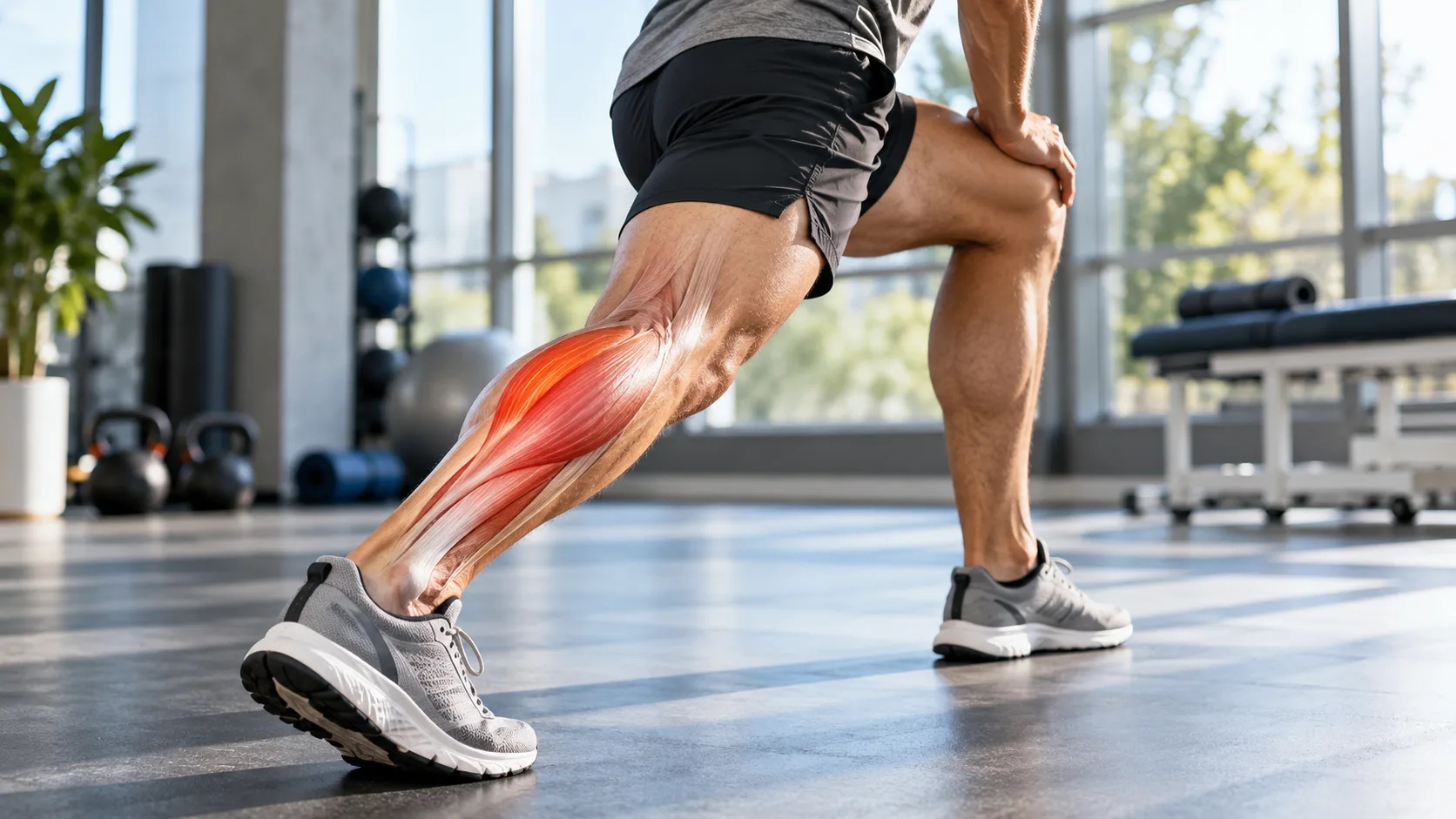
What Is the Soleus Muscle?
The soleus is a broad, powerful muscle located in the back of the lower leg. It sits underneath the larger gastrocnemius muscle and forms an important part of the calf. Although it is less visible from the outside, the soleus plays a major role in standing, walking, running, climbing stairs, and controlling movement at the ankle.
Together, the soleus and gastrocnemius form much of the calf muscle group and connect to the heel through the Achilles tendon. The soleus begins below the knee, attaching to the tibia and fibula, which makes its function slightly different from the gastrocnemius. Because it does not cross the knee joint, it remains active even when the knee is bent.
The soleus is especially important for endurance-based activity because it works repeatedly throughout the day. Every time you stand, walk, or push through the front of your foot, this muscle contributes. Weakness, tightness, strain, or overuse in the soleus can therefore make ordinary movement, exercise, and sports noticeably uncomfortable.
Where Is the Soleus Muscle Located?
The soleus sits deep within the posterior compartment of the lower leg, underneath the gastrocnemius. It stretches from the upper portions of the tibia and fibula down toward the Achilles tendon. Because another large muscle covers much of it, you cannot see the soleus as clearly as the outer shape of the gastrocnemius.
You can often feel the soleus working by performing a calf raise with your knees slightly bent. Bending the knees reduces some contribution from the gastrocnemius and places relatively more demand on the soleus. The muscle contracts in the lower part of the calf as the heel lifts away from the floor.
Its location also explains why soleus discomfort may be mistaken for general calf pain. Pain can feel deep rather than sitting directly on the surface of the lower leg. A proper assessment may be necessary when symptoms persist because the calf contains several muscles, tendons, nerves, and blood vessels that can produce similar sensations.
What Does the Soleus Muscle Do?
The primary function of the soleus is plantar flexion, which means pointing the foot downward at the ankle. This movement occurs when you stand on your toes, push away from the ground while walking, or press a pedal. It is essential for producing and controlling force during many lower-body activities.
The soleus is also an important postural muscle. When you stand upright, your body naturally shifts slightly forward and backward over the ankles. The soleus works continuously to help prevent you from falling forward, making it a key contributor to quiet standing and balance throughout everyday life.
During walking and running, the soleus helps control how the lower leg moves over the foot before contributing to push-off. It absorbs and generates force with every stride. This repeated role makes the muscle particularly important for runners, hikers, athletes, and anyone who spends long periods standing or walking.
Soleus vs. Gastrocnemius: What Is the Difference?
The soleus and gastrocnemius work together, but their anatomy differs. The gastrocnemius crosses both the knee and ankle joints, while the soleus crosses only the ankle. Because of this difference, knee position can affect how strongly each muscle contributes during calf exercises and other lower-body movements.
Straight-knee calf raises tend to involve both muscles, with substantial contribution from the gastrocnemius. When the knee bends, the gastrocnemius is placed in a shortened position and the soleus becomes relatively more important. This is why seated calf raises are commonly used when the goal is to emphasize the soleus.
Their muscle fiber characteristics also differ. The soleus contains a high proportion of endurance-oriented fibers, which suits its role in standing and repetitive movement. The gastrocnemius contributes strongly to faster, more explosive actions, although both muscles cooperate during walking, running, jumping, and many athletic tasks.
Why the Soleus Matters for Walking and Running
During walking, the soleus helps control forward movement of the shin as your body passes over the planted foot. It then contributes to pushing the body forward as the heel rises. This process occurs thousands of times during an active day, making soleus endurance important for efficient and comfortable movement.
Running places even greater demands on the muscle because forces increase as speed and impact rise. The soleus must absorb energy when the foot contacts the ground and then help generate force during push-off. As running distance increases, fatigue in the calf complex can influence stride mechanics and overall lower-leg comfort.
A sudden increase in mileage, hill training, speed work, or running frequency may challenge the soleus beyond its current capacity. This does not automatically mean injury will occur, but gradual progression gives the muscle more time to adapt. Strength training and appropriate recovery can support its ability to handle repeated loading.
Common Causes of Soleus Muscle Pain
Overuse is one of the most common reasons for soreness in the soleus. Long walks, running, repeated jumping, or standing for extended periods can fatigue the muscle, particularly after a sudden increase in activity. Discomfort may feel like a deep ache, tenderness, tightness, or heaviness in the lower calf.
A muscle strain can occur when the soleus is loaded beyond what its fibers can tolerate. This may happen during running, acceleration, hill work, or a sudden change in direction. Symptoms can include localized pain, tenderness, weakness, and discomfort when pushing through the foot or performing a bent-knee calf raise.
Not all deep calf pain comes from the soleus, so self-diagnosis has limitations. Achilles tendon problems, other calf strains, nerve irritation, or circulation-related conditions can produce similar symptoms. Persistent, severe, or unusual calf pain deserves professional assessment, especially when swelling or other concerning signs are present.
Signs of a Soleus Strain
A soleus strain may cause pain deeper in the lower calf rather than high near the knee. Some people notice symptoms during running, particularly when increasing speed or pushing uphill. Others develop soreness afterward that becomes more noticeable while walking, climbing stairs, or lifting the heel from the floor.
Mild strains may allow normal walking with only slight discomfort, while more significant injuries can make push-off painful. Tenderness may be present when pressing into the lower calf, and strength can feel reduced compared with the other side. Swelling or bruising can occur but may be less obvious than with some larger muscle injuries.
If pain develops suddenly during exercise, reduce the activity rather than repeatedly testing the muscle. Continuing to sprint, jump, or perform heavy calf raises may increase irritation. A gradual return based on comfortable walking, strength, and symptom response is usually more sensible than trying to train normally immediately.
How to Stretch the Soleus
A common soleus stretch uses a bent-knee position. Stand facing a wall, place one foot behind you, keep the heel down, and gently bend both knees while shifting your weight forward. The rear knee should remain bent so the stretch is directed more toward the deeper calf rather than mainly the gastrocnemius.
Keep the back foot pointing comfortably forward and avoid allowing the heel to lift from the floor. Move only until you feel mild tension in the lower calf. A stretch should not produce sharp pain, burning, or intense pulling, particularly if you are recovering from a recent calf injury.
Stretching can temporarily reduce the feeling of tightness, but it is not always the complete solution to recurring soleus discomfort. Similar principles apply when managing stiffness elsewhere in the body, as explained in these neck crick relief tips. Gentle movement, appropriate loading, and recovery often matter more than aggressive stretching alone.
Best Exercises to Strengthen the Soleus
Seated calf raises are one of the most direct ways to strengthen the soleus. Sit with the knees bent, keep the feet flat, and raise the heels slowly while the balls of the feet remain on the ground. Lower under control and use body weight or light resistance before progressing toward heavier loads.
Bent-knee standing calf raises provide another option. Slightly bend the knees, keep the torso controlled, and raise both heels from the floor without allowing the ankles to roll outward. Once the movement feels strong and comfortable, you can progress to single-leg versions or add external resistance gradually.
Strength training should include both endurance and heavier resistance over time because the soleus performs many repeated contractions during daily movement. Higher-repetition sets can build muscular endurance, while heavier controlled sets can develop strength. The most effective program progresses gradually rather than suddenly increasing load, volume, and exercise frequency together.
How to Recover From Soleus Soreness
Mild soreness after unfamiliar exercise often improves with temporary reductions in training intensity. Gentle walking and comfortable ankle movement may be preferable to remaining completely inactive. If an activity causes pain to increase steadily, reduce the duration or choose a lower-impact alternative until the muscle feels more settled.
Recovery also depends on adequate sleep, nutrition, hydration, and sensible training volume. A sore muscle may need time before another demanding session, particularly after hills, speed work, or high-volume calf training. Alternating difficult days with easier activity can help prevent repeated overload while maintaining general fitness.
When symptoms improve, rebuild activity progressively. Start with comfortable walking or low-load strengthening before returning to faster running, jumping, or heavy calf exercises. Monitor how the calf feels later that day and the next morning, because delayed increases in soreness may indicate that the previous session was too demanding.
How to Prevent Soleus Problems
Gradual training progression is one of the most practical ways to protect the soleus. Avoid dramatically increasing running mileage, hills, speed, or jumping volume within a short period. Even well-conditioned athletes may develop calf problems when the workload rises faster than the muscle has time to adapt.
Include calf strengthening throughout the year rather than starting only after soreness develops. Straight-knee and bent-knee calf raises train the calf complex in complementary ways. Adding balance, hip strength, and general lower-body exercises can also help the legs handle forces efficiently during walking, running, and sport.
Footwear and running surfaces can influence calf demand as well. A major change in heel height, shoe design, terrain, or training surface may temporarily alter how much work the soleus performs. Introduce substantial changes progressively and pay attention to recurring discomfort rather than waiting until pain significantly affects your movement.
When Soleus or Calf Pain Needs Medical Attention
Seek medical assessment when calf pain is severe, follows major trauma, or prevents normal walking. A noticeable loss of strength, significant bruising, or inability to push through the foot may indicate a more substantial muscle or tendon injury. Professional evaluation can help determine whether imaging or structured rehabilitation is necessary.
Calf pain accompanied by sudden swelling, warmth, redness, or unusual tenderness requires particular caution. These symptoms can sometimes be associated with a blood clot rather than a muscle problem. Seek prompt medical care, especially when calf symptoms occur with unexplained shortness of breath, chest pain, dizziness, or coughing blood.
Persistent pain also deserves attention when it does not gradually improve despite reducing aggravating activities. Recurrent calf problems may involve training errors, weakness, tendon issues, nerve symptoms, or another underlying cause. A physiotherapist, doctor, or other qualified healthcare professional can help identify the source and guide appropriate treatment.
Conclusion
The soleus is a deep calf muscle that plays a major role in ankle movement, balance, standing, walking, and running. Although it is less visible than the gastrocnemius, it works constantly during everyday weight-bearing activity. Its ability to tolerate repeated force makes it especially important for runners and active individuals.
Soleus health can be supported with progressive calf strengthening, comfortable mobility, balanced training, and adequate recovery. Bent-knee calf raises and seated calf raises are particularly useful because they emphasize the deeper calf muscle. Sudden training increases should be avoided when possible because the tissues need time to adapt to greater demands.
Most mild soleus soreness can improve with sensible activity changes and gradual reloading. However, severe pain, substantial weakness, persistent symptoms, or unexplained swelling and redness should not be ignored. Identifying whether discomfort truly comes from the soleus is important because several other calf conditions can create similar symptoms.
FAQs
Where is the soleus muscle located?
The soleus is located deep in the back of the lower leg underneath the gastrocnemius. It runs from the tibia and fibula toward the heel, joining the Achilles tendon.
What does the soleus muscle do?
The soleus helps point the foot downward, supports push-off during walking and running, and controls forward movement of the lower leg. It also helps maintain balance while standing.
How do you strengthen the soleus?
Bent-knee calf raises and seated calf raises are useful because bending the knee reduces some gastrocnemius contribution. Gradually increase resistance while maintaining slow, controlled movement through a comfortable range.
What does a soleus strain feel like?
A soleus strain may cause deep lower-calf pain, tenderness, weakness, or discomfort during walking and running. Symptoms can become more noticeable when performing bent-knee calf raises or pushing off the foot.
When should I worry about calf pain?
Seek prompt care for sudden swelling, redness, warmth, severe pain, major weakness, or difficulty walking. Calf symptoms accompanied by chest pain or shortness of breath require urgent medical attention.