
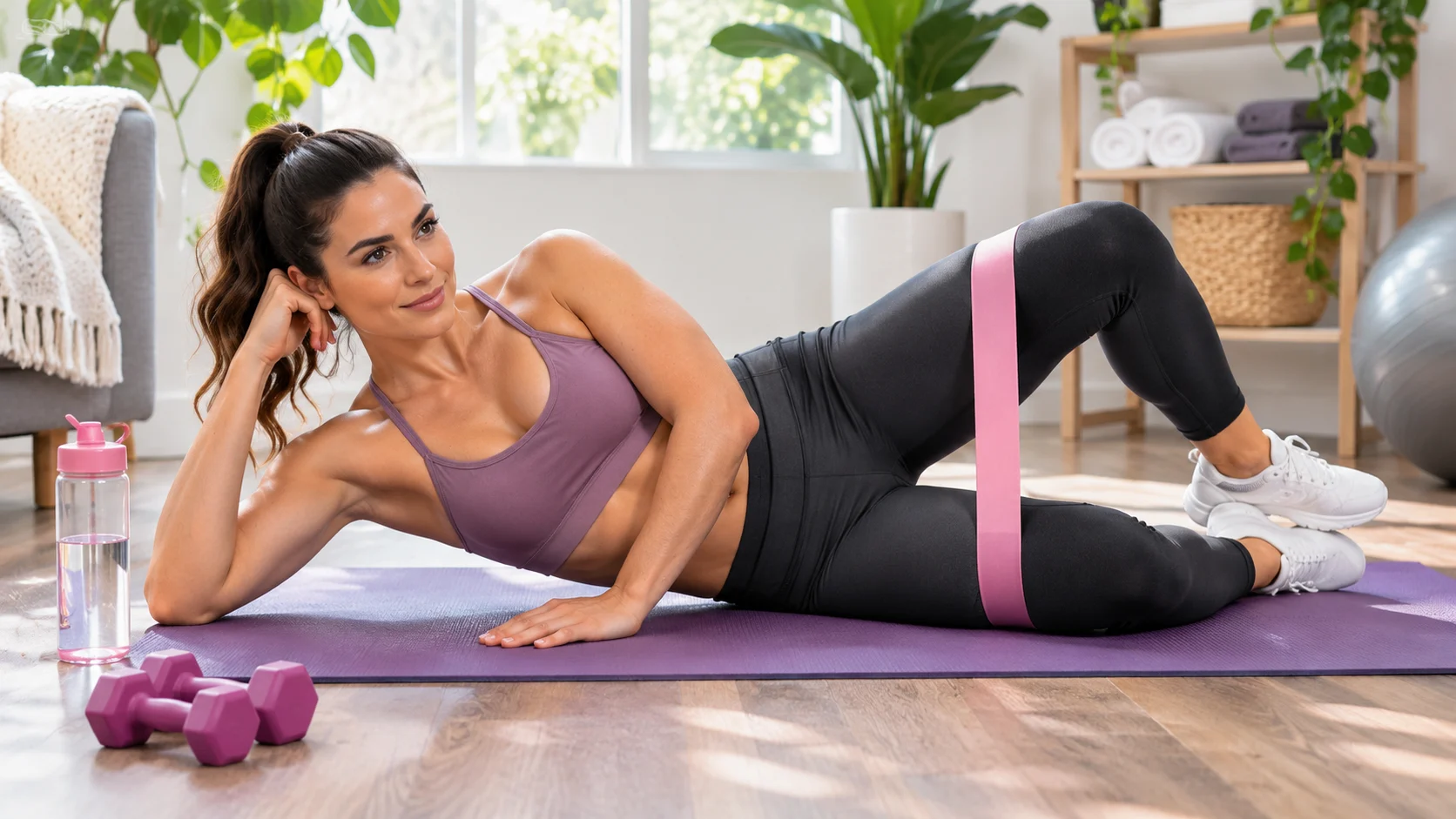
What Are Hip Exercises for Women?
Hip exercises for women are movements designed to strengthen the muscles surrounding the hips, improve joint mobility, and support everyday physical activities. These exercises target important muscles responsible for walking, standing, bending, and maintaining balance. Regular hip strengthening can help improve movement control and make ordinary activities feel more comfortable and manageable.
The hip joint connects the thigh bone to the pelvis and allows movement in several directions. Muscles surrounding this joint work together to support stability, flexibility, and coordinated lower-body movement. Although hip exercises are suitable for people of all genders, women can adapt them to individual fitness goals, physical abilities, and health needs.
The best hip exercises for women include glute bridges, clamshells, side-lying leg raises, standing hip abductions, and controlled hip hinges. These movements can be performed at home or in a gym with minimal equipment. Understanding proper form, exercise benefits, and safety precautions helps beginners build a comfortable routine that supports long-term strength and mobility.
Which Muscles Do Hip Exercises Target?
Hip exercises strengthen several important muscle groups, including the gluteus maximus, gluteus medius, and gluteus minimus. The gluteus maximus helps extend the hip during movements such as standing and climbing stairs. Meanwhile, the smaller gluteal muscles support hip stability and help control leg movement during walking and balancing activities.
The hip flexors are another important muscle group involved in lifting the thigh toward the torso. They include the iliopsoas and other muscles that contribute to hip flexion. The adductors, located along the inner thigh, help bring the legs toward the body’s midline and support controlled movement in different directions.
The hamstrings, quadriceps, and abdominal muscles also contribute to exercises involving the hips. These muscles work together to stabilize the pelvis and coordinate lower-body activities. Strengthening several muscle groups rather than focusing on one area can support balanced movement and improve the body’s ability to handle everyday physical demands.
Benefits of Hip Strengthening Exercises for Women
One major benefit of hip strengthening exercises is improved stability during everyday movement. Strong hip muscles help control the position of the pelvis and legs while walking, standing, or changing direction. This muscular support may improve balance and make activities such as climbing stairs, carrying objects, and rising from chairs feel easier.
Hip exercises can also improve lower-body strength and movement control when performed consistently. The glutes and surrounding muscles contribute to coordinated movement during recreational activities and sports. Strengthening these muscles may support comfortable movement around the knees and lower back, although exercise alone cannot prevent every injury or resolve every painful condition.
Another benefit is maintaining mobility and physical independence over time. Gentle strengthening and flexibility exercises can help people remain active through different stages of life. Whether someone enjoys walking, cycling, dancing, or general fitness, appropriately selected hip exercises provide a useful foundation for maintaining physical function and confidence during movement.
How to Prepare for Hip Exercises Safely
Before beginning a hip exercise routine, consider your current fitness level, flexibility, and any existing injuries or medical conditions. Beginners should start with comfortable movements that do not require heavy resistance. If you experience persistent hip pain, significant stiffness, or difficulty walking, seek guidance from a healthcare professional before attempting demanding exercises.
A gentle warm-up helps prepare the body for strengthening activities. Walking comfortably for a few minutes, marching slowly in place, or performing controlled hip movements can increase circulation and introduce movement gradually. Avoid forcing the hips into uncomfortable positions during warm-up activities, particularly if you have limited mobility or previous joint problems.
Choose a clear exercise area with stable flooring and enough space to move safely. A comfortable exercise mat and sturdy chair may be useful for several beginner-friendly movements. Focus on controlled breathing, smooth technique, and manageable effort rather than completing as many repetitions as possible or rushing through the exercises.
Glute Bridges for Hip Strength and Stability
Glute bridges are beginner-friendly hip exercises that primarily target the gluteus maximus while engaging the hamstrings and supporting trunk muscles. This movement involves lifting the pelvis from a lying position through controlled hip extension. It can help strengthen muscles used during standing, walking, stair climbing, and other ordinary physical activities.
To perform a glute bridge, lie on your back with your knees bent and feet resting flat on the floor. Keep your arms comfortably beside your body and gently tighten your abdominal muscles. Press through your feet to lift your hips until your torso and thighs form a comfortable, approximately straight line.
Pause briefly at the top before lowering your hips slowly toward the floor. Avoid arching your lower back excessively or pushing your hips higher than feels comfortable. Start with a few controlled repetitions and focus on using your glute muscles rather than relying on momentum or forcing the movement through discomfort.
Clamshell Exercises for the Gluteus Medius
Clamshell exercises target muscles involved in rotating and stabilizing the hips, particularly portions of the gluteus medius and other hip rotators. These muscles help control pelvic and thigh position during movement. Because clamshells require little equipment, they are often included in beginner strength routines and individualized rehabilitation programs.
Begin by lying on your side with your knees bent and your feet stacked together. Keep your hips aligned and gently lift the upper knee while maintaining contact between your feet. Move only as far as you can without rolling your pelvis backward or creating discomfort around the hip.
Slowly lower the knee to its starting position and repeat the movement with control. You can perform the exercise on both sides to train the supporting muscles of each hip. A light resistance band may provide an additional challenge later, but learning smooth, comfortable technique should come before increasing resistance.
Side-Lying Leg Raises for Hip Abductor Strength
Side-lying leg raises are effective exercises for strengthening the hip abductors, particularly the gluteus medius and minimus. These muscles help move the leg outward and stabilize the pelvis during standing and walking. The exercise provides a simple way to train lateral hip strength without requiring complex equipment or demanding movements.
Lie on one side with your lower leg comfortably bent or straight and your upper leg extended. Keep your pelvis steady while slowly lifting the upper leg a short distance away from the lower leg. Maintain a comfortable foot position and avoid twisting your torso to lift the leg higher.
Lower the leg gradually and repeat the movement without allowing momentum to take over. Keep the exercise within a comfortable range rather than attempting the highest possible lift. If maintaining balance is difficult, position yourself against a stable surface or ask a qualified professional about a suitable exercise modification.
Standing Hip Abduction and Extension Exercises
Standing hip exercises offer a practical way to strengthen muscles while practicing balance and controlled lower-body movement. Standing hip abduction mainly targets the muscles along the outer hip, while standing hip extension emphasizes the gluteus maximus. Both movements can be performed using a sturdy chair or countertop for additional support.
For standing hip abduction, stand upright while holding a stable surface and keeping your feet comfortably apart. Slowly move one leg outward without leaning your torso excessively to the opposite side. Pause briefly before returning the leg to its starting position, maintaining a steady pelvis throughout the exercise.
To perform standing hip extension, gently move one leg backward while keeping your torso relatively upright. Avoid arching your lower back or swinging the leg behind you. Start with a small range of motion and repeat comfortably on both sides, gradually developing better muscular control as the movements become familiar.
Hip Hinge Exercises for Functional Lower-Body Strength
Hip hinges strengthen muscles involved in bending and returning to an upright position, including the glutes and hamstrings. They also require coordinated trunk stability during movement. Learning a controlled hip hinge can support everyday tasks such as reaching toward the floor, picking up suitable objects, and changing positions comfortably.
Begin by standing with your feet approximately hip-width apart and your knees slightly bent. Slowly move your hips backward while allowing your torso to lean forward through the hip joints. Keep your spine in a comfortable, relatively stable position and stop before the movement becomes difficult to control.
Return to standing by gently driving through your feet and extending your hips. Avoid rounding or excessively arching the back, and do not force the movement beyond your available mobility. Once comfortable with the basic technique, a qualified trainer can help you explore appropriate resistance variations if they suit your abilities.
Sit-to-Stand and Step-Up Exercises for Stronger Hips
Sit-to-stand exercises strengthen the glutes, quadriceps, and other muscles involved in everyday lower-body movement. They are particularly useful because standing from a chair is a common functional activity. Practicing this movement can improve coordination and help develop the strength needed for comfortable transitions between sitting and standing.
Sit on a sturdy chair with your feet flat on the floor and comfortably spaced apart. Lean forward slightly through your hips and stand up using a smooth, controlled movement. Lower yourself back into the chair slowly, using the armrests for assistance if necessary to maintain balance or reduce discomfort.
Supported step-ups provide another option for training hip and leg strength during functional movements. Begin with a low, stable step and hold a secure handrail while stepping up and down carefully. These exercises should remain comfortable, and anyone experiencing balance problems or significant joint pain may benefit from simpler alternatives.
Hip Mobility Exercises and Gentle Stretches
Hip mobility exercises help maintain movement in different directions, including flexion, extension, rotation, and side-to-side motion. Gentle mobility work can complement strengthening by helping people move through their available range comfortably. However, limited hip movement does not always mean that muscles are tight, because joint structure and other factors also influence flexibility.
A seated figure-four stretch is one option for gently exploring movement around the outer hip. Sit on a stable chair and place one ankle across the opposite thigh if the position feels comfortable. Maintain an upright posture and lean forward slightly only when the movement does not cause pain or uncomfortable pressure.
Gentle hip flexor stretches may also feel useful after extended periods of sitting. A supported standing split stance can introduce mild movement around the front of the hip without requiring deep stretching. Avoid bouncing, forcing the joint, or holding positions that create pinching sensations, and choose movements that match your natural flexibility.
How to Build a Safe Hip Exercise Routine
A balanced hip exercise routine can combine strengthening, mobility, and general physical activity. For example, glute bridges and clamshells train supporting hip muscles, while heel slides or gentle stretches encourage comfortable movement. Walking and other suitable activities can complement these exercises while supporting overall endurance and functional fitness.
Start with a small selection of exercises and a manageable number of controlled repetitions. There is no need to perform every movement in one session or increase resistance quickly. Allow appropriate recovery between challenging activities, and adjust your routine when muscles feel unusually sore or exercise begins to interfere with daily comfort.
Common mistakes include swinging the legs, rushing through repetitions, forcing stretches, and ignoring persistent pain. If you experience sharp hip pain, sudden weakness, inability to bear weight, or significant discomfort after an injury, seek medical assessment. A physical therapist can help adapt exercises for pregnancy, postpartum recovery, arthritis, or other individual needs.
Conclusion
Hip exercises for women can help strengthen important muscle groups, maintain joint mobility, and support comfortable movement during everyday activities. Movements such as glute bridges, clamshells, side-lying leg raises, and standing hip exercises provide practical starting options. These exercises target different muscles that work together to stabilize the pelvis and control lower-body movement.
The most useful hip exercise routine is one that matches your individual abilities, goals, and comfort level. Proper technique, manageable effort, and adequate recovery are more important than rushing toward difficult movements. Combining strengthening with suitable mobility exercises and regular physical activity can support long-term function without requiring complicated equipment or demanding workouts.
If hip exercises repeatedly cause pain or you experience unexplained movement limitations, seek guidance from a qualified healthcare professional. Individualized recommendations can help identify appropriate modifications and address underlying concerns. With consistent, comfortable practice, hip strengthening exercises can become a practical part of maintaining mobility, balance, and overall physical well-being.
Frequently Asked Questions
What are the best hip exercises for women?
Glute bridges, clamshells, side-lying leg raises, standing hip abductions, and controlled hip hinges are useful options. The best choices depend on your strength, mobility, comfort, and individual exercise goals.
Can hip exercises help with lower back pain?
Hip strengthening may help some people improve movement control and support surrounding muscles. However, lower-back pain has many possible causes, and persistent symptoms require assessment rather than relying on hip exercises alone.
How often should women do hip exercises?
Frequency depends on exercise difficulty, experience, and recovery needs. Gentle mobility activities may be suitable more frequently, while strengthening sessions should allow adequate recovery and gradual progression.
Can beginners perform hip exercises at home?
Yes, many beginner-friendly hip exercises require little equipment and can be performed at home. Glute bridges, clamshells, and supported standing movements are practical options when performed with comfortable technique.
How long does it take to improve hip strength?
Improvements vary depending on starting strength, exercise consistency, and individual health. Some people notice better movement control within several weeks, while larger strength improvements generally develop gradually with suitable training and recovery.