
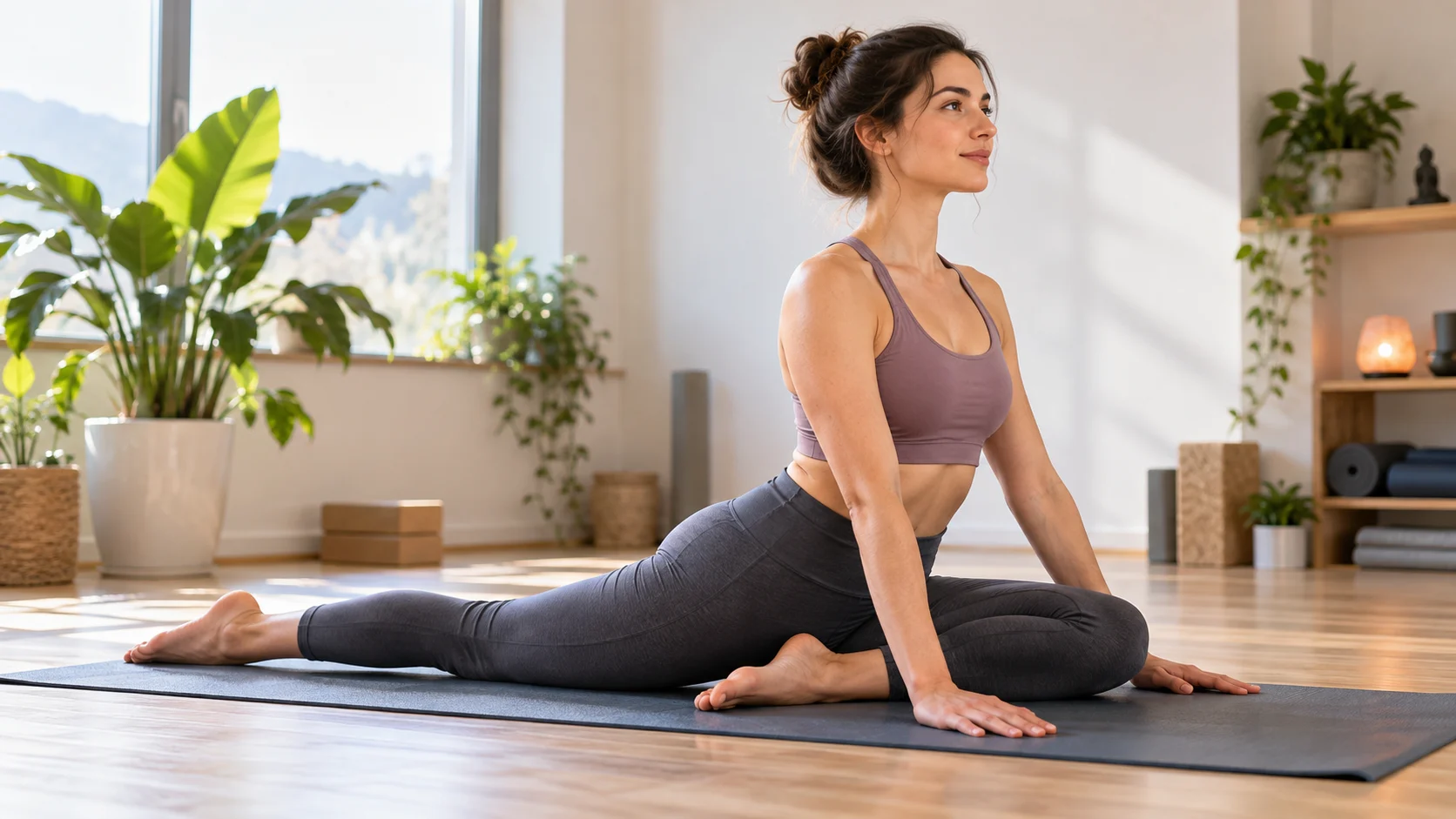
What Is the Pigeon Pose Stretch?
Pigeon Pose is a yoga-based hip stretch commonly used to improve flexibility around the glutes, outer hips, and surrounding muscles. One leg is positioned in front of the body while the other extends behind you. The position creates a deep hip stretch that can be adjusted depending on mobility, comfort, and previous experience.
The pose is often included in yoga, mobility sessions, cool-down routines, and lower-body recovery work. Although it is known as a hip opener, the exact sensation can vary considerably between people. Some feel the stretch mainly in the glutes, while others notice tension around the outer hip or front of the back leg.
Pigeon Pose does not need to look perfectly symmetrical to be effective. Hip anatomy differs between individuals, which affects how comfortably the front leg can rotate and how low the pelvis can move. Using support and reducing the depth can make the stretch safer and more accessible without reducing its usefulness.
What Muscles Does Pigeon Pose Stretch?
Pigeon Pose commonly creates tension through the gluteal muscles of the front leg. The gluteus maximus, gluteus medius, and smaller muscles around the back of the hip may all experience a stretch depending on leg position. These muscles contribute to hip movement, stability, walking, running, and many lower-body exercises.
The deep external rotators of the hip can also be affected. These smaller muscles help rotate and stabilize the thigh inside the hip socket. Because the front leg is positioned in external rotation, the pose can create a noticeable stretch around the back and side of the hip.
The back leg may create a different sensation through the front of the hip, particularly around the hip flexors. However, Pigeon Pose should not be treated as a perfect isolation stretch for one muscle. It places several tissues and joints in different positions simultaneously, making comfort and control more important than targeting one structure precisely.
Benefits of Pigeon Pose
One potential benefit of Pigeon Pose is improved hip mobility. People who spend long periods sitting may notice stiffness around the hips and glutes, and a comfortable stretch can provide temporary relief. Regular mobility work can help maintain movement variety when combined with normal walking, exercise, and strength training.
Pigeon Pose may also feel useful after lower-body workouts involving squats, lunges, running, or cycling. These activities challenge the hips repeatedly, and a gentle stretch afterward can provide a relaxing change in position. Stretching is optional for recovery, but some people find that it reduces the sensation of post-workout tightness.
The pose can also encourage slower breathing and body awareness. Because it is usually held rather than performed rapidly, you have time to notice where tension occurs and whether one side feels different. These observations can help guide future mobility work without assuming that every asymmetry represents a problem.
How to Do Pigeon Pose Correctly
Begin on your hands and knees or in a downward-facing position. Bring one knee forward toward the same-side wrist and place the lower leg comfortably across the mat. Extend the opposite leg behind you while keeping your hips facing generally forward rather than rotating dramatically to one side.
The front shin does not need to be perfectly parallel with the front edge of the mat. In fact, forcing it into that position can create unnecessary pressure on the knee. Keep the front foot closer to the pelvis if that allows the hip and knee to remain more comfortable.
Support yourself with your hands while you settle into the position. You can stay upright or gradually lower onto your forearms if your hips allow it without pain. Breathe naturally and stop before you feel sharp pinching, numbness, or uncomfortable pressure inside the hip or knee.
How Long Should You Hold Pigeon Pose?
For general flexibility, holding Pigeon Pose for around 20 to 60 seconds per side can be enough for many people. The exact duration is less important than maintaining a comfortable position. You should be able to breathe slowly rather than holding your breath while waiting for the stretch to end.
Longer holds may be used in slower yoga practices, but they are not automatically more effective. Remaining in a deep stretch for several minutes can become uncomfortable if the knee, hip, or ankle begins to experience pressure. Changing position when discomfort increases is more sensible than forcing a predetermined time target.
Consistency generally matters more than unusually long holds. Performing a comfortable mobility routine several times per week may help maintain flexibility without creating unnecessary irritation. If you become sore after every stretching session, reduce the depth, duration, or frequency and allow more recovery.
How to Modify Pigeon Pose for Tight Hips
If your front hip does not comfortably reach the floor, place a folded blanket, cushion, or yoga block beneath the hip. This provides support and reduces the demand on the front leg. A supported position can still create a useful stretch while making it easier to relax the surrounding muscles.
You can also bring the front foot closer toward the opposite hip. This reduces the amount of external rotation required and may decrease knee pressure. As your mobility improves, the lower leg can gradually move farther forward if that change continues to feel comfortable.
Another option is performing a reclining figure-four stretch instead. Lie on your back, cross one ankle over the opposite thigh, and gently bring the legs toward you. This variation targets similar hip muscles while allowing the floor to support your spine and pelvis.
Pigeon Pose and Knee Safety
The knee of the front leg is placed in a position that can feel uncomfortable when hip rotation is limited. If the hip cannot provide enough movement, stress may shift toward the knee. Sharp pain around the joint is a reason to reduce the stretch rather than trying to push through it.
Keep the front foot active and avoid twisting the knee forcefully. Moving the foot closer to the pelvis usually reduces the amount of rotation required. Supporting the hip with a cushion can also prevent the body from collapsing into a position that places unnecessary stress on the knee.
People with recent knee injuries, surgery, significant arthritis, or persistent swelling may need another stretch. Pigeon Pose is not essential for hip flexibility, so there is no benefit in forcing it when the knee does not tolerate the position. A figure-four stretch can provide a more comfortable alternative.
Pigeon Pose for Lower-Back and Pelvic Comfort
Hip and lower-back sensations often influence each other because the pelvis connects these regions during movement. A comfortable hip stretch may make the lower body feel less stiff, particularly after prolonged sitting. However, Pigeon Pose should not be considered a treatment for every type of back or pelvic pain.
Some discomfort follows predictable hormonal patterns rather than coming from tight hips. For example, back pain before period can involve menstrual cramping, hormonal changes, and referred pelvic pain. In those situations, stretching may provide comfort but does not address every possible cause.
If Pigeon Pose causes lower-back pain, reduce the depth or use more support under the hips. You can also switch to a reclining stretch that places less demand on the spine. Persistent or severe back and pelvic pain should be assessed when it interferes with normal daily activities.
Pigeon Pose Before or After Exercise
Before a workout, dynamic mobility is often more practical than holding a deep static Pigeon Pose for a long time. Walking lunges, controlled hip rotations, squats, and other active movements can prepare the lower body while keeping the muscles engaged. A brief, gentle Pigeon variation may still be used if it feels helpful.
After exercise, a longer static stretch can be included if you enjoy it. Hold the position comfortably and focus on relaxed breathing rather than trying to force a dramatic increase in flexibility. You do not need to feel an intense stretch for the pose to be worthwhile.
Stretching after exercise is optional rather than mandatory for recovery. Sleep, nutrition, hydration, training volume, and gradual progression are also important. Use Pigeon Pose because it feels useful and comfortable, not because you believe every workout must end with deep stretching.
Common Pigeon Pose Mistakes
One common mistake is forcing the front shin to become parallel with the front edge of the mat. This position requires substantial hip rotation and may transfer stress toward the knee when mobility is limited. Allow the shin to rest at an angle that feels natural instead.
Another mistake is allowing the pelvis to collapse heavily toward one side. Some asymmetry is normal, but using a support under the elevated hip can create a more stable position. This makes it easier to focus on the hip stretch rather than struggling to prevent the body from tipping.
People also sometimes push their torso forward simply to make the pose look deeper. Forward folding should happen only when the hips and knees remain comfortable. Staying upright is completely valid and may provide all the stretch you currently need.
How Often Should You Practice Pigeon Pose?
You can practice Pigeon Pose several times per week if it feels comfortable and does not leave your hips or knees irritated. There is no requirement to perform it every day. Your overall exercise routine, mobility needs, and response to stretching should determine frequency.
A few controlled holds per side are usually enough for a mobility session. Repeating the pose many times is unnecessary if your hips already feel well stretched. More stretching does not always produce better mobility, particularly when the tissues become sensitive from excessive end-range work.
Balance stretching with strengthening exercises such as squats, bridges, lunges, step-ups, and hip abduction movements. Mobility gives you access to a range, while strength helps you control that range. Combining both qualities usually creates more useful movement than focusing exclusively on flexibility.
When Should You Avoid Pigeon Pose?
Avoid Pigeon Pose if it produces sharp knee pain, strong hip pinching, numbness, tingling, or symptoms that travel down the leg. These sensations are different from a normal muscular stretch. Modifying the position may help, but there is no reason to continue if symptoms remain uncomfortable.
People recovering from hip or knee surgery should follow rehabilitation restrictions before attempting deep stretches. The same applies after dislocations, fractures, or major soft-tissue injuries. A healthcare professional or physiotherapist can suggest alternative movements that match the current stage of recovery.
Pregnancy may also change how comfortable Pigeon Pose feels because joint mobility, abdominal size, and pelvic pressure change over time. Support and wider positions may help, but individual medical guidance takes priority when pregnancy complications or exercise restrictions are present.
Best Practices for Better Hip Mobility
Warm tissues often tolerate stretching more comfortably than completely cold tissues. Consider walking for several minutes or performing gentle hip movements before settling into Pigeon Pose. This does not need to be an intense warm-up; the goal is simply to introduce movement before a deeper static position.
Avoid comparing your range with other people. Hip socket shape, femur structure, previous injuries, and flexibility differ naturally, meaning some people will never look identical in this pose. Comfortable function is more important than achieving an extreme position for appearance.
Progress gradually and judge success by how your hips move during everyday activities and exercise. If walking, squatting, and other movements feel comfortable, you may not need dramatically greater flexibility. Mobility work should support your activities rather than becoming a goal that encourages unnecessary end-range forcing.
Conclusion
Pigeon Pose is a popular hip stretch that can target the glutes, deep hip rotators, and surrounding tissues. It may help maintain comfortable hip mobility and provide a relaxing position after sitting or lower-body exercise. The exact stretch sensation varies because hip anatomy and flexibility differ between individuals.
Good form means supporting the pelvis, allowing the front shin to rest at a natural angle, and avoiding sharp knee or hip pain. Props and easier variations can make the pose more accessible. You do not need to reach the floor or create an extreme stretch for Pigeon Pose to be useful.
Combine Pigeon Pose with regular strength training and general movement for a more balanced approach to hip function. Stop or modify the position when it produces joint pain, numbness, or worsening symptoms. Comfortable, controlled mobility is more useful than forcing your body into a textbook-looking pose.
FAQs
What muscles does Pigeon Pose stretch?
Pigeon Pose commonly stretches the glutes and deep hip rotators of the front leg. Depending on your position, you may also feel tension through the hip flexors of the extended leg.
How long should I hold Pigeon Pose?
Holding the pose for approximately 20 to 60 seconds per side can work well for general mobility. Use a shorter duration if the hips, knees, or ankles become uncomfortable.
Why does Pigeon Pose hurt my knee?
Limited hip rotation can shift stress toward the front knee. Bring the foot closer to your pelvis, support the hip with a cushion, or switch to a reclining figure-four stretch.
Is Pigeon Pose good for tight hips?
It can help some people temporarily reduce the feeling of hip tightness. For longer-term function, combine stretching with hip strengthening, regular walking, and varied lower-body movement.
Can beginners do Pigeon Pose?
Yes, but beginners should modify the pose as needed. Using a cushion under the hip or choosing a reclining figure-four variation can make the stretch more comfortable and easier to control.