
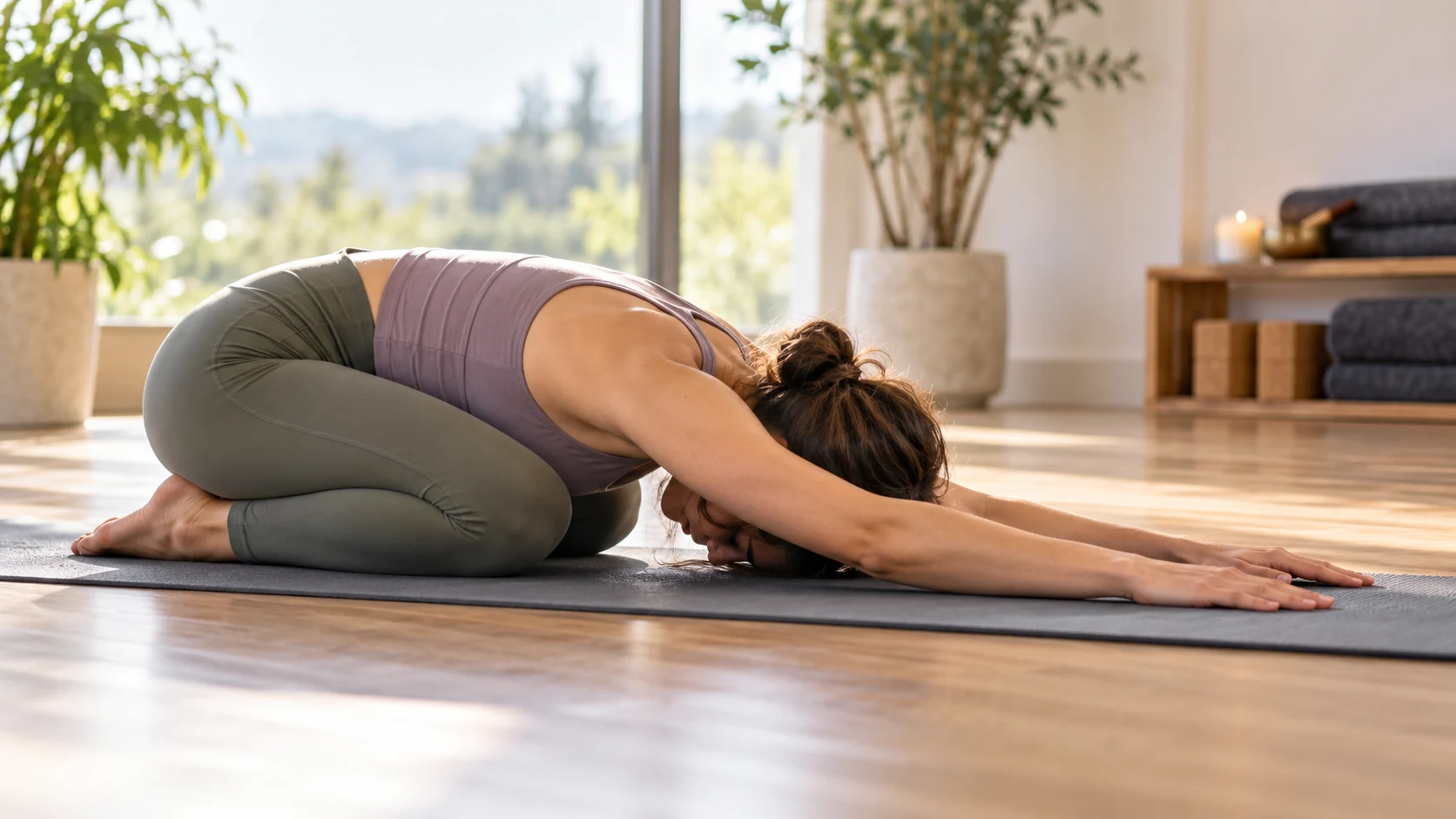
What Is Child Pose?
Child Pose, commonly known in yoga as Balasana, is a gentle resting position that involves sitting the hips toward the heels while lowering the torso forward. The arms may reach in front of the body or rest alongside the legs. It is commonly used during yoga sessions for relaxation, mobility, breathing, and recovery between more demanding movements.
The position places the hips and knees into flexion while allowing the spine to relax into a comfortable forward bend. Depending on your arm position, you may also feel a gentle stretch through the shoulders, upper back, hips, thighs, or ankles. The exact sensation varies according to flexibility, body proportions, and how widely the knees are positioned.
Child Pose does not need to look identical for everyone. Some people can bring their hips close to their heels and forehead toward the floor, while others need cushions or a shorter range. The goal is to find a supported, comfortable position rather than forcing your body to match a picture of the pose.
What Muscles Does Child Pose Stretch?
Child Pose can create a gentle stretch through several areas of the body at once. The muscles along the lower and middle back may lengthen as the spine moves forward, while the glutes can feel stretched as the hips sit backward. Reaching the arms ahead may also create tension through the shoulders, upper back, and sides of the torso.
The front of the ankles may experience a mild stretch when the tops of the feet rest on the floor. The hips and thighs are placed into deep flexion, although some people feel more pressure than stretch in these areas. Knee and ankle mobility therefore influence how comfortable the position feels.
Child Pose is best viewed as a whole-body mobility position rather than an exercise that perfectly isolates one muscle. You may feel the strongest stretch in a different area from someone else. Adjusting knee width, arm position, and hip depth can change which tissues receive the most noticeable tension.
Benefits of Child Pose
One of the main benefits of Child Pose is that it provides a simple way to slow down during a yoga or mobility session. The position allows you to reduce muscular effort while focusing on steady breathing. This makes it useful as a rest position between more demanding movements or as part of a relaxing cool-down.
The pose can also help maintain comfortable movement through the hips, spine, shoulders, and ankles. Because several joints move simultaneously, it can be a convenient addition to general mobility routines. People who spend long periods sitting may appreciate the change in position, especially when the pose is performed without forcing deeper ranges.
Child Pose may also help you become more aware of breathing into the back and sides of the rib cage. As the torso rests toward the thighs, the front of the abdomen has less space to expand. This can encourage you to notice how the ribs move during slower, more relaxed breathing.
How to Do Child Pose Correctly
Begin on your hands and knees on a comfortable mat. Bring your big toes closer together if that feels natural, then gradually sit your hips backward toward your heels. Your knees can remain close together or move wider apart depending on which position provides more space and comfort through the hips and abdomen.
Lower your torso forward and extend your arms in front of you with your palms resting on the floor. Alternatively, allow your arms to relax beside your body with the palms facing upward. Rest your forehead on the mat, a folded towel, or a yoga block if the floor feels too far away.
Breathe slowly and allow your body to settle into the position without pressing aggressively downward. Your hips do not need to touch your heels, and your forehead does not need to reach the floor. Stay within a range that allows you to breathe naturally and relax rather than creating sharp pressure in any joint.
How Long Should You Hold Child Pose?
The amount of time you hold Child Pose depends on why you are using it. During a yoga workout, you may remain there for several breaths between exercises. During a relaxation or mobility session, staying for 30 seconds to a few minutes may feel comfortable for some people.
Longer is not automatically better. If your knees, ankles, hips, or lower back become uncomfortable, leave the position and move normally before trying again. A shorter hold that feels relaxed and sustainable is usually more useful than forcing yourself to remain in the pose simply to reach a specific time.
Breathing can help determine how long to stay. If you can inhale and exhale comfortably without feeling trapped or strained, the position is probably manageable. Once you start holding your breath, shifting constantly, or feeling increasing joint pressure, it is reasonable to come out of the pose.
Child Pose for Lower-Back Comfort
Child Pose may feel soothing when the lower back feels stiff after sitting or general daily activity. The forward-folded position allows the lumbar spine to move differently from prolonged upright postures. Some people notice temporary relief because the back muscles can relax while the hips remain supported toward the heels.
However, Child Pose is not a universal treatment for back pain. Certain conditions may feel worse in spinal flexion, especially when symptoms travel into the leg or increase significantly during forward bending. The pose should therefore be used based on how your body responds rather than because it is commonly recommended.
If the position feels good, use it as one part of a broader movement routine. Walking, strength training, regular position changes, and general physical activity also matter for long-term back function. Stretching alone is rarely enough to address every cause of recurring lower-back discomfort.
Child Pose and Knee Comfort
The deep knee bend required in Child Pose can feel uncomfortable for people with limited knee mobility or an irritated joint. Placing a folded towel or cushion between the thighs and calves can reduce how far the knees bend. You can also keep the hips farther away from the heels if deeper flexion creates pressure.
If you have ongoing knee pain, swelling, or a recent injury, do not force the position. Conditions involving extra joint fluid, such as joint effusion, may make deep bending particularly uncomfortable because pressure inside the joint can increase. A modified pose or another mobility exercise may be more suitable.
Sharp pain, locking, or increasing swelling is a reason to stop rather than trying to stretch through the problem. Child Pose should feel restful, not like a test of knee flexibility. Persistent knee symptoms deserve professional assessment when they interfere with ordinary walking, exercise, or daily activities.
Child Pose for Hip Mobility
The hips move into flexion as you sit backward in Child Pose. Wider knees can create additional space for the torso and may change the sensation around the inner thighs and hips. This variation can be useful for people who feel restricted when the knees stay close together.
Hip structure differs between individuals, so the depth of the pose naturally varies. Some people can sit comfortably toward the heels, while others feel compression in the front of the hips much earlier. Forcing deeper movement does not guarantee better mobility and may simply make the position uncomfortable.
If your hips feel pinched, reduce the depth, widen the knees slightly, or place support beneath the torso. Gentle mobility should allow the joint to move without sharp pressure. Strengthening the hips through squats, bridges, step-ups, and other exercises can complement stretching by improving control throughout the available range.
Child Pose for Shoulder and Upper-Back Mobility
Reaching the arms forward during Child Pose can create a gentle stretch through the shoulders and upper back. As the hands move farther away, the muscles around the shoulder blades and sides of the torso may lengthen. This variation can feel useful after desk work or upper-body training.
You do not need to push your chest toward the floor to increase the stretch. Keep the shoulders comfortable and allow the arms to rest naturally. If reaching forward causes shoulder pain, bend the elbows, bring the hands closer, or place the arms alongside the body instead.
Another variation is threading one arm under the other from a hands-and-knees position before settling backward slightly. This can increase rotation through the upper back, but it also adds complexity. Use only movements that remain comfortable and avoid forcing rotation if you have a recent shoulder, rib, or spinal injury.
Common Child Pose Mistakes
One common mistake is trying to push the hips all the way to the heels even when the knees or hips feel uncomfortable. The pose does not require maximum depth to be useful. A cushion beneath the hips can make the position more relaxing while still providing gentle mobility.
Another mistake is forcing the forehead toward the floor. If your torso does not naturally reach that low, use a yoga block, cushion, or folded towel for support. Keeping the head unsupported while straining downward can make the neck and shoulders tense instead of allowing them to relax.
People also sometimes hold their breath while trying to deepen the pose. Slow breathing is part of what makes Child Pose useful as a resting position. If the pose becomes so intense that comfortable breathing is difficult, reduce the range or change the setup until your body feels more supported.
When to Use Child Pose in a Workout
Child Pose can be used at the beginning of a mobility or yoga session to help you settle into slower breathing and gentle movement. It may work well after several minutes of easy activity when the body already feels warm. From there, you can move into other hip, shoulder, or spinal mobility exercises.
During a yoga sequence, Child Pose can serve as an active rest between more demanding positions. You can return to it when your shoulders, core, or legs become fatigued. Taking a rest does not reduce the quality of the session, especially when fatigue begins to interfere with technique.
The pose can also be used after exercise as part of a cool-down if it feels comfortable. It may provide a relaxing way to slow breathing and transition out of a workout. However, stretching after exercise is optional, so there is no need to perform Child Pose if another position feels better.
Child Pose Variations to Try
Wide-knee Child Pose involves moving the knees farther apart while keeping the big toes relatively close. This creates more room for the torso between the thighs and may feel more comfortable around the abdomen. It can also change the stretch through the inner hips compared with the knees-together version.
Supported Child Pose uses a bolster, pillow, or folded blankets beneath the torso. This reduces the amount of muscular effort needed to hold the position and may make longer relaxation periods more comfortable. Turning the head to one side can work, although switching sides helps avoid staying rotated in one direction for too long.
You can also keep the arms beside your body rather than reaching forward. This reduces demand around the shoulders and allows the upper body to relax differently. Experiment with these variations to find the version that fits your mobility and comfort instead of assuming one setup is universally correct.
When Child Pose May Not Be Appropriate
Child Pose may not be suitable when deep knee flexion causes significant pain. People recovering from certain knee injuries or surgeries may also have restrictions on how far the joint should bend. Follow rehabilitation guidance rather than assuming a gentle-looking yoga pose is automatically safe during recovery.
Pregnancy can also change how comfortable the position feels as the abdomen grows. A wide-knee variation and additional support may create more space, but some people may still prefer other positions. Follow maternity guidance if you have specific pregnancy complications or exercise restrictions.
Avoid the pose if it causes numbness, sharp pain, strong joint pinching, or worsening neurological symptoms. A stretch should create manageable tension rather than intense discomfort. If pain repeatedly appears whenever you attempt basic mobility positions, professional assessment may help identify the underlying cause.
Conclusion
Child Pose is a simple yoga position that can provide gentle mobility through the spine, hips, shoulders, knees, and ankles. It is commonly used for relaxation and recovery between more demanding movements. The pose can be adjusted easily by changing knee width, arm position, or the amount of support beneath the body.
Focus on comfortable breathing and a manageable range rather than trying to reach the deepest possible position. Props such as cushions, towels, or yoga blocks can make Child Pose more accessible. A modified version is just as valid when it allows you to relax without sharp pressure or joint pain.
Child Pose works best as one part of a balanced movement routine that also includes strength and general physical activity. Avoid forcing the pose when you have significant knee, hip, or back symptoms. Comfortable, consistent movement is more valuable than trying to match an idealized yoga position.
FAQs
What is Child Pose good for?
Child Pose can provide gentle mobility for the hips, spine, shoulders, and ankles while offering a resting position during yoga. It may also encourage slower breathing and relaxation.
How long should I stay in Child Pose?
You can hold Child Pose for several breaths or a few minutes depending on comfort. Leave the position if you develop increasing knee, hip, ankle, back, or shoulder discomfort.
Is Child Pose good for lower-back pain?
It may feel comfortable for some types of mild lower-back stiffness, but it is not suitable for everyone. Stop if forward bending increases pain or causes symptoms to travel into a leg.
Why do my knees hurt in Child Pose?
Deep knee flexion can increase pressure in sensitive knees. Try placing support between your thighs and calves or reducing the depth, and avoid the pose if sharp pain or swelling develops.
Can beginners do Child Pose?
Yes. Beginners can modify the pose with wider knees, a shorter range, or pillows and blocks for support. The priority should be comfortable breathing and relaxation rather than reaching the floor.