
What Is a Small Joint Effusion?
A small joint effusion means a small amount of extra fluid has collected inside or around a joint. Joints normally contain a thin layer of lubricating fluid, but irritation, inflammation, injury, or certain medical conditions can cause more fluid to accumulate. The finding may be noticed because of symptoms or discovered during imaging such as an X-ray, ultrasound, or MRI.
A small effusion does not automatically mean the joint is seriously damaged. Some people have only mild stiffness or discomfort, while others may not notice symptoms at all. The importance of the finding depends on which joint is involved, what caused the fluid buildup, and whether pain, warmth, redness, or reduced movement is present.
Joint effusions commonly affect the knee, although they can also occur in the ankle, shoulder, elbow, hip, wrist, and other joints. Treatment focuses on the underlying cause rather than simply removing the fluid. Understanding why the effusion developed is therefore more useful than focusing only on the amount of fluid reported.
What Causes Fluid to Build Up in a Joint?
Joint fluid can increase when tissues inside the joint become irritated or inflamed. This may happen after repetitive activity, a minor sprain, cartilage irritation, or another musculoskeletal problem. The body increases fluid production as part of its response to stress, which can make the joint feel fuller or slightly stiff.
A more noticeable effusion can also follow an injury involving ligaments, cartilage, or bone. Twisting the knee, landing awkwardly, or sustaining a direct impact may irritate internal structures. Depending on the injury, swelling can appear quickly or gradually over several hours after activity.
Medical conditions such as arthritis, gout, or infection can also cause joint fluid to accumulate. These causes may produce additional symptoms such as warmth, redness, pronounced tenderness, or recurrent swelling. Because different problems can create the same imaging finding, a small effusion must always be interpreted alongside symptoms and medical history.
What Does a Small Joint Effusion Feel Like?
A small joint effusion may produce only subtle symptoms. The joint can feel slightly stiff, full, or uncomfortable when bending through a larger range. Some people notice mild pressure inside the joint rather than sharp pain, especially after prolonged activity or after sitting in one position.
Movement may remain mostly normal when the amount of fluid is small. You might still be able to walk, climb stairs, or perform daily tasks, although certain movements can feel less smooth. In the knee, deep bending or kneeling may become uncomfortable because additional fluid increases pressure inside the joint.
Some small effusions cause no obvious symptoms and are found only during imaging performed for another reason. In that situation, the imaging result should not automatically be treated as the cause of every ache. A healthcare professional considers the complete clinical picture before deciding whether the fluid requires specific treatment.
Small Knee Joint Effusion
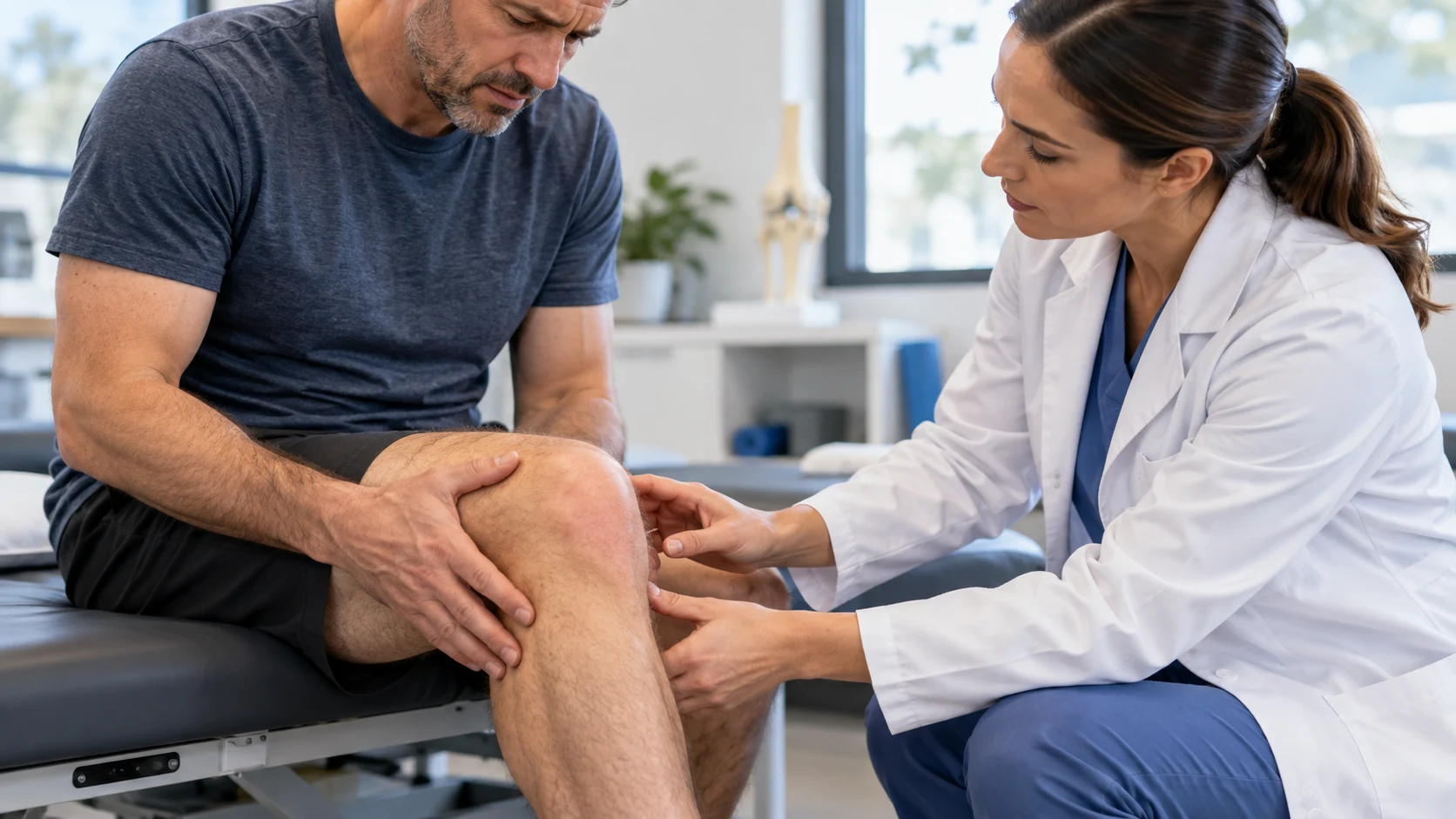
The knee is one of the most common locations for joint effusion because it handles substantial forces during walking, running, squatting, and sports. A small amount of extra fluid may develop after overuse, a minor injury, arthritis, meniscus irritation, or other problems inside the knee.
You may notice fullness around the kneecap or mild stiffness when bending and straightening the leg. Larger effusions can make the knee visibly swollen, but small ones may be difficult to see. Comparing both knees can occasionally reveal subtle differences, although visual inspection alone cannot determine the cause.
Mechanical symptoms such as repeated catching or a locked knee deserve additional attention because they may indicate a meniscus problem or another structure interfering with movement. Joint fluid can occur alongside these conditions, but the effusion itself is not usually what physically locks the knee.
Can Exercise Cause a Small Joint Effusion?
Exercise can sometimes contribute to a temporary effusion when a joint experiences more load than it is accustomed to handling. A sudden increase in running distance, squatting volume, jumping, or sports activity may irritate tissues inside the joint. Symptoms may appear later the same day or the following morning.
This does not mean exercise is inherently damaging. Joints normally adapt to regular physical activity, but large increases in workload can exceed current tolerance. Returning to training after a long break can create the same issue because tissues have not yet rebuilt their previous capacity.
If a joint becomes mildly swollen after exercise, reduce the aggravating activity temporarily and monitor how it responds. Continuing to train at full intensity while swelling increases may prolong irritation. Once symptoms settle, rebuild exercise volume gradually instead of immediately returning to the workload that triggered the problem.
Arthritis and Joint Effusion
Arthritis is another common reason extra fluid may appear in a joint. Osteoarthritis can cause changes in cartilage and other joint tissues that occasionally lead to irritation and swelling. Symptoms may include stiffness, aching, reduced movement, or discomfort that becomes more noticeable after activity.
Inflammatory types of arthritis can also produce effusions because the joint lining becomes inflamed. These conditions may cause more pronounced morning stiffness, warmth, or swelling and can involve several joints. Symptoms sometimes fluctuate, with periods of increased inflammation followed by quieter phases.
A small effusion on imaging does not automatically prove arthritis is the source of pain. Many joint changes can appear on scans without causing significant symptoms. Clinical evaluation helps connect imaging findings with the person’s actual pain pattern, movement limitations, and medical history.
Injury-Related Joint Effusion
Ligament sprains, meniscus injuries, cartilage irritation, and fractures can all produce fluid inside a joint. The timing of swelling can sometimes provide useful clues. Rapid swelling after significant trauma may indicate a more substantial internal injury and deserves prompt medical evaluation.
Smaller injuries may create slower, less dramatic fluid buildup. A knee or ankle might feel slightly swollen after several hours rather than immediately after the event. You may still be able to walk, although twisting, deep bending, or weight-bearing can remain uncomfortable.
Do not repeatedly test an injured joint with painful movements just to see whether it has improved. Give the area time to settle and avoid activities that clearly increase swelling. Severe pain, inability to bear weight, deformity, or rapidly increasing swelling should be assessed rather than treated only with home care.
Can Infection Cause Joint Effusion?
Joint infection, sometimes called septic arthritis, can produce significant inflammation and fluid inside a joint. The affected joint may become very painful, hot, swollen, and difficult to move. Fever or feeling generally unwell may also occur, although symptoms can vary between individuals.
Infection is much less common than ordinary overuse or arthritis, but it requires prompt treatment because joint tissues can be damaged if infection progresses. A healthcare professional may need to test joint fluid or perform other investigations when infection is suspected.
A small effusion seen on imaging does not automatically mean infection is present. However, swelling combined with significant warmth, redness, fever, or rapidly worsening pain should not be managed only with rest or cold packs. Seek medical care promptly if these symptoms develop.
Simple Relief Tips for a Mild Joint Effusion
For mild symptoms, reduce activities that clearly increase pain or swelling. You do not necessarily need complete bed rest, especially if comfortable movement remains possible. Short walks and gentle daily activity may help maintain mobility while avoiding the heavier loads that irritated the joint.
Cold packs can provide temporary relief when the joint feels swollen or warm. Wrap the cold source in a cloth and apply it for a limited period rather than placing ice directly against the skin. Elevation may also help when swelling affects a lower-limb joint such as the knee or ankle.
Compression can feel supportive for some people, but it should not cause numbness, tingling, or color changes. Home care is most appropriate when symptoms are mild and improving. If the joint repeatedly fills with fluid or becomes progressively more painful, identifying the underlying cause becomes more important.
Gentle Movement and Strengthening
Gentle range-of-motion exercises can help prevent stiffness as swelling settles. Slowly bend and straighten the affected joint through a comfortable range without forcing deeper movement. The goal is to maintain mobility rather than immediately restore maximum range while tissues are still irritated.
Strengthening can be introduced or progressed once movement feels more comfortable. For knee-related effusion, exercises such as straight leg raises, bridges, and controlled sit-to-stands may help maintain lower-body strength. The exact exercises should depend on the injury or condition responsible for the fluid buildup.
Monitor the joint after exercise rather than judging only how it feels during the session. If swelling becomes clearly worse later that day or the following morning, the workout may have been too demanding. Reduce repetitions, resistance, or range and build back gradually.
How Long Does a Small Joint Effusion Last?
The duration depends on the cause. A mild activity-related effusion may settle within several days as irritation decreases, while fluid associated with arthritis, tendon problems, or internal joint injuries may persist longer. Recovery therefore cannot be predicted from the words “small effusion” alone.
Improvement should generally include less stiffness, reduced swelling, and easier movement. The joint may not return to normal immediately, especially after an injury. Gradually increasing activity as symptoms settle is usually more practical than waiting for every sensation to disappear before moving again.
A joint that remains swollen for weeks or repeatedly develops fluid should be evaluated. Recurrent effusion may indicate that an underlying problem continues to irritate the joint. Medical assessment can help determine whether imaging, rehabilitation, medication, or another form of treatment is appropriate.
When Should You Get Medical Help?
Seek medical attention if swelling follows significant trauma and you cannot move or bear weight normally. Rapid swelling, severe pain, deformity, or major instability can indicate a substantial injury. These symptoms deserve evaluation even if you are unsure how much fluid is actually inside the joint.
Prompt care is also important when the joint becomes very red, hot, and painful or when swelling occurs with fever. These symptoms can suggest infection or another inflammatory condition requiring medical treatment. Waiting for severe symptoms to disappear on their own can delay necessary care.
Persistent or recurrent joint effusion should also be assessed when it interferes with walking, exercise, sleep, or daily activities. Locking, repeated giving way, significant weakness, or progressive loss of motion are additional reasons to seek help. The goal is to identify and treat the underlying cause rather than only reducing swelling.
Conclusion
A small joint effusion means there is a small amount of extra fluid within or around a joint. It can develop after overuse, injury, arthritis, inflammation, or other conditions. The finding itself does not always indicate serious damage, particularly when symptoms are mild and gradually improving.
Relief may involve temporary activity modification, cold for comfort, elevation, gentle movement, and gradual strengthening. The best treatment depends on why the fluid developed. Repeatedly pushing through increasing swelling is less useful than adjusting activity and allowing the irritated joint to recover.
Seek medical care for severe pain, major trauma, redness, warmth, fever, recurrent swelling, locking, or difficulty bearing weight. Persistent effusion also deserves assessment. Understanding the cause helps determine whether simple self-care is enough or whether more specific medical or rehabilitation treatment is needed.
FAQs
Is a small joint effusion serious?
Not always. A small effusion can develop from mild irritation or overuse and may improve naturally. Its importance depends on symptoms, the affected joint, and the underlying cause.
What is the most common cause of joint effusion?
Common causes include joint overuse, injury, and arthritis. The exact cause varies by joint and should be interpreted alongside pain, swelling, movement limitations, and recent activity.
Can a small joint effusion go away on its own?
Yes, mild effusions caused by temporary irritation may settle as the joint recovers. Persistent, recurrent, or worsening swelling should be evaluated to identify the underlying problem.
Should I exercise with a joint effusion?
Gentle movement may be appropriate when symptoms are mild, but avoid activities that noticeably increase swelling or pain. Gradually return to harder exercise as joint comfort and movement improve.
When should I worry about fluid in a joint?
Seek medical care for severe pain, rapid swelling, fever, redness, warmth, inability to bear weight, or repeated locking. Persistent or recurrent effusions also deserve professional evaluation.