
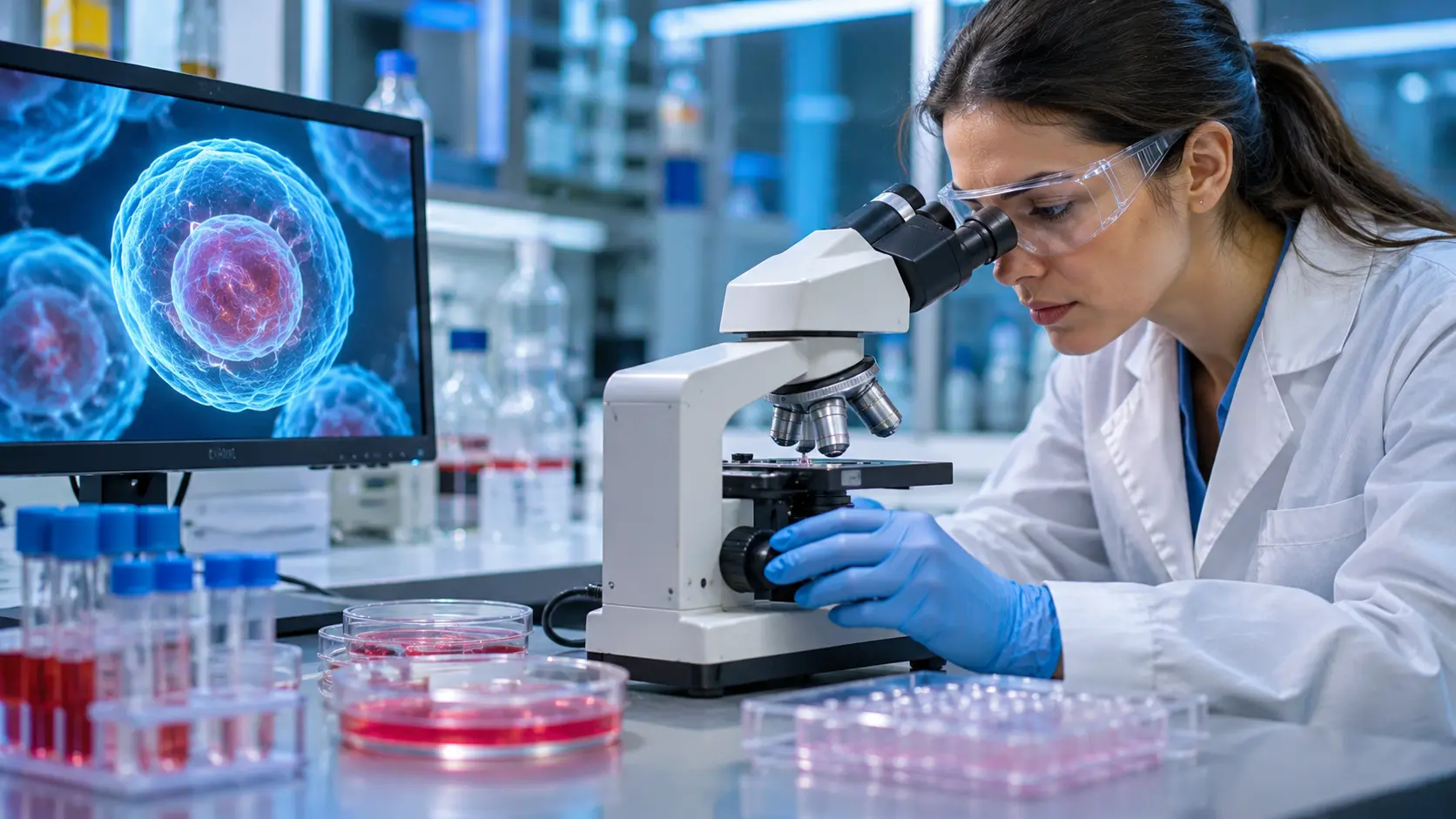
Stem cell research is one of the most promising areas of modern medical science because it helps scientists understand how the human body grows, repairs tissues, and responds to diseases. Researchers study these unique cells to explore new medical treatments, investigate genetic conditions, and improve understanding of human biology. Although many applications are still experimental, the field has already contributed to important advances in medicine.
Understanding what stem cell research is and why it is important helps explain its growing role in healthcare, biotechnology, and regenerative medicine. Stem cells have unusual abilities that distinguish them from most other cells in the body. Scientists use these characteristics to study disease development, evaluate medicines, and investigate ways to replace damaged tissues. This article explains the science, applications, benefits, limitations, and future possibilities of stem cell research.
What Is Stem Cell Research?
Stem cell research is the scientific study of cells that can renew themselves and develop into certain specialized cell types. Researchers investigate how these cells grow, divide, and change their functions under different conditions. This knowledge helps scientists understand normal human development and the biological processes involved in disease. Stem cells are studied in laboratories, clinical research programs, and specialized medical institutions.
Unlike many mature cells, stem cells can produce additional stem cells through a process called self-renewal. They can also undergo differentiation, which allows them to develop into specialized cells under suitable biological conditions. These characteristics make stem cells valuable for investigating tissue development and repair. However, different stem cell types have different abilities and limitations.
Stem cell research includes basic laboratory science, disease modeling, drug testing, and investigations into potential medical treatments. Some applications, particularly blood-forming stem cell transplantation, are already established in clinical medicine. Many other proposed treatments remain experimental and require careful evaluation. Researchers continue studying how stem cells could contribute to safe and effective healthcare improvements.
How Do Stem Cells Work in the Human Body?
Stem cells help maintain certain tissues by producing new cells when existing cells are damaged, worn out, or naturally replaced. This activity is especially important in tissues that undergo frequent renewal. For example, blood-forming stem cells continuously support the production of different blood cells. Their ability to generate specialized cells contributes to normal body function.
The process begins when stem cells receive biological signals that influence their behavior. Depending on their type and environment, they may remain inactive, produce additional stem cells, or develop into specialized cells. Scientists call this transformation differentiation. The process involves complex interactions between genes, proteins, and signals from surrounding tissues.
Not every stem cell can become every type of human cell. Adult stem cells are generally restricted to producing certain related cell types, while pluripotent stem cells have broader developmental potential. Understanding these differences is essential for medical research. Scientists investigate how to control stem cell behavior without producing unwanted or abnormal cell growth.
Different Types of Stem Cells Used in Research
Embryonic stem cells are obtained from early-stage embryos and have the ability to develop into nearly every specialized cell type found in the adult body. Scientists describe this property as pluripotency. These cells provide opportunities to study early human development and cell differentiation. Their use also raises important ethical and regulatory questions.
Adult stem cells, also called somatic stem cells, exist in various tissues throughout the body. They help maintain and repair particular tissues according to their biological functions. Blood-forming stem cells in bone marrow are a well-known example. Other stem cell populations are found in tissues such as the skin and intestine, where regular cellular replacement occurs.
Induced pluripotent stem cells, commonly called iPSCs, are created by reprogramming mature cells into a pluripotent state. Researchers can produce them from certain adult cells, including skin or blood cells. These laboratory-generated cells can be used to study diseases and investigate possible treatments. They also provide an alternative research approach that does not require deriving embryonic stem cells.
Why Is Stem Cell Research Important?
Stem cell research is important because it improves scientific understanding of how human cells develop, function, and respond to disease. Many medical conditions involve damaged, missing, or malfunctioning cells. Studying stem cells helps researchers investigate these problems at a biological level. This knowledge may reveal new approaches to prevention, diagnosis, and treatment.
Another major benefit is the ability to create specialized human cells for laboratory experiments. Scientists can observe how certain diseases affect cells without relying entirely on animal models or direct testing in people. These methods provide valuable information during early medical research. However, laboratory findings still require careful validation before they can guide clinical treatment.
Stem cell research also supports the development of regenerative medicine, which investigates ways to restore damaged tissues or biological functions. Although some applications are established, many remain experimental. Researchers must determine whether new approaches are safe, effective, and suitable for patients. The field’s importance comes from both its current scientific contributions and its potential future benefits.
The Role of Stem Cells in Regenerative Medicine
Regenerative medicine focuses on repairing, replacing, or restoring damaged cells, tissues, and organs. Stem cells are important to this field because certain types can produce specialized cells under controlled conditions. Researchers investigate whether these abilities could help restore functions affected by disease or injury. However, producing functional replacement tissues remains technically challenging.
Blood-forming stem cell transplantation is an established medical application involving the replacement or restoration of blood-forming cells. It is used for certain blood cancers, immune disorders, and other serious conditions. These procedures require specialized medical teams and careful patient evaluation. They also carry significant risks and are not appropriate for every patient.
Researchers are investigating additional possibilities involving heart tissue, nerve cells, cartilage, and other structures. Some experimental approaches aim to replace damaged cells, while others investigate biological signals that influence tissue repair. Most proposed regenerative treatments are not routine medical care. Their safety and effectiveness must be established through rigorous clinical research.
How Stem Cell Research Helps Scientists Understand Diseases
Stem cells allow researchers to study how diseases begin and develop at the cellular level. Scientists can create specialized cells from laboratory-grown stem cells and examine their behavior under controlled conditions. This approach is especially useful when affected tissues are difficult to obtain directly from patients. It provides new opportunities to investigate biological changes associated with illness.
Patient-derived induced pluripotent stem cells are particularly useful for studying inherited conditions. Researchers can reprogram suitable patient cells and develop them into relevant cell types. These laboratory models may help reveal how genetic differences affect cellular function. However, a laboratory model cannot reproduce every feature of a disease within the human body.
Stem cell research has applications in studying neurological disorders, heart disease, diabetes, and certain genetic conditions. Scientists investigate how different cells respond to stress, genetic changes, and experimental treatments. These findings can help identify possible therapeutic targets. Additional research is necessary before laboratory discoveries become reliable medical interventions.
Stem Cell Research and the Development of New Medicines
Developing a new medicine requires extensive research to understand whether it may be useful and safe. Stem cells provide valuable tools for examining how human cells respond to experimental substances. Researchers can create specialized cell models that represent particular tissues or disease processes. These models help scientists investigate potential benefits and harmful effects during early development.
For example, laboratory-grown heart cells may help researchers study how an experimental compound affects cardiac function. Similarly, nerve cells derived from stem cells can support investigations into neurological diseases. These approaches provide information that conventional testing methods may not fully capture. Nevertheless, additional laboratory studies and clinical trials remain necessary.
Stem cell models may also contribute to personalized medicine research. Scientists can study cells derived from individuals with particular genetic characteristics to investigate differences in biological responses. This may eventually help improve treatment selection for certain conditions. However, personalized stem cell testing is not yet a routine solution for predicting every patient’s response to medication.
What Are Organoids in Stem Cell Research?
Organoids are three-dimensional laboratory-grown structures that reproduce selected characteristics of human organs or tissues. Researchers can develop certain organoids using stem cells under carefully controlled conditions. These structures help scientists investigate how cells organize, communicate, and respond to biological signals. They provide useful models for studying aspects of human development.
Scientists have created organoid models representing tissues associated with the brain, intestine, liver, and other organs. These models can help investigate disease mechanisms and evaluate experimental treatments. However, organoids are simplified representations rather than complete replacement organs. Their structures and functions do not fully reproduce the complexity of living human tissues.
Organoid research may improve the study of inherited diseases, infections, and certain forms of cancer. Researchers can compare healthy and diseased tissue models to identify meaningful biological differences. Standardization and reproducibility remain important challenges. Continued improvements could make these systems more reliable tools for biomedical research and early drug development.
Ethical Concerns and Challenges in Stem Cell Research
Stem cell research raises ethical questions, particularly when studies involve human embryonic stem cells. Obtaining these cells can involve the use of early-stage embryos, leading to disagreements about their moral status. Different communities and legal systems approach these questions in different ways. Responsible research requires careful consideration of these perspectives and applicable regulations.
Consent, transparency, and donor privacy are also important ethical responsibilities. Researchers must explain how donated biological materials may be used and follow appropriate institutional requirements. Genetic information associated with donated cells may require additional protections. Clear oversight helps ensure that scientific work respects participants and maintains public trust.
Induced pluripotent stem cells have reduced some concerns because they can be created without obtaining cells from embryos. However, they introduce other ethical questions involving genetic modification, biological models, and possible future applications. International scientific guidelines emphasize responsible research practices. Ethical review remains essential as stem cell technologies become more advanced.
Risks and Limitations of Stem Cell Treatments
Despite their potential, stem cell treatments can involve significant medical risks. Depending on the approach, complications may include infection, immune reactions, abnormal cell development, or unwanted tissue formation. Some transplanted cells may fail to function as intended. Researchers must investigate these possibilities before experimental treatments can be considered appropriate for wider clinical use.
Another challenge is controlling how stem cells develop after they are introduced into a biological environment. Researchers need to ensure that cells reach the intended location, perform suitable functions, and remain stable. Achieving these outcomes can be difficult. A promising laboratory result does not guarantee that a treatment will work safely in people.
Patients should also be cautious about clinics advertising unproven stem cell procedures for numerous unrelated conditions. In the United States, the FDA has warned that many marketed regenerative medicine products lack appropriate approval. Claims about treating arthritis, neurological disorders, or other diseases require reliable evidence. Medical decisions should involve qualified healthcare professionals and appropriately regulated treatments.
The Future of Stem Cell Research and Medical Science
Future stem cell research may expand understanding of human development, inherited diseases, and tissue repair. Scientists are improving methods for producing specialized cells and examining their behavior. Advances in laboratory technology may make disease models more accurate and reproducible. These improvements could support the development of new diagnostic tools and experimental treatments.
Researchers are also studying how stem cells could contribute to advanced tissue engineering. Combining cell biology with biomaterials and carefully designed laboratory environments may help create more sophisticated tissue models. Such systems could improve medical research and eventually support selected therapeutic applications. However, replacing entire complex organs remains a major scientific challenge.
The future of stem cell research will depend on scientific evidence, ethical oversight, and careful clinical evaluation. New treatments must demonstrate meaningful benefits while meeting appropriate safety requirements. Collaboration among researchers, clinicians, regulators, and patients will remain important. Progress may be gradual, but reliable discoveries can contribute significantly to long-term improvements in medicine.
Conclusion
Stem cell research is an important field of medical science that investigates how specialized cells develop and how tissues maintain themselves. Researchers study embryonic, adult, and induced pluripotent stem cells to understand biological processes and disease mechanisms. These discoveries provide valuable foundations for biomedical research. They also create opportunities to investigate new approaches to healthcare.
The importance of stem cell research extends beyond the possibility of future treatments. Stem cell models help scientists investigate diseases, evaluate experimental medicines, and understand cellular development. Established blood-forming stem cell transplantation demonstrates that certain clinical applications already exist. However, many other therapies remain experimental and require further evidence.
As scientific methods improve, stem cell research may contribute to more effective medical technologies and a deeper understanding of human health. Responsible progress requires careful testing, transparent communication, and strong ethical standards. Researchers must distinguish promising discoveries from proven clinical treatments. With continued investigation, stem cell science can remain an important part of modern medicine.
Frequently Asked Questions
What is stem cell research in simple words?
Stem cell research is the study of special cells that can renew themselves and develop into certain other cell types. Scientists investigate these abilities to understand human development, study diseases, and explore potential medical treatments.
Why is stem cell research important in medicine?
Stem cell research helps scientists understand disease processes, test experimental medicines, and investigate tissue repair. It has contributed to established blood-forming stem cell treatments and supports research into additional medical applications.
What are the three main types of stem cells?
The three commonly discussed types are embryonic stem cells, adult or somatic stem cells, and induced pluripotent stem cells. Each has different characteristics, developmental abilities, and applications in biomedical research.
Can stem cells cure every disease?
No. Stem cells are not a universal cure, and many proposed treatments remain experimental. Certain blood-forming stem cell transplants are established, but other applications require additional evidence of safety and effectiveness.
Is stem cell research safe and ethical?
Stem cell research can be conducted responsibly under appropriate scientific and ethical oversight. However, safety depends on the specific research or treatment, and some methods raise ethical questions requiring careful review and regulation.