
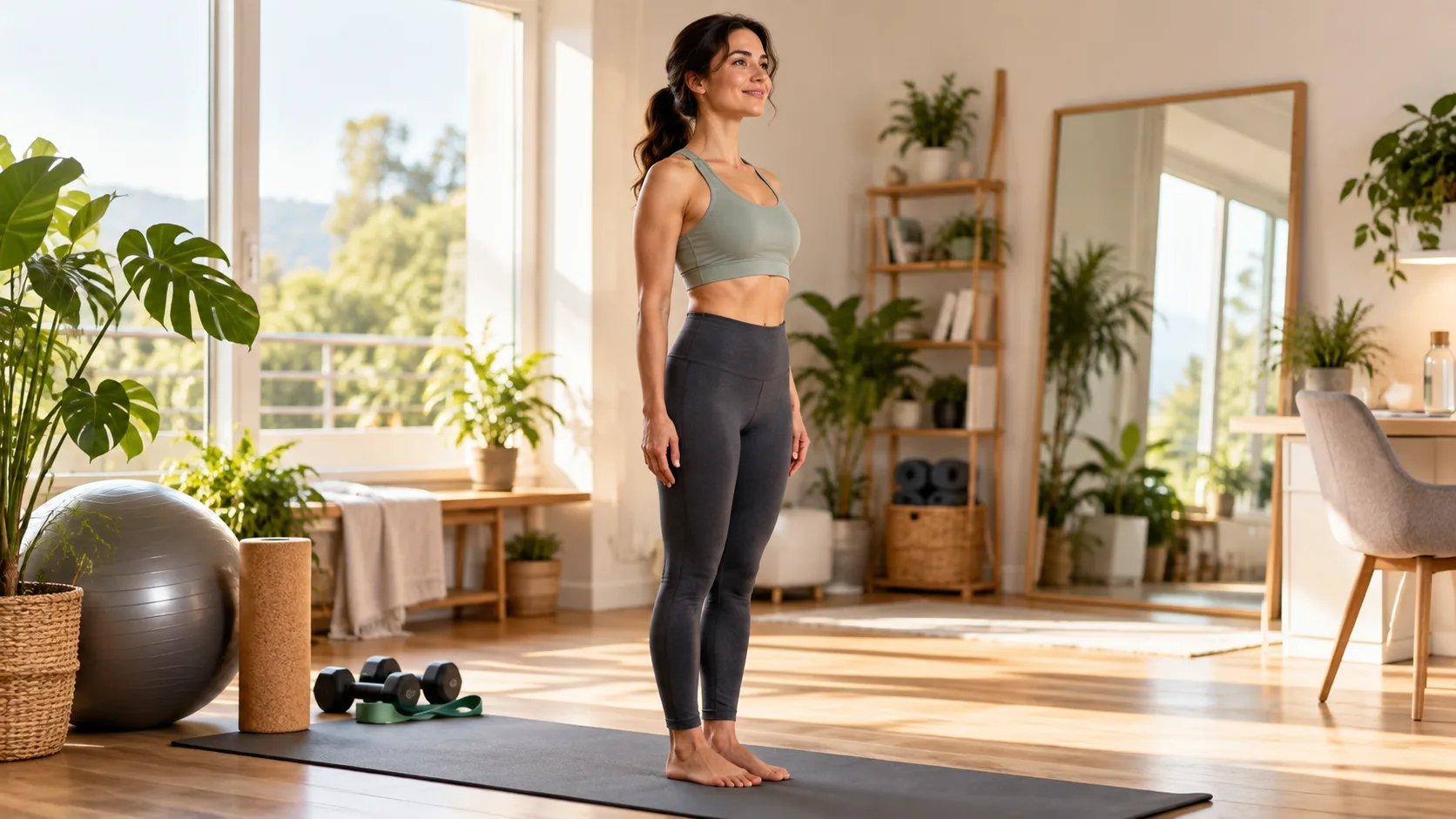
What Does Good Posture Really Mean?
Good posture does not mean holding your body perfectly straight or forcing your shoulders backward all day. It generally means arranging your head, shoulders, spine, pelvis, and limbs in positions that feel comfortable and allow efficient movement. Healthy posture can change throughout the day depending on whether you are sitting, standing, walking, working, exercising, or relaxing.
Your body is designed to move rather than stay in one position for hours. Even a posture that looks ideal can become uncomfortable if you hold it too long without changing position. This is why improving posture usually involves developing better movement habits, strength, mobility, and awareness rather than trying to maintain one rigid position.
Individual anatomy also influences posture. Height, body proportions, joint shape, previous injuries, muscle strength, work demands, and daily habits can all affect how someone naturally sits or stands. The goal should be comfortable, adaptable posture that supports everyday activities instead of trying to copy one perfect alignment from a picture.
Why Improving Posture Can Be Helpful
Improving posture can make everyday activities feel more comfortable by distributing physical load more efficiently. When your body is supported well, muscles do not need to work unnecessarily hard to hold certain positions. This may help reduce feelings of fatigue or stiffness during desk work, standing, driving, studying, or other activities performed for long periods.
Better postural awareness can also improve movement quality during exercise. Squats, lifting, walking, and other activities require coordinated movement between the trunk, hips, shoulders, and limbs. Learning to control your body through comfortable positions can make these movements feel more stable and may reduce unnecessary compensation when exercise becomes more demanding.
Posture also influences how easily you can change position throughout the day. Someone who develops strength and mobility may find it easier to move from sitting to standing, reach overhead, or walk comfortably. The greatest benefit often comes from becoming more adaptable rather than trying to eliminate every small slouch, curve, or asymmetry.
How to Improve Sitting Posture
Start by adjusting your chair so your feet can rest comfortably on the floor or a stable foot support. Your knees and hips do not need to form a perfect angle, but the position should feel supported and relaxed. Sit far enough back that the chair supports you instead of constantly holding your torso upright with muscular effort.
Position your computer screen roughly in front of you so you do not repeatedly rotate or tilt your neck to one side. The top portion of the screen can sit around eye level, although personal comfort and screen size may require adjustment. Keep frequently used items close enough that you are not constantly reaching forward from the shoulders.
Most importantly, change position regularly. Leaning back, sitting upright, standing, or briefly walking are all reasonable options throughout the workday. Instead of trying to maintain one “perfect” seated posture for eight hours, aim to avoid spending extremely long periods in any single position without movement.
How to Improve Standing Posture
When standing, distribute your weight comfortably through both feet rather than constantly leaning heavily onto one leg. Keep the knees relaxed instead of locking them rigidly backward. Your pelvis and rib cage should feel naturally stacked without aggressively tucking the tailbone or lifting the chest as high as possible.
Allow your shoulders to remain relaxed instead of pulling them down and backward with constant muscular effort. The head can sit naturally over the trunk rather than being pushed forward or held stiffly backward. Small adjustments are usually enough because posture should feel sustainable rather than like an exercise you must consciously maintain every second.
If you stand for work, movement is just as important as alignment. Shift your weight, take short walks, or place one foot briefly on a low support if that feels comfortable. Even good standing posture can become tiring when maintained without breaks, so regular position changes are an important part of reducing stiffness.
Strengthen Your Core for Better Postural Control
Your core includes abdominal muscles, back muscles, the diaphragm, pelvic floor, and other structures that help control the trunk. Strong core muscles can support posture during sitting, standing, lifting, and exercise. However, improving posture does not require holding your stomach tightly or bracing your abdomen throughout the entire day.
Exercises such as dead bugs, bird dogs, planks, carries, and controlled resistance training can help develop trunk strength. Begin with variations that allow you to breathe naturally and maintain comfortable control. Progress gradually by increasing repetitions, resistance, or difficulty rather than choosing advanced exercises before you can perform the basics well.
Core training works best when combined with full-body strengthening. The trunk does not function independently from the hips, shoulders, and legs during daily movement. Squats, rows, presses, and hinge exercises can all challenge postural control while simultaneously building strength throughout the rest of the body.
Strengthen Your Upper Back and Shoulders
Upper-back strength can be particularly helpful for people who spend long hours at a desk or working with their arms in front of them. Rows, band pull-aparts, face pulls, and other pulling exercises train muscles around the shoulder blades. These muscles help control the shoulders during reaching, lifting, and many other everyday movements.
You do not need to force your shoulder blades together throughout the day to improve posture. In fact, the shoulders are meant to move freely as your arms move. Strength training gives these muscles greater capacity to support different positions rather than teaching you to hold one fixed shoulder position indefinitely.
Balanced upper-body training should also include pushing movements such as presses or push-ups when appropriate. The goal is not simply to strengthen the back while avoiding the chest. Training multiple movement patterns can help build a stronger, more adaptable upper body that handles work, exercise, and daily activities more comfortably.
Improve Hip Mobility and Lower-Body Strength
The hips influence the position of the pelvis and trunk during sitting, standing, and walking. Long periods of inactivity can make some people feel stiff around the hips, particularly when they first stand after sitting. Gentle mobility exercises such as hip rotations, lunges, or controlled stretches may help restore comfortable movement.
Strength is just as important as flexibility. Squats, split squats, bridges, step-ups, and deadlift variations can strengthen the glutes and surrounding hip muscles. Stronger hips can help support the pelvis during standing and walking while reducing the need for other areas of the body to compensate unnecessarily.
Your posture during movement is closely connected to how you walk. Understanding your walking gait can help explain how the hips, pelvis, trunk, and legs coordinate during each step. Improving lower-body control can therefore support both stationary posture and comfortable movement throughout the day.
Stretch Tight Areas Without Overdoing It
Stretching can feel helpful when certain areas become stiff after prolonged sitting or repetitive activity. Common targets include the chest, hip flexors, calves, and upper back, depending on where you personally feel restricted. Move gradually into each stretch and stop at a mild or moderate pulling sensation rather than forcing your body into a painful position.
It is important to remember that feeling tight does not always mean a muscle is physically shortened. Fatigue, weakness, stress, repetitive activity, and prolonged positioning can all create a sensation of tightness. Stretching may temporarily improve comfort, but strengthening or changing daily habits may provide better long-term improvement when stiffness repeatedly returns.
A few minutes of mobility performed regularly can be more practical than occasional long stretching sessions. Combine gentle stretches with movement through comfortable ranges, such as arm circles, thoracic rotations, or bodyweight squats. Posture generally responds better to a balanced combination of mobility and strength than to flexibility exercises alone.
Take More Movement Breaks During the Day
Frequent movement breaks are one of the simplest ways to improve how your body feels during prolonged desk work. Standing up, walking briefly, or changing position every so often can interrupt long periods of inactivity. You do not need an elaborate stretching routine each time; even a few minutes of ordinary movement can be useful.
Movement breaks also reduce the pressure to maintain perfect posture at your desk. If you know you will change position regularly, you can sit more comfortably instead of constantly monitoring every angle of your spine. This makes posture improvement more realistic and sustainable for people who work or study for many hours.
Consider connecting movement breaks to existing habits. Stand when taking a phone call, walk after finishing a task, or stretch briefly when refilling your water. Small actions repeated throughout the day can create more total movement than relying on one workout to compensate for many uninterrupted hours of sitting.
Set Up Your Workspace to Support Better Posture
A comfortable workspace should allow you to perform your job without repeatedly reaching, twisting, or looking down for long periods. Place the monitor, keyboard, mouse, and other commonly used items where they can be accessed easily. Small ergonomic adjustments can make a noticeable difference during long work sessions.
Laptop users may struggle because the keyboard and screen are connected. Raising the laptop screen can improve viewing height, but using an external keyboard and mouse may then be necessary for comfortable arm positioning. The best setup depends on your equipment, desk height, chair, and how long you typically work at the computer.
Ergonomics should support movement rather than lock you into one position. A standing desk can be useful, but standing continuously is not automatically better than sitting. Switching between sitting, standing, and walking is often more comfortable than replacing one prolonged static posture with another.
How Posture Changes During Walking and Exercise
Posture should adapt naturally when you move. During walking, your pelvis rotates slightly, your arms swing, and your spine responds to each step. Trying to hold the body completely rigid can interfere with normal movement, so good posture during activity should allow controlled motion rather than attempting to eliminate it.
During strength training, posture becomes specific to the exercise. A squat, deadlift, overhead press, and row each require different joint positions. Instead of trying to maintain one universal posture, focus on controlling the movement, using an appropriate range, and keeping the exercise comfortable for your individual anatomy.
The same principle applies during running, sports, and recreational activity. Fatigue can gradually change movement patterns, particularly during longer sessions. Building strength, endurance, and technical skill can help you maintain efficient movement without constantly thinking about keeping every joint in a supposedly perfect position.
Common Posture Mistakes to Avoid
One common mistake is trying to sit or stand unnaturally straight all day. Constantly pulling the shoulders backward, tightening the abdomen, or squeezing the glutes can create unnecessary muscular fatigue. Good posture should allow you to breathe and move comfortably instead of feeling as though you are maintaining a military stance.
Another mistake is believing that every ache is caused by poor posture. Neck, shoulder, or back pain can be influenced by stress, sleep, training load, injury, general health, and many other factors. Posture may contribute in some situations, but changing how you sit is not always enough to solve persistent pain.
People also sometimes buy multiple posture devices without changing their daily habits. Braces, special chairs, and wearable reminders may increase awareness temporarily, but they do not replace strength, mobility, movement breaks, and gradual behavior changes. A practical routine that you can maintain is usually more valuable than depending completely on a device.
When to Get Professional Help for Posture Problems
Consider speaking with a physiotherapist or other qualified healthcare professional if posture-related discomfort persists despite reasonable changes to your activity and workspace. A professional can assess joint mobility, strength, movement patterns, and symptoms. This can help identify whether your discomfort is actually related to posture or another underlying issue.
Seek medical advice when pain is severe, worsening, or accompanied by numbness, weakness, loss of coordination, or symptoms that travel into an arm or leg. These features may indicate nerve involvement or another condition that requires assessment. Posture exercises alone should not be relied on when neurological symptoms are significant.
You should also get help if discomfort consistently interferes with work, sleep, exercise, or normal daily tasks. Individual guidance can make it easier to choose appropriate exercises and modifications rather than experimenting with random posture corrections. The goal should be improving function and comfort, not achieving a visually perfect body position.
Conclusion
Improving posture is less about forcing your body into one perfect position and more about building strength, mobility, awareness, and better movement habits. Comfortable sitting and standing positions are useful, but regular changes in position are equally important. The human body generally responds better to varied movement than to prolonged stiffness.
Strengthen the core, upper back, hips, and legs while also addressing areas that feel restricted. Adjust your workspace, take regular movement breaks, and practice comfortable alignment during everyday activities. Small improvements performed consistently are often easier to maintain than trying to completely transform your posture overnight.
If pain, numbness, weakness, or significant movement problems continue, professional assessment may be appropriate. Posture is only one factor that can influence physical comfort. A balanced approach that combines movement, strength, appropriate ergonomics, recovery, and medical guidance when necessary is usually the most practical strategy.
FAQs
How long does it take to improve posture?
Postural habits can begin changing within several weeks, but strength and movement improvements take time. Progress depends on consistency, daily activity, exercise, workspace habits, mobility, and how long your previous movement patterns have been present.
What exercises are best for improving posture?
Rows, dead bugs, bird dogs, squats, bridges, carries, and other controlled strength exercises can be useful. The best routine strengthens the trunk, hips, upper back, and shoulders while also addressing individual mobility limitations.
Should I keep my shoulders back all day?
No. Your shoulders should move naturally rather than being forced backward continuously. A comfortable, relaxed position combined with regular movement is generally more sustainable than constantly squeezing the shoulder blades together.
Can poor posture cause back pain?
Posture can influence discomfort in some people, but back pain usually has multiple possible contributors. Activity level, strength, sleep, stress, previous injuries, and overall health can also influence symptoms.
Is sitting up straight enough to fix posture?
No. Improving posture involves more than sitting upright. Regular movement, strength training, mobility, workspace adjustments, and changing positions throughout the day are all useful for building more comfortable and adaptable postural habits.