
What Is Gait?
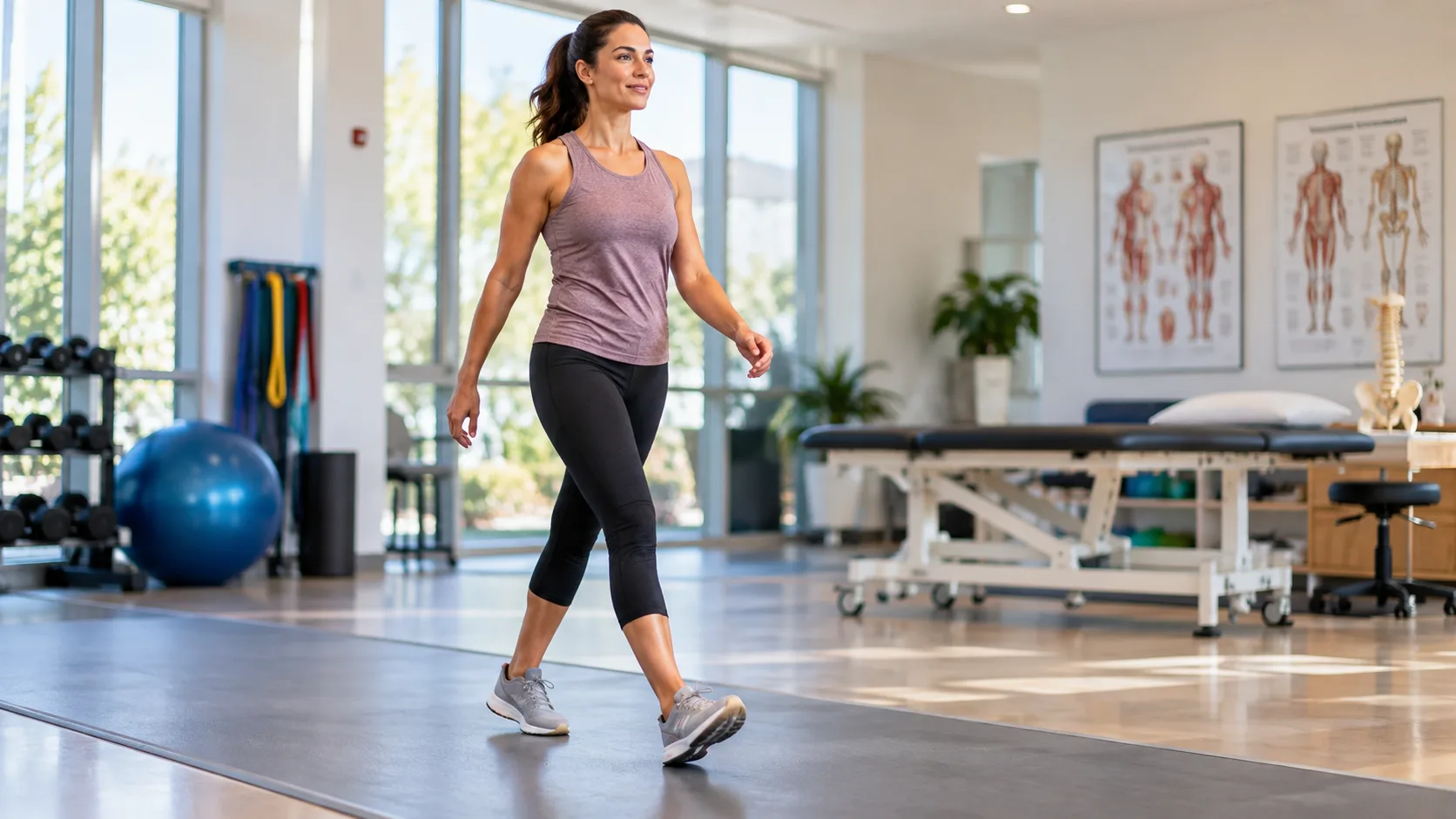
Gait is the pattern of movement a person uses when walking or running. It describes how the feet, legs, hips, pelvis, and upper body work together to move the body forward. Everyone has a slightly different gait, influenced by anatomy, strength, flexibility, balance, speed, habits, footwear, and the surface they are moving across.
Walking gait may look simple, but it requires coordinated activity across many muscles and joints. One leg supports the body while the other swings forward, then the roles reverse with each step. The brain, spinal cord, nerves, muscles, and sensory systems continuously communicate to maintain balance and adapt movement to the environment.
Healthcare professionals sometimes analyze gait when someone has pain, weakness, balance problems, or difficulty walking normally. Changes in gait can provide clues about how different parts of the body are functioning. However, not every unusual walking pattern represents a medical problem because natural variation between individuals is common.
How the Normal Walking Gait Cycle Works
The gait cycle begins when one foot contacts the ground and continues until the same foot touches down again. During that time, the leg moves through two broad phases called the stance phase and swing phase. These phases are further divided into smaller stages that describe how the body absorbs impact, supports weight, and prepares for the next step.
The stance phase occurs while the foot remains in contact with the ground. It begins with initial contact, continues as body weight moves over the foot, and ends as the toes leave the ground. This portion of walking takes up more of the gait cycle because the leg must support body weight and help move the body forward.
The swing phase begins once the foot leaves the ground. The hip and knee bend to help clear the foot while the leg travels forward, then the knee gradually straightens to prepare for the next contact. Smooth walking depends on the timing between these phases on both sides of the body.
What Muscles Are Used During Gait?
Walking involves many muscle groups rather than one dominant muscle. The glutes help stabilize the pelvis and extend the hip, while the quadriceps control the knee as weight moves onto the leg. Hamstrings assist with hip movement and control the leg during the later part of the swing phase before the foot reaches the ground.
The calf muscles are especially important during push-off. They help control forward movement over the foot and generate force as the heel lifts and the toes prepare to leave the ground. Muscles around the shin also help lift and position the foot so the toes can clear the floor during the swing phase.
Core and trunk muscles provide stability while the arms move naturally in the opposite direction of the legs. Even the upper body contributes to efficient walking by balancing rotational forces. This demonstrates why gait is considered a whole-body movement pattern rather than simply a sequence of steps produced by the legs.
Why Arm Swing Matters When You Walk
Natural arm swing helps balance the movement created by the legs and pelvis. As the right leg moves forward, the left arm normally moves forward, creating a coordinated counter-rotation through the trunk. This pattern can make walking smoother and may reduce the amount of unnecessary rotation required elsewhere in the body.
Arm swing can change when someone walks faster, carries an object, experiences pain, or has reduced shoulder mobility. Small differences between sides are common and may not indicate a problem. More noticeable changes become relevant when they appear suddenly or occur alongside weakness, balance difficulty, or other neurological symptoms.
Walking also depends on coordination throughout the entire upper limb and hand. Even small structures contribute to overall movement and daily function, as explained in this guide to pinky finger function. While the finger does not directly control gait, the example highlights how coordinated movement involves many body regions working together.
What Is Considered a Normal Gait?
A typical gait usually appears smooth, balanced, and relatively symmetrical from one step to the next. The feet clear the ground, the body moves forward steadily, and weight shifts comfortably between the legs. The exact appearance varies because height, limb length, walking speed, age, body structure, and personal habits influence how each person moves.
Normal gait does not require perfect symmetry. One foot may turn slightly differently, arm swing may vary, and step length may not be exactly identical on both sides. These differences can exist without pain or functional problems, particularly when they have been present for many years and do not interfere with normal activity.
A gait pattern becomes more concerning when it changes noticeably, causes repeated stumbling, or develops alongside pain, weakness, numbness, or poor balance. In those cases, the goal is not necessarily to make walking look perfectly symmetrical. Instead, assessment focuses on finding the reason movement has changed and whether treatment is needed.
Common Types of Abnormal Gait
An antalgic gait develops when someone changes the way they walk to reduce pain. The person may spend less time standing on the painful leg and take shorter steps on the opposite side. This pattern can occur with injuries or conditions affecting the foot, ankle, knee, hip, or other weight-bearing structures.
A Trendelenburg-type gait may occur when the muscles responsible for stabilizing the pelvis are unable to control it effectively during single-leg support. The pelvis may drop on one side, and the trunk may shift to compensate. Hip weakness is one possible contributor, but a complete assessment is needed because several conditions can affect pelvic stability.
Other patterns include steppage gait, where the knee lifts higher to help clear the foot, and shuffling gait, where steps become shorter and the feet may remain closer to the floor. Abnormal gait patterns can have orthopedic, neurological, muscular, or balance-related causes, so appearance alone does not establish a diagnosis.
What Can Cause Changes in Gait?
Pain is one of the most common reasons people change the way they walk. An ankle sprain, knee irritation, hip discomfort, or back problem may cause someone to shorten a step or shift weight away from one side. These changes can happen automatically as the body tries to avoid movements that increase discomfort.
Muscle weakness, reduced joint mobility, poor balance, and nerve problems can also affect gait. For example, weakness around the hip may influence pelvic control, while limited ankle movement may change how the body travels over the foot. Nerve-related problems can affect sensation, muscle control, or the ability to lift the foot properly.
Environmental factors matter as well. Uneven ground, slippery surfaces, poorly fitting shoes, fatigue, and carrying heavy objects can temporarily alter walking mechanics. A gait change that appears only in one situation may have a different explanation from a pattern that occurs consistently during normal daily walking.
How Age Can Affect Gait
Gait naturally changes throughout life. Young children often walk with shorter steps and a wider base while balance and coordination continue developing. As strength, nervous system control, and confidence improve, walking generally becomes smoother and more efficient during childhood.
Older adults may gradually develop shorter steps, slower walking speed, or a slightly wider stance. These changes can reflect normal adaptations related to strength, balance, vision, reaction time, and confidence. They do not automatically indicate disease, although sudden or substantial changes should still be evaluated.
Maintaining strength, mobility, and regular physical activity can support walking ability with age. Exercises that challenge the legs, hips, calves, and balance may help people remain confident during everyday movement. Walking itself is valuable, but including resistance and balance training can address abilities that ordinary walking may not challenge enough.
How Footwear and Surfaces Affect Your Gait
Shoes can change how the foot contacts the ground and how forces move through the lower body. Heel height, cushioning, stiffness, weight, and fit may all influence walking mechanics. People often adapt naturally to different shoes, but a major footwear change can temporarily make movement feel unfamiliar or uncomfortable.
Walking barefoot may produce a different step pattern than walking in thick or rigid shoes. Similarly, hiking boots, athletic shoes, sandals, and formal footwear each create slightly different conditions for the feet and ankles. Comfort and suitability for the activity are generally more useful considerations than trying to find one universally perfect shoe.
Surfaces also influence gait. People may shorten their steps on ice, widen their stance on uneven trails, or walk differently on sand compared with pavement. These adjustments demonstrate how adaptable gait can be, because the nervous system continuously responds to information from the eyes, joints, skin, and inner ear.
What Is Gait Analysis?
Gait analysis is the process of observing and sometimes measuring how a person walks or runs. A basic assessment may involve watching the person from different angles while examining step length, balance, joint movement, foot position, and trunk control. More advanced testing can use video, pressure plates, motion sensors, or specialized laboratory equipment.
Physiotherapists, sports professionals, podiatrists, doctors, and other specialists may use gait analysis for different purposes. Someone recovering from an injury may be assessed to identify protective movement patterns, while an athlete may be evaluated for performance-related reasons. Neurological assessments may focus on balance, coordination, weakness, or changes in muscle control.
Gait analysis should be interpreted in context rather than treating every variation as a defect. A movement pattern that looks unusual may be completely comfortable and efficient for one person. The most useful assessment combines visual findings with symptoms, strength, mobility, medical history, and the person’s actual functional goals.
Can Exercises Improve Your Gait?
Exercise may improve gait when weakness, poor balance, reduced mobility, or low confidence contributes to walking difficulty. Strengthening the glutes, quadriceps, calves, and trunk can improve the body’s ability to support weight and control each step. The specific exercises should match the underlying limitation rather than following the same routine for everyone.
Balance exercises can also be useful because walking repeatedly places the body on one leg for brief periods. Single-leg stands, step-ups, controlled reaches, and other stability drills may help improve confidence and coordination. Difficulty should increase gradually so the exercises remain challenging without creating unnecessary risk of falling.
Mobility work may be added when restricted joint movement affects step length or foot clearance. Ankle, hip, and thoracic mobility can all influence the way someone walks. However, stretching alone is unlikely to correct every gait problem, particularly when the main issue involves strength, pain, neurological function, or balance.
How Running Gait Differs From Walking Gait
Running and walking share many movement principles, but their gait cycles are different. During walking, at least one foot remains in contact with the ground at all times. Running includes a flight phase when both feet temporarily leave the ground, which increases the demand on muscles, tendons, joints, and balance.
Running also involves greater forces and usually requires more rapid muscle activity. The hips, knees, ankles, and trunk must repeatedly absorb and generate force at higher speeds. Step length, cadence, foot strike, and body position may all change depending on pace, terrain, fatigue, footwear, and individual running style.
There is no single running gait that is perfect for everyone. Different successful runners use different foot strikes, cadences, and body positions. Technique changes are most useful when they address a specific problem or goal rather than trying to make every runner copy one standardized movement pattern.
When Should You Get Help for a Gait Change?
A sudden unexplained change in walking deserves attention, particularly when it occurs alongside weakness, numbness, dizziness, severe pain, or loss of balance. New difficulty lifting a foot, repeated falls, or an inability to walk normally should be assessed promptly. These symptoms can sometimes indicate a neurological or musculoskeletal problem requiring medical evaluation.
Gradual changes should also be evaluated when they interfere with everyday activities. If walking becomes increasingly painful, tiring, or unstable, a healthcare professional can examine strength, sensation, joint movement, balance, and other possible contributors. Early assessment may help identify treatable problems before they create greater limitations.
Emergency care may be necessary when gait suddenly changes together with symptoms such as facial weakness, speech difficulty, severe dizziness, sudden one-sided weakness, or loss of coordination. These can be signs of a serious neurological event. In such situations, walking changes should not be treated simply as a posture or exercise problem.
Conclusion
Gait is the coordinated pattern the body uses to walk or run. It depends on communication between the brain, nerves, muscles, joints, balance systems, and sensory information from the environment. Each step includes carefully timed phases that allow the body to support weight, move forward, and prepare for the next contact.
Everyone’s gait is slightly different, and small variations are usually normal. Pain, weakness, injury, neurological conditions, footwear, surfaces, fatigue, and age can all influence walking patterns. Gait assessment becomes particularly useful when a change causes symptoms, instability, repeated falls, or difficulty performing normal daily activities.
Strength, balance, mobility, and appropriate rehabilitation can improve walking in many situations, but treatment should address the actual cause. Sudden or significant gait changes deserve medical attention, especially when neurological symptoms are present. Understanding how gait works can make it easier to recognize what is normal and when additional help may be needed.
FAQs
What does gait mean?
Gait means the pattern or manner in which a person walks or runs. It includes the coordinated movement of the feet, legs, hips, pelvis, trunk, and arms during each step.
What are the two main phases of gait?
The two main phases are stance and swing. During stance, the foot is on the ground supporting weight, while during swing, the same leg moves forward in preparation for the next step.
What causes an abnormal gait?
Abnormal gait can result from pain, injury, muscle weakness, limited mobility, neurological problems, poor balance, or joint conditions. Temporary changes can also occur because of fatigue, footwear, or uneven surfaces.
Can gait be improved with exercise?
Yes, when weakness, balance, or mobility limitations contribute to the problem. Strengthening, balance exercises, and appropriate mobility work can improve walking ability when they are matched to the underlying cause.
When should I worry about a change in gait?
Seek medical assessment for sudden gait changes, repeated falls, severe pain, weakness, numbness, or difficulty walking normally. Sudden walking problems with speech changes or one-sided weakness require urgent medical attention.