
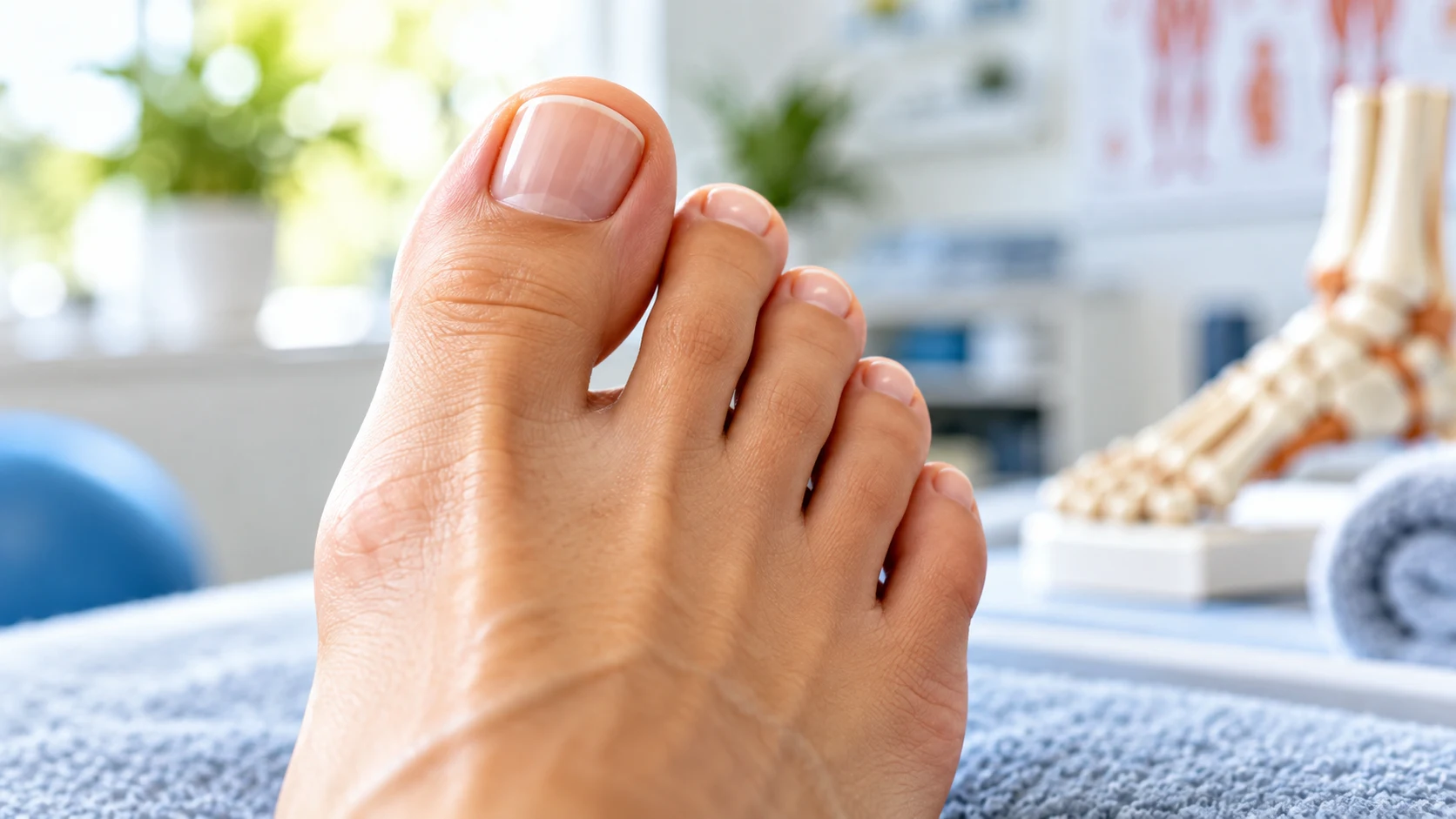
What Is the Big Toe?
The big toe is the largest toe on the foot and is medically known as the hallux. Unlike the other toes, which usually contain three small bones, the big toe has two phalanges. Despite its simple structure, it plays an important role in balance, walking, running, standing, and transferring force through the foot during everyday movement.
The big toe connects to the first metatarsal bone through the first metatarsophalangeal joint, often shortened to the first MTP joint. This joint allows the toe to bend upward and downward as you move. Several muscles, tendons, ligaments, nerves, and small sesamoid bones around the joint help control movement and provide stability.
Because the big toe handles considerable pressure during walking and other weight-bearing activities, discomfort can noticeably affect how you move. Pain, stiffness, swelling, or weakness may cause you to shift pressure toward the outside of the foot. Understanding the toe’s function can help explain why even a small problem sometimes makes walking surprisingly uncomfortable.
Why Is the Big Toe Important for Walking?
During normal walking, your body weight moves forward across the foot before you push away from the ground. The big toe helps create a stable platform during this final push-off phase. As the heel rises, the big toe bends upward and helps the foot transfer force efficiently into the next step.
If the big toe cannot bend comfortably, you may naturally shorten your stride or rotate the foot outward to avoid the restricted movement. These compensations can occur without conscious effort. They may not always cause problems, but significant stiffness or pain can make walking less efficient and increase pressure on other areas of the foot.
The big toe also contributes to stability while the body passes over one foot. This becomes particularly important when walking quickly, climbing stairs, or moving uphill. Although the toe is small compared with the hip or knee, its position at the front of the foot makes it important during the final part of each step.
How the Big Toe Helps With Balance
Balance depends on information and control from several parts of the body, including the feet. The big toe helps create contact with the ground and provides sensory feedback about pressure and position. This information contributes to the nervous system’s ability to make small adjustments while you stand, walk, or change direction.
When standing on one leg, the toes may press gently into the floor as the body shifts. The big toe can help control these subtle movements along the inside of the foot. Limited strength, sensation, or comfort in the toe may make certain balance tasks feel less secure, although many other muscles and systems also contribute.
Balance should therefore be viewed as a whole-body skill rather than something controlled by the toes alone. The ankles, hips, trunk, vision, and inner ear all play important roles. Strengthening these areas alongside the foot can create a more complete approach to improving stability during daily activities and exercise.
Common Causes of Big Toe Pain
Big toe pain can develop from injury, overuse, joint irritation, poorly fitting footwear, or certain medical conditions. The discomfort may appear around the base of the toe, underneath the joint, near the nail, or along the sides. Identifying exactly where pain occurs and what makes it worse can help narrow down possible causes.
An injury can happen when the toe is stubbed, bent backward forcefully, or struck by a heavy object. Running, jumping, sports, and repetitive walking can also irritate tissues around the joint when training increases suddenly. In these cases, pain may be accompanied by swelling, tenderness, bruising, or difficulty pushing through the toe.
Persistent pain can also be associated with arthritis, bunions, gout, tendon problems, or irritation around the sesamoid bones beneath the joint. These conditions require different approaches, so repeated symptoms should not automatically be treated as simple soreness. Professional assessment may be helpful when the cause remains unclear.
Big Toe Stiffness and Limited Movement
Big toe stiffness can make it difficult to bend the toe upward during walking. Some people first notice the problem when climbing stairs, running, lunging, or wearing shoes that require greater movement through the front of the foot. The joint may feel blocked, tight, painful, or less mobile compared with the opposite side.
Arthritic changes in the first MTP joint can contribute to progressive stiffness, sometimes referred to as hallux rigidus. The joint may gradually lose motion and become uncomfortable during activities that require toe extension. Other causes of stiffness can include previous injury, swelling, prolonged immobilization, or irritation around surrounding tissues.
Gentle mobility may help when the joint is mildly stiff and movement is comfortable. However, forcing a painful big toe into deeper ranges is not necessarily helpful. If motion continues to decrease or the joint becomes increasingly swollen and painful, a healthcare professional can assess whether a specific condition is limiting movement.
Bunions and Changes Around the Big Toe
A bunion is a visible bump that develops around the base of the big toe as the first MTP joint changes alignment. The big toe may gradually angle toward the second toe while the joint becomes more prominent. Bunions can vary considerably, and not everyone with a visible bunion experiences significant pain.
Footwear may influence symptoms when tight or narrow shoes place pressure against the prominent joint. Choosing shoes with enough width in the toe box can reduce rubbing and compression. Padding may also provide temporary comfort, although these strategies do not reverse the structural changes that have already developed.
Genetics and foot structure can influence who develops bunions, so they should not simply be blamed on footwear. If a bunion causes persistent pain, limits walking, or makes shoes difficult to wear, medical evaluation can help determine appropriate treatment. Management can range from footwear changes and activity adjustments to surgery in selected cases.
Big Toe Strength and Foot Function
The muscles that control the big toe help support the foot during standing and movement. Some of these muscles originate in the lower leg, while smaller intrinsic muscles begin and end within the foot itself. Together, they help bend, straighten, and stabilize the big toe while you walk or balance.
Simple exercises can challenge these muscles without requiring special equipment. You might practice gently pressing the big toe into the floor while keeping the other toes relaxed, or lifting the big toe while the smaller toes remain down. These movements can be surprisingly difficult because independent toe control is not something most people regularly practice.
Toe strength should complement rather than replace general lower-body training. Calf raises, balance exercises, squats, step-ups, and walking all challenge the foot in more functional ways. Combining specific toe exercises with broader strength work can help improve how the foot contributes to movement rather than treating the big toe in isolation.
How Footwear Affects the Big Toe
Shoes directly influence the amount of space available for the big toe. A narrow toe box can squeeze the toes together, while footwear that is too short may create repeated pressure against the end of the toe. Over time, this can contribute to discomfort, nail irritation, blisters, or sensitivity around the joint.
Shoe stiffness can also change how much the big toe bends during walking. A very rigid sole may limit toe movement, while a highly flexible shoe allows more motion. Neither is automatically better because the most appropriate option depends on comfort, activity, foot structure, and whether the toe is currently painful.
When choosing shoes, make sure your toes have enough room to move without sliding excessively inside the shoe. Pay attention to discomfort rather than choosing footwear based only on appearance. If certain shoes consistently trigger big toe pain, switching to a wider or differently shaped pair may be a simple and useful adjustment.
How the Big Toe Connects to Whole-Body Movement
The big toe is part of a movement chain that extends through the foot, ankle, knee, hip, pelvis, and trunk. During walking, each of these areas contributes to transferring force from the ground through the body. A painful toe may therefore cause someone to change their stride or shift weight without consciously realizing it.
These compensations do not automatically mean that a toe problem will cause pain elsewhere. The body is highly adaptable and can temporarily change movement when needed. However, persistent limping or avoiding one side can make everyday activity less efficient and may increase fatigue when walking for longer periods.
Whole-body movement habits also matter when thinking about alignment. Learning how to improve posture can support awareness of how the feet, hips, trunk, and upper body work together. Good movement involves coordination across several regions rather than trying to position one joint perfectly.
Gentle Exercises for Big Toe Mobility
One simple mobility exercise is to sit comfortably and gently move the big toe upward and downward using your hand. Keep the movement within a comfortable range and avoid forcing the joint. A mild stretch may be acceptable, but sharp pain, pinching, or increasing swelling is a reason to reduce the movement or stop.
You can also practice controlled toe lifts while standing or sitting. Keep the ball of the foot on the floor and slowly lift the big toe before lowering it again. Another variation involves keeping the big toe down while lifting the smaller toes, which can improve awareness and coordination within the foot.
Mobility exercises should be performed consistently rather than aggressively. A few controlled repetitions can be more useful than repeatedly pushing the joint to its limit. If stiffness is caused by arthritis, injury, or another structural problem, exercises may help maintain comfortable motion but may not completely restore the previous range.
How to Protect Your Big Toe During Exercise
Gradually increase activities that place significant pressure on the forefoot. Running, jumping, lunging, climbing, and court sports can all require substantial movement through the big toe. Sudden increases in training volume may irritate tissues that have not yet adapted to the additional stress, even when the activity itself is normally healthy.
Warm up before demanding exercise by walking, performing easy calf raises, and moving the ankles and toes through comfortable ranges. A gradual warm-up can help prepare the feet for faster or heavier movement. Sports that involve sudden direction changes may require additional preparation because the big toe helps control force during acceleration and cutting.
Footwear should also match the activity and provide enough space around the toes. Replace shoes that have become excessively worn, compressed, or uncomfortable. If a particular exercise consistently creates big toe pain, reduce the load temporarily and identify whether technique, footwear, training volume, or an existing joint problem may be contributing.
When to Get Help for Big Toe Problems
Seek medical attention after a significant toe injury if you develop severe swelling, obvious deformity, extensive bruising, or difficulty bearing weight. A fracture, dislocation, or significant joint injury may require imaging or specific treatment. Being able to move the toe slightly does not necessarily rule out a more serious injury.
You should also get help when the big toe becomes suddenly very red, hot, swollen, and extremely painful without an obvious injury. Several medical conditions can cause acute joint inflammation. Because these symptoms may need specific treatment, relying only on ice, stretching, or changing shoes may delay appropriate care.
Persistent pain, increasing stiffness, recurrent swelling, numbness, or difficulty walking also deserves assessment. A healthcare professional can examine the joint, surrounding tissues, footwear, movement, and medical history to identify possible causes. Getting an accurate diagnosis can prevent months of repeatedly treating the wrong problem at home.
Conclusion
The big toe is small but plays an important role in walking, balance, push-off, and overall foot function. Its bones, joints, tendons, muscles, and surrounding tissues help transfer force as the body moves forward. When the toe becomes painful or stiff, even ordinary walking can feel noticeably different.
Maintaining comfortable mobility, adequate strength, suitable footwear, and gradual training progression can support healthy big toe function. Toe-specific exercises may be useful, but they work best alongside general foot, ankle, and lower-body strength. Avoid forcing painful movement simply because you believe the joint needs to become more flexible.
Many minor problems improve with sensible activity changes, but significant or persistent symptoms should not be ignored. Severe swelling, deformity, sudden redness, increasing stiffness, or difficulty walking may require professional care. Understanding how the big toe works can make it easier to recognize when simple self-care is enough and when additional help is appropriate.
FAQs
Why is the big toe important?
The big toe helps support balance, stabilize the front of the foot, and generate force during push-off while walking. It also contributes to running, climbing stairs, and many other weight-bearing activities.
Why does my big toe hurt when I walk?
Pain while walking may result from overuse, injury, arthritis, bunions, footwear pressure, or irritation around the joint. Persistent or worsening symptoms should be assessed to identify the underlying cause.
How can I improve big toe mobility?
Gentle assisted bending, controlled toe lifts, and comfortable foot mobility exercises may help maintain movement. Avoid forcing the joint if exercises cause sharp pain, significant swelling, or worsening symptoms.
Can big toe problems affect the way I walk?
Yes. Pain or stiffness can cause you to shorten your stride, shift weight, or turn the foot differently during walking. These changes often occur naturally as the body tries to avoid discomfort.
When should I see a doctor for big toe pain?
Seek medical help for severe pain, deformity, significant swelling, inability to bear weight, sudden redness and heat, or persistent symptoms. Recurrent pain or progressive stiffness also deserves professional evaluation.