
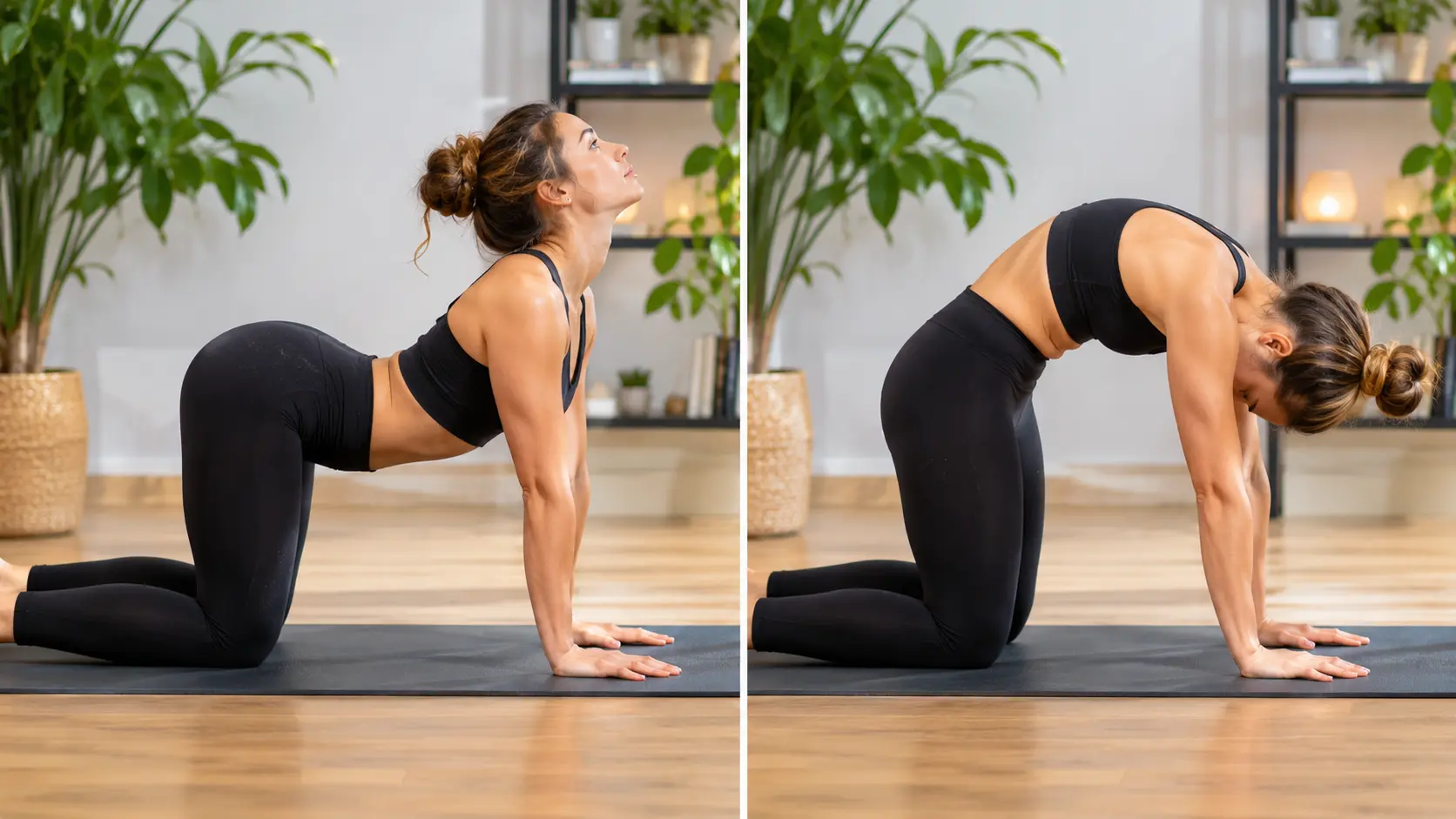
The Cat Cow exercise is a gentle yoga movement that helps improve spinal mobility, release muscle tension, and encourage better body awareness. It involves moving the spine between two comfortable positions while coordinating movement with breathing. Whether you are beginning yoga or looking for a simple stretching routine, learning how to do the Cat Cow exercise correctly can help you move more comfortably.
Also known as Cat-Cow Pose or Marjaryasana-Bitilasana, this exercise is commonly included in yoga sessions, mobility routines, and gentle warm-ups. It requires no special equipment beyond a comfortable surface. This guide explains the correct technique, potential benefits, common mistakes, helpful modifications, and practical ways to include Cat Cow in your daily routine.
What Is the Cat Cow Exercise?
The Cat Cow exercise is a gentle spinal mobility movement performed on the hands and knees. It combines two yoga positions called Cat Pose and Cow Pose. During Cat Pose, the back rounds upward, while Cow Pose involves a comfortable extension of the spine. Moving slowly between these positions encourages awareness of spinal movement.
Cat Cow is commonly used in yoga classes, warm-up sessions, and gentle mobility programs. The exercise involves coordinated movement through the neck, upper back, lower back, and pelvis. It does not require heavy resistance or advanced flexibility. Beginners can generally learn the movement by following simple instructions and staying within a comfortable range.
The main purpose of Cat Cow is to encourage controlled spinal movement rather than achieve an extreme stretch. It can help people become more aware of how their back moves during everyday activities. The exercise also encourages steady breathing and mindful movement. These qualities make it useful in many gentle physical activity routines.
How to Do the Cat Cow Exercise Step by Step
Begin in a tabletop position on a comfortable exercise mat. Place your hands approximately beneath your shoulders and your knees beneath your hips. Keep your arms relaxed but supported, with your fingers spread comfortably against the floor. Start with your spine in a natural position and breathe normally.
<text></text>
To perform Cow Pose, inhale gently while allowing your abdomen to move slightly toward the floor. Lift your chest and tailbone only as far as feels comfortable, creating a gentle curve through your back. Keep your shoulders relaxed and avoid forcing your neck upward. Focus on smooth movement rather than achieving a deep arch.
Next, exhale while gradually rounding your back toward the ceiling to enter Cat Pose. Allow your head to follow the movement naturally without forcing your chin toward your chest. Continue moving between the two positions at a slow, controlled pace. Each repetition should feel comfortable and coordinated with your breathing.
Cat Cow Exercise Benefits for Spinal Mobility
One of the primary benefits of the Cat Cow exercise is its ability to encourage movement through different sections of the spine. Alternating between gentle flexion and extension allows the back to move through a comfortable range. This can be useful after spending long periods sitting. Regular mobility activities may help reduce feelings of stiffness.
Cat Cow also encourages awareness of the relationship between the spine, pelvis, and surrounding muscles. As the back rounds and extends, the pelvis moves with the rest of the body. Learning to coordinate these movements can improve body awareness. This may help people perform other gentle exercises with greater control.
The exercise is sometimes included in programs designed to support general back mobility. However, it should not be considered a treatment for every cause of back pain. Individual conditions require different approaches, and some movements may not be appropriate for everyone. People with persistent or worsening symptoms should seek professional guidance.
How Cat Cow Helps Improve Flexibility and Movement
Cat Cow encourages gentle movement through the spine without requiring advanced yoga experience. The exercise involves controlled changes in spinal position rather than maintaining a demanding stretch. This makes it a practical addition to general mobility routines. Over time, consistent movement practice may help some people feel more comfortable during everyday activities.
The movement also involves the shoulders and hips because they support the tabletop position. While these joints remain relatively stable, they contribute to coordination and balance throughout the exercise. Comfortable positioning allows the spine to move naturally. Maintaining relaxed shoulders can also help prevent unnecessary tension during practice.
Improving flexibility does not require pushing the body into uncomfortable positions. Cat Cow works best when performed slowly and within an easy range of motion. People may notice different amounts of movement from one day to another. Respecting these differences supports a more comfortable and sustainable routine.
Cat Cow Exercise for Lower Back Comfort
Cat Cow is often recommended as a gentle movement for people who experience occasional stiffness in their lower back. The alternating spinal positions encourage controlled movement through the lumbar region and surrounding structures. Some individuals find that this helps them feel less restricted. However, the effects depend on personal circumstances and the reason for discomfort.
When performing Cat Cow for lower back comfort, smaller movements may be more suitable than pronounced spinal curves. Focus on moving smoothly while maintaining relaxed breathing. Avoid forcing the lower back into a deep arch or exaggerated rounding. The exercise should remain comfortable rather than create additional pressure or pain.
People experiencing ongoing back pain should avoid assuming that one exercise will resolve the underlying problem. Some spinal conditions require modified movements or specific rehabilitation plans. If Cat Cow causes pain, tingling, numbness, or worsening symptoms, stop the activity. A qualified healthcare professional can help determine whether the exercise is appropriate.
Cat Cow Exercise for Posture and Body Awareness
Cat Cow can help people become more aware of how their spine moves between rounded and extended positions. This awareness may support better control during everyday activities such as sitting, standing, and reaching. The exercise encourages exploration of comfortable movement rather than forcing the body into one position. Natural posture varies between individuals.
Long periods of sitting can sometimes contribute to feelings of stiffness or fatigue. Gentle movement breaks may help people change position and feel more comfortable. Cat Cow offers one option for introducing movement during the day. However, no single exercise can permanently correct posture or prevent every type of discomfort.
Healthy movement habits involve changing positions regularly and choosing comfortable working arrangements. People should avoid treating a perfectly straight back as the only acceptable posture. The spine naturally moves through different curves throughout daily life. Cat Cow can support familiarity with these movements as part of a varied activity routine.
How to Coordinate Breathing During Cat Cow
Breathing is an important part of the Cat Cow exercise because it helps establish a calm and comfortable movement rhythm. Traditionally, practitioners inhale while moving into Cow Pose and exhale during Cat Pose. This pattern provides a simple way to coordinate spinal movement. However, breathing should remain natural and free from unnecessary strain.
During Cow Pose, inhale gently as the chest opens and the spine extends. During Cat Pose, exhale while allowing the back to round comfortably. Avoid holding your breath or forcing unusually deep breathing. The purpose is to create smooth coordination rather than follow a strict breathing performance target.
People who find the traditional breathing pattern uncomfortable can move more slowly and breathe naturally. It is more important to maintain relaxed breathing than to match every movement perfectly. Mindful attention to the breath may also make the exercise feel calming. This connection between movement and breathing is common in gentle yoga practices.
Common Cat Cow Exercise Mistakes to Avoid
One common mistake is moving too quickly between Cat Pose and Cow Pose. Rapid movements can make it harder to notice spinal position and maintain comfortable control. Slowing down provides time to coordinate breathing and adjust movement. The exercise is intended to feel smooth rather than rushed or forceful.
Another mistake involves exaggerating the curve of the lower back during Cow Pose. Some people attempt to create the deepest possible arch, which may cause discomfort. Instead, allow the spine to extend gently while keeping the shoulders and neck relaxed. A smaller range of motion can still provide meaningful movement.
Poor hand placement can also make the exercise uncomfortable. Placing excessive pressure through the wrists or allowing the shoulders to collapse may create unnecessary strain. Adjust the position of your hands and knees to improve comfort. If the tabletop position remains uncomfortable, consider a suitable supported variation.
Cat Cow Exercise Modifications for Beginners
Beginners can modify Cat Cow by reducing the amount of spinal movement during each repetition. Start with a comfortable tabletop position and explore small changes in back shape. Gradually move between gentle rounding and extension without forcing either position. This approach allows time to become familiar with the exercise.
A folded towel or cushioned exercise mat may improve comfort when kneeling. If wrist pressure is uncomfortable, a supported forearm position may be an option, although it changes the exercise slightly. People with joint concerns may also benefit from professional guidance. Comfort and stability should determine the most suitable variation.
Chair Cat Cow provides an alternative for individuals who prefer not to kneel on the floor. Sit comfortably on a stable chair with your feet supported and hands resting on your thighs. Gently round and extend your spine while breathing naturally. This variation allows similar spinal movement without requiring a hands-and-knees position.
How Many Cat Cow Repetitions Should You Do?
The appropriate number of Cat Cow repetitions depends on individual comfort, experience, and exercise goals. Beginners may start with approximately five slow movements and assess how they feel. There is no universal requirement to complete a specific number. Smooth technique and comfortable breathing matter more than reaching a high repetition count.
Some people prefer using Cat Cow for a brief movement break, while others include it in a longer yoga session. The exercise can be performed at a comfortable pace with pauses whenever needed. If the movement causes fatigue or discomfort, reduce the repetitions. A manageable routine is easier to maintain consistently.
Frequency should also reflect personal needs and any existing health conditions. People who enjoy gentle mobility activities may include Cat Cow regularly alongside other comfortable movements. However, performing it more frequently does not automatically produce greater benefits. Balance, recovery, and individual tolerance should guide the routine.
When Is the Best Time to Do Cat Cow?
Cat Cow can be practiced at different times of the day depending on personal preference. Some people enjoy it in the morning as part of a gentle movement routine. Others use it after sitting for extended periods. The exercise does not require a particular time to provide an opportunity for comfortable spinal movement.
Including Cat Cow in a warm-up may help introduce gentle movement before other activities. It can be combined with comfortable shoulder movements or easy mobility exercises. However, it should not replace activity-specific preparation when more demanding exercise is planned. The warm-up should match the type of activity and individual needs.
Cat Cow can also be included in a relaxed evening routine. Moving slowly and coordinating the breath may help create a calming transition between activities. Avoid performing the exercise immediately after a large meal if the position feels uncomfortable. Choose a time when you can move without rushing or unnecessary pressure.
Cat Cow vs. Other Yoga Stretches
Cat Cow differs from many yoga stretches because it involves continuous movement between two positions. Instead of holding one posture for an extended period, practitioners gently alternate spinal flexion and extension. This creates a dynamic mobility exercise. It can be useful for people who prefer movement-based stretching over prolonged static positions.
Child’s Pose, for example, is commonly used as a resting position in yoga. It involves a different body position and may provide a comfortable opportunity to relax. Cat Cow focuses more directly on coordinated spinal movement. The two exercises can complement each other when both are suitable for the individual.
Other yoga movements may emphasize the hips, shoulders, or surrounding muscles more strongly. Cat Cow primarily encourages awareness of spinal movement while using the limbs for support. Selecting exercises depends on personal goals, physical comfort, and experience. A balanced routine can include several gentle movements without requiring complicated sequences.
Who Should Be Careful With the Cat Cow Exercise?
Although Cat Cow is generally considered a gentle exercise, it may not be suitable for everyone. People with recent spinal injuries, certain joint conditions, or ongoing unexplained back pain may need individualized advice. Movement that is comfortable for one person can aggravate symptoms in another. Professional guidance is important when medical concerns are present.
Wrist, knee, and shoulder discomfort may also affect the ability to perform the standard tabletop position. Using supportive padding or a chair variation may improve comfort for some individuals. However, modifications should not be used to push through pain. Stop the movement if symptoms become uncomfortable or unusual.
People recovering from surgery or managing a diagnosed spinal condition should follow guidance from their healthcare professional. The appropriate range of motion may vary depending on the condition and stage of recovery. Cat Cow is a general mobility exercise rather than a substitute for treatment. Individualized recommendations can help determine safe movement options.
How to Add Cat Cow to Your Daily Routine
Adding Cat Cow to an everyday routine can be simple because the exercise requires little equipment. Choose a comfortable location with enough space for gentle movement. Begin with a few slow repetitions while paying attention to breathing and posture. There is no need to make the session complicated or physically demanding.
The exercise can be included alongside other gentle activities such as walking, comfortable stretching, or basic mobility movements. Combining different activities supports variety and helps prevent repetitive routines from becoming boring. Each activity serves a slightly different purpose. Select movements that match your interests and physical comfort.
Consistency is easier when exercise fits naturally into an existing schedule. Some people prefer a brief morning routine, while others enjoy movement breaks during the day. Adjust the frequency and duration according to how your body responds. A sustainable routine should support comfort and well-being without creating unnecessary pressure.
Conclusion
The Cat Cow exercise is a simple yoga movement that encourages spinal mobility, body awareness, and coordinated breathing. By alternating between gentle rounding and extension of the back, practitioners can explore comfortable movement through the spine. The exercise requires minimal equipment and offers several modifications. Its accessibility makes it a useful option for many beginner-friendly routines.
Learning the correct technique is important for maintaining comfort during practice. Start in a stable position, move slowly, and avoid forcing the spine into extreme curves. Breathing naturally and adjusting the range of motion can make the exercise easier to perform. Individuals with existing injuries or persistent pain should seek suitable professional guidance.
Ultimately, Cat Cow works best as part of a balanced approach to everyday movement. It can provide a gentle opportunity to change position, develop body awareness, and enjoy mindful activity. Focus on comfortable technique rather than completing large numbers of repetitions. With appropriate modifications, Cat Cow can become an enjoyable addition to a regular mobility routine.
Frequently Asked Questions (FAQs)
What is the Cat Cow exercise good for?
The Cat Cow exercise encourages spinal mobility, gentle movement, and body awareness. It may also help some people feel less stiff after prolonged sitting. Benefits vary according to individual circumstances and comfort.
How do you perform the Cat Cow exercise correctly?
Start on your hands and knees. Inhale while gently extending your spine into Cow Pose, then exhale while rounding your back into Cat Pose. Move slowly and avoid forcing uncomfortable positions.
Can the Cat Cow exercise help with back pain?
Cat Cow may feel comfortable for some people with mild back stiffness, but it is not suitable for every cause of back pain. Stop if symptoms worsen and seek professional guidance for persistent discomfort.
How many times should I do the Cat Cow exercise?
Beginners can try approximately five slow repetitions and adjust according to comfort. There is no required number for everyone. Focus on smooth movements, relaxed breathing, and avoiding pain rather than completing more repetitions.
Can beginners do the Cat Cow exercise every day?
Many beginners can include gentle Cat Cow movements in a regular routine if they remain comfortable. Start slowly, allow adjustments as needed, and consider a chair variation if kneeling is difficult.