
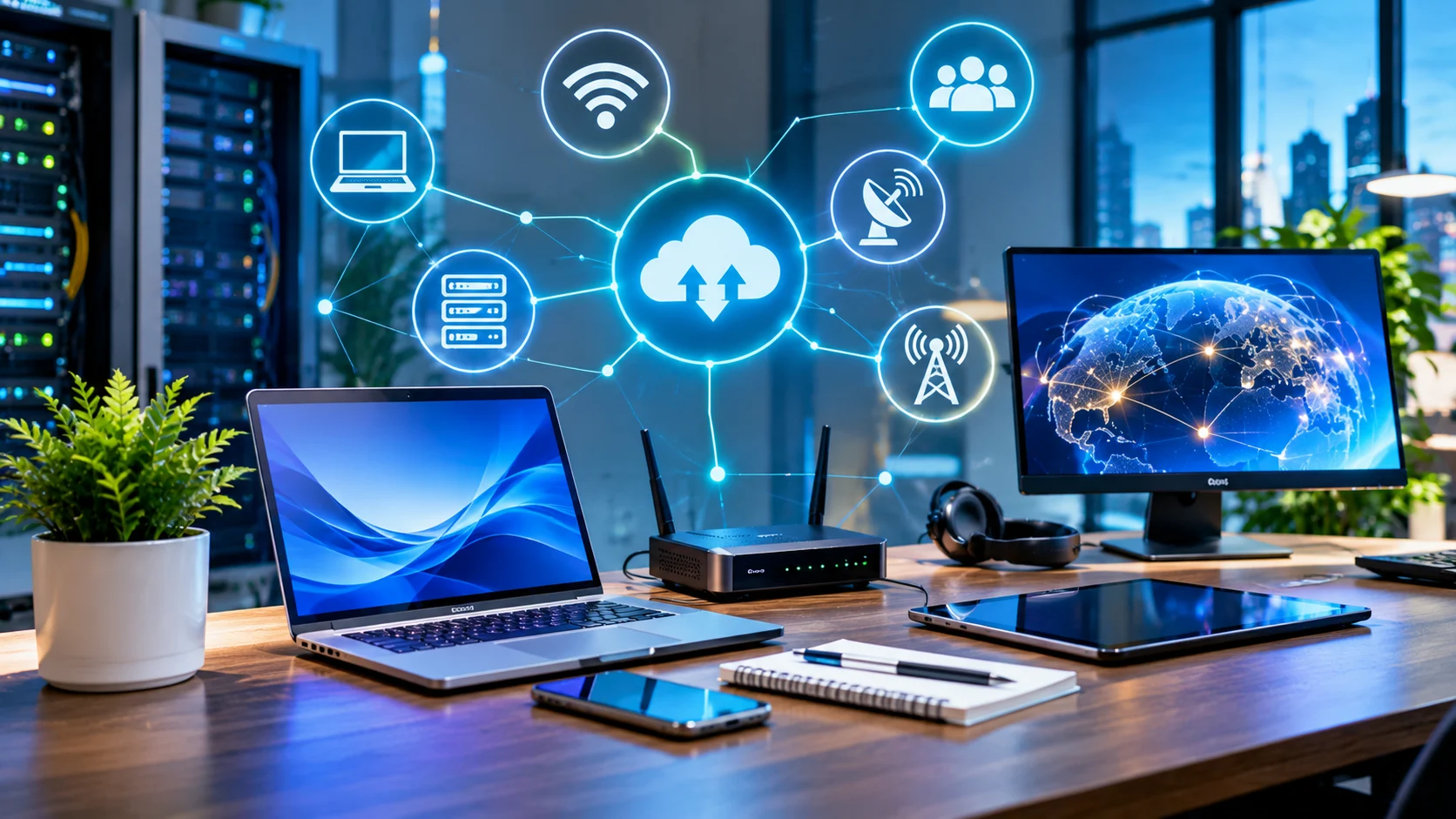
Information and Communication Technology (ICT) has become an essential part of modern life, connecting people, businesses, and organizations through digital systems. From smartphones and computers to internet networks and cloud services, ICT supports the way information is created, stored, processed, and shared. It influences education, healthcare, business operations, entertainment, and everyday communication across the world.
Understanding Information and Communication Technology helps explain how digital devices and communication networks work together. As technology continues to develop, individuals and organizations increasingly rely on ICT for productivity, collaboration, and access to information. This guide explains the meaning of ICT, its major components, practical applications, benefits, challenges, and importance in the digital world.
What Is Information and Communication Technology?
Information and Communication Technology refers to the technologies used to collect, process, store, transmit, and exchange information. It combines computing systems with communication networks to support digital interactions between people and devices. ICT includes computers, smartphones, internet services, software applications, and telecommunications infrastructure that enable information to move efficiently between different locations and users.
The meaning of ICT extends beyond individual electronic devices because it also includes the systems connecting them. For example, sending an email involves a computer or smartphone, software, internet connectivity, and network infrastructure. These technologies work together to deliver information between users, demonstrating how computing and communication systems combine to support everyday activities.
ICT plays an important role in both personal and professional environments by improving access to information and supporting collaboration. Businesses use digital platforms to manage operations, while schools rely on educational software and online learning systems. Individuals use communication applications to stay connected, making ICT a fundamental part of modern society and economic activity.
How Information and Communication Technology Works
ICT works by combining hardware, software, networks, and data processing systems to manage digital information. Hardware devices collect or display information, while software applications process instructions and perform specific tasks. Communication networks connect devices, allowing information to travel between users, servers, and other systems through wired or wireless connections.
For example, when someone sends a message through a communication application, the device converts that message into digital data. The information travels through network infrastructure toward the intended recipient, where software processes and displays it. Depending on the service, additional systems may handle authentication, encryption, storage, and delivery confirmation during this communication process.
Modern ICT systems often depend on interconnected services rather than operating independently. A business application may use cloud servers, databases, internet connections, and employee devices to deliver its functions. Reliable performance requires these components to work together, making network availability, system maintenance, and cybersecurity important considerations for organizations using digital technologies.
Main Components of Information and Communication Technology
Hardware represents the physical equipment used in ICT systems, including computers, smartphones, servers, routers, and networking devices. These components provide the foundation for processing, storing, and communicating information. Input devices collect data, processing components handle instructions, and output devices present results, allowing users to interact with digital systems through different technologies.
Software provides the instructions that allow ICT hardware to perform useful activities. Operating systems manage computer resources, while application software supports tasks such as document creation, communication, accounting, and database management. Different software tools serve different purposes, but they often depend on compatible hardware and network connections to operate efficiently.
Communication networks and data systems complete the core ICT environment by connecting devices and managing information. Local area networks, wireless systems, and the internet allow users to exchange digital content across different locations. Databases organize information for retrieval and analysis, while security controls help protect systems against unauthorized access and other potential threats.
Different Types of ICT Technologies
Computer technology includes desktop computers, laptops, servers, and other devices designed to process digital information. These systems support activities ranging from everyday document editing to complex scientific calculations. Organizations use computing technology to automate operations, manage records, and run specialized applications, making it one of the most recognizable parts of ICT infrastructure.
Telecommunication technology focuses on transmitting information across distances through electronic communication systems. Mobile networks, fiber-optic connections, wireless services, and internet infrastructure allow people to communicate through calls, messages, and digital applications. These technologies make remote collaboration possible and help businesses connect employees, customers, and partners across different geographic regions.
Emerging technologies such as cloud computing, artificial intelligence, and the Internet of Things also contribute to modern ICT environments. Cloud platforms provide computing resources through network connections, while connected sensors collect and exchange information. Artificial intelligence can assist with data analysis and automation, although its reliability depends on system design, available information, and appropriate human oversight.
Importance of ICT in Everyday Life
Information and Communication Technology influences everyday activities by making communication faster and more accessible. People use smartphones, messaging applications, and video conferencing services to stay connected with others. Digital platforms also provide access to news, educational resources, entertainment, and public information, allowing individuals to complete many tasks without visiting physical locations.
ICT also supports financial activities through digital banking, electronic payments, and online account management. Users can review transactions, transfer money, and access financial services through supported devices and secure applications. These services can improve convenience, although individuals should remain aware of privacy concerns, online fraud, and the importance of protecting account credentials.
Navigation, transportation, and household technology provide additional examples of ICT in daily life. Digital maps help people plan journeys, while connected devices can support home security and energy management. These applications demonstrate how information systems influence practical decisions, making digital literacy increasingly valuable for people navigating modern services and technology-dependent environments.
Role of ICT in Business and Organizations
Businesses use ICT to organize operations, communicate with customers, and manage information across departments. Digital systems support accounting, inventory management, marketing, sales, and human resource activities. By replacing repetitive manual tasks with suitable software, organizations can improve coordination and reduce certain administrative delays while maintaining more consistent business records.
Communication technology also supports collaboration between employees working in different locations. Email, video meetings, shared workspaces, and project management platforms help teams exchange information and coordinate responsibilities. These tools can support remote and hybrid working arrangements, although effective collaboration still depends on clear expectations, suitable training, and reliable communication practices.
ICT contributes to business decision-making by providing access to operational data and reporting tools. Organizations can examine sales patterns, customer feedback, and financial information to identify opportunities for improvement. However, data quality remains essential because inaccurate records can lead to misleading conclusions, making information governance an important part of digital business management.
Applications of ICT in Education
ICT in education helps teachers and students access learning materials through computers, digital platforms, and internet-connected devices. Educational websites, electronic textbooks, and interactive applications provide alternatives to traditional classroom resources. These tools can make lessons more engaging and allow students to review information at different times, depending on available technology and internet access.
Online learning platforms support communication between teachers and students outside physical classrooms. Educators can distribute assignments, share recorded lessons, and provide feedback through digital learning management systems. Students may also collaborate on projects using shared documents and communication tools, creating opportunities for flexible learning when appropriate guidance and support are available.
However, successful educational technology requires more than providing devices or software. Schools must consider internet availability, accessibility, teacher training, and students’ digital skills. Technology should support educational objectives rather than replace meaningful instruction, helping learners develop critical thinking, communication, and responsible online behavior alongside technical knowledge.
Uses of ICT in Healthcare Services
Healthcare organizations use Information and Communication Technology to manage patient records, coordinate appointments, and exchange clinical information. Electronic health record systems can help authorized professionals access relevant patient details and document care activities. These tools may improve coordination between departments, although accuracy, confidentiality, and appropriate access controls remain essential for protecting sensitive information.
Telehealth services provide another example of ICT in healthcare by enabling certain consultations through video calls, telephone systems, or secure messaging platforms. These services can improve access for some patients who face travel or scheduling difficulties. However, remote appointments are not suitable for every medical concern, and physical examinations may still be necessary.
ICT also supports medical imaging, laboratory information systems, and administrative operations. Digital platforms can help organize test results, manage schedules, and support communication among healthcare teams. Reliable systems and responsible data handling are particularly important in medical environments, where technical errors or inappropriate information access can affect patient care and trust.
Benefits of Information and Communication Technology
One major benefit of ICT is faster communication between individuals and organizations. Messages, documents, and other information can travel across networks within seconds under suitable conditions. This speed supports business coordination, personal communication, and access to essential services, making many everyday activities more convenient than traditional methods of information exchange.
ICT can also improve productivity by automating repetitive processes and simplifying information management. Businesses may use software to generate reports, track transactions, and organize customer records without repeatedly entering the same details. Automation can reduce certain errors and administrative workloads, although effective results still depend on accurate information, appropriate system design, and regular oversight.
Another advantage is improved access to educational, professional, and informational resources. People can develop skills through online courses, participate in remote collaboration, and explore services beyond their immediate location. However, these opportunities depend on affordable connectivity and digital literacy, meaning the benefits of ICT are not distributed equally across all communities.
Challenges and Disadvantages of ICT
Cybersecurity threats represent one of the most significant challenges associated with ICT. Organizations and individuals may encounter phishing attempts, malware, unauthorized access, and other digital risks. Strong passwords, multifactor authentication, software updates, and security awareness can reduce exposure, but effective protection requires ongoing attention as technology and threats continue to change.
The digital divide creates another challenge because access to technology is not equal everywhere. Some communities experience limited internet connectivity, expensive devices, or insufficient digital training opportunities. These barriers can restrict access to online education, employment opportunities, and essential services, highlighting the importance of inclusive digital infrastructure and accessible technology.
ICT systems can also create operational challenges involving maintenance costs, technical failures, and dependence on digital services. Businesses may experience disruptions when networks become unavailable or software stops functioning correctly. Planning for backups, system recovery, employee training, and appropriate technical support helps organizations manage these limitations while maintaining dependable operations.
ICT vs. Information Technology: Key Differences
Information Technology, commonly called IT, focuses primarily on computing systems used to create, process, store, and manage digital information. It includes computers, software, databases, and related infrastructure. Information and Communication Technology covers these areas while explicitly emphasizing the communication technologies that connect people, devices, and information systems.
For example, maintaining a company database is commonly considered an IT function because it involves storing and managing information. Connecting that database to remote employees through secure networks highlights the communication component associated with ICT. In practice, the two terms overlap considerably, and organizations may use them differently depending on their professional context.
Understanding this distinction helps explain the broad role of digital infrastructure in modern organizations. IT specialists may focus on software, technical support, or systems administration, while ICT activities can additionally emphasize telecommunications and digital connectivity. Both disciplines contribute to reliable information management, secure communication, and the efficient delivery of technology-based services.
ICT Careers and Skills for Beginners
Information and Communication Technology offers career opportunities across computing, networking, cybersecurity, technical support, and software development. Common professional roles include IT support technician, network administrator, systems analyst, cybersecurity analyst, and software developer. Each position requires different technical abilities, making it useful for beginners to explore their interests before selecting a particular career direction.
Basic computer literacy provides a strong starting point for developing ICT skills. Beginners can learn how operating systems work, understand networking fundamentals, practice spreadsheet management, and explore common productivity applications. Knowledge of cybersecurity principles is also valuable because safe information handling is relevant across nearly every technology-related profession.
Practical experience helps learners understand how ICT concepts apply in real situations. Building small projects, practicing troubleshooting, and studying introductory technical courses can strengthen foundational knowledge. Communication, problem-solving, and continuous learning are equally important because technology professionals often collaborate with people who have different technical backgrounds and business responsibilities.
The Future of Information and Communication Technology
The future of ICT will continue to involve developments in connectivity, computing, and digital services. Technologies such as advanced mobile networks, cloud platforms, and connected devices can support new applications across different industries. However, their adoption depends on infrastructure investment, technical feasibility, affordability, and the actual needs of organizations and users.
Artificial intelligence and automation are also influencing how information systems operate. AI-assisted tools can support document processing, data analysis, customer service, and selected administrative tasks. These capabilities may improve efficiency when implemented appropriately, but organizations must consider accuracy, privacy, fairness, and human oversight before relying on automated outputs.
Cybersecurity, accessibility, and responsible technology development will remain important as digital systems become more interconnected. Organizations need to protect information while ensuring that services remain reliable and usable. Developing digital skills and understanding technological limitations can help individuals and businesses prepare for future changes without assuming every emerging technology will deliver immediate benefits.
Conclusion
Information and Communication Technology provides the foundation for many digital services used in modern society. By combining computers, software, communication networks, and data management systems, ICT enables information to be processed and exchanged across different environments. Its applications extend into business, education, healthcare, finance, and everyday communication.
The benefits of ICT include improved connectivity, greater access to information, and opportunities for operational efficiency. However, cybersecurity risks, unequal technology access, and technical maintenance challenges require careful attention. Understanding both the advantages and limitations helps individuals and organizations make more responsible decisions about adopting and using digital technologies.
As technology continues to evolve, ICT knowledge will remain valuable for students, professionals, and businesses. Learning fundamental concepts, improving digital skills, and following appropriate security practices can support confident participation in a connected world. With thoughtful implementation, Information and Communication Technology can contribute to better communication, productivity, and access to essential services.
Frequently Asked Questions
What is Information and Communication Technology in simple words?
Information and Communication Technology refers to digital tools and systems used to create, store, process, and share information. Examples include computers, smartphones, internet networks, communication applications, and cloud-based services.
What are the main components of ICT?
The main components of ICT include hardware, software, communication networks, and data management systems. These elements work together to process information, connect devices, and support digital communication across different environments.
What are five examples of ICT?
Five common examples of ICT are smartphones, computers, email systems, video conferencing applications, and internet networks. These technologies help people communicate, access information, complete tasks, and collaborate digitally.
Why is ICT important in education and business?
ICT supports online learning, digital communication, information management, and workplace collaboration. Educational institutions use it to deliver learning resources, while businesses use digital systems to improve operations and coordinate activities.
What is the difference between ICT and IT?
IT primarily focuses on computing systems, software, and information management. ICT includes these technologies while placing additional emphasis on communication networks and the exchange of information between people and connected devices.