
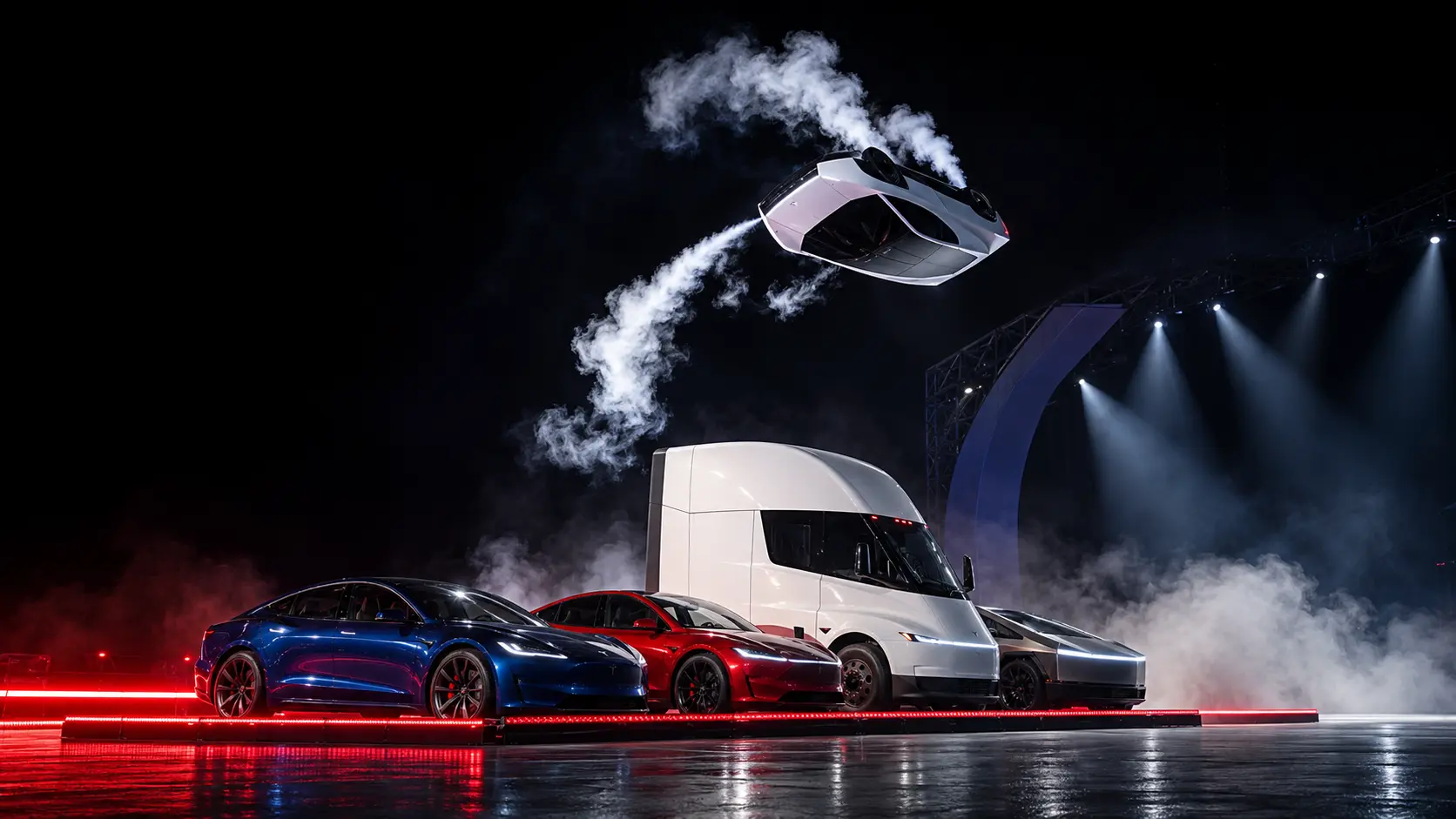
Tesla has captured global attention once again after revealing its long-awaited next-generation Roadster, a futuristic electric sports car with unusual airborne capabilities. The unveiling has sparked excitement across the automotive and technology industries, raising questions about whether flying cars are finally becoming a reality. With advanced engineering developed alongside SpaceX, Tesla is attempting to expand the boundaries of traditional electric vehicle technology.
The announcement has also generated considerable curiosity about the Tesla flying car, including its performance, technology, pricing, and expected release date. Although the demonstration showed remarkable capabilities, important differences remain between brief airborne movements and practical flying transportation. This article explains everything currently known about Tesla’s new Roadster, its innovative features, potential limitations, and what the unveiling could mean for future mobility.
Tesla Unveils New Flying Car: What Happened at the Launch?
On October 15, 2026, Tesla unveiled its redesigned second-generation Roadster at a SpaceX testing facility in McGregor, Texas. The presentation featured a futuristic electric sports car equipped with specialized propulsion technology developed through cooperation between Tesla and SpaceX. The demonstration attracted widespread attention because the vehicle performed unusual movements that are not possible with conventional production sports cars.
During the event, the Roadster prototype traveled along a specially constructed curved structure, moved upside down, and briefly became airborne. Its built-in thrusters helped control its movement before it returned to the ground. Tesla also demonstrated the vehicle moving over a lineup of other vehicles, highlighting the experimental capabilities of its advanced propulsion and aerodynamic systems.
Tesla CEO Elon Musk presented the Roadster as an ambitious combination of automotive engineering and aerospace technology. The unveiling represented an important milestone for a vehicle that had experienced years of development delays. However, Tesla has not yet introduced a production-ready flying car for everyday transportation, and the demonstrated capabilities remain part of an experimental prototype program.
Can Tesla’s New Roadster Actually Fly?
The most important question surrounding Tesla’s latest announcement is whether the new Roadster can genuinely fly like an aircraft. The prototype demonstrated short airborne movements supported by compressed-air thrusters, but it did not demonstrate sustained, controlled flight over meaningful distances. This distinction is essential because conventional flying vehicles must maintain controlled movement through the air for an extended period.
Tesla’s demonstration showed that specialized propulsion technology could temporarily lift the vehicle and influence its orientation. Unlike airplanes, which rely primarily on aerodynamic lift from wings, the Roadster prototype uses directed thrust to produce its unusual movements. These capabilities are impressive from an engineering perspective, but they do not establish that the vehicle can operate as practical airborne transportation.
A true flying car would also need suitable navigation systems, reliable flight controls, emergency procedures, and appropriate regulatory approvals. Tesla has not demonstrated all these capabilities in a consumer-ready vehicle. Therefore, describing the Roadster as a flying car reflects its experimental airborne features rather than an established ability to replace conventional aircraft or operate freely above public roads.
How Tesla and SpaceX’s Thruster Technology Works
One of the most interesting features of Tesla’s new Roadster is its collaboration with SpaceX, the aerospace company also led by Elon Musk. The prototype uses cold-gas thrusters supplied by systems containing highly pressurized air. These thrusters generate force by releasing compressed gas, allowing the vehicle to perform movements that conventional electric motors and wheels cannot achieve alone.
Unlike traditional rocket propulsion systems that rely on chemical combustion, the Roadster’s demonstrated thrusters use compressed air as their working medium. This approach gives the prototype access to additional directional forces without relying on conventional rocket fuel. However, the system still introduces engineering challenges involving stored energy, equipment complexity, control precision, and overall vehicle reliability.
Tesla also demonstrated a powerful suction system designed to create substantial downward force under particular conditions. This technology allows the experimental vehicle to maintain contact with specially prepared surfaces in unusual orientations. Combining aerodynamic systems with specialized thrusters gives the Roadster capabilities that distinguish it from ordinary electric sports cars, although their practicality outside controlled demonstrations remains uncertain.
Tesla Flying Car Speed, Acceleration, and Performance
Tesla’s next-generation Roadster is designed to showcase exceptional performance, with the company making ambitious claims about acceleration and maximum speed. During the October 2026 presentation, Tesla demonstrated acceleration from zero to 60 miles per hour in approximately 0.8 seconds. This result was presented as a prototype demonstration rather than an independently verified production-vehicle performance figure.
The company has also indicated that the redesigned Roadster is expected to exceed 230 miles per hour under suitable operating conditions. Such performance would position it among extremely high-speed road-going vehicles if the final version achieves those targets. However, maximum speed, acceleration, and other specifications remain subject to production development, testing, and eventual independent verification.
Driving range is another important consideration for the new electric sports car. Tesla indicated that the Roadster could travel more than 300 miles on a charge, although certified production-range figures have not been established. This estimate is considerably lower than the approximately 620-mile figure associated with the company’s original 2017 Roadster announcement, highlighting how specifications can evolve during development.
Design and Interior Features of the New Tesla Roadster
The redesigned Roadster features a futuristic exterior intended to combine aerodynamic efficiency with an aggressive sports car appearance. Its low profile, sculpted body panels, and distinctive proportions create a design that emphasizes performance. The prototype displayed during the unveiling featured a white exterior, dramatic body styling, and specialized aerodynamic components that distinguish it from Tesla’s existing passenger vehicles.
One notable feature is the vehicle’s active aerodynamic system, including an adjustable rear wing designed to influence airflow and vehicle behavior. Different configurations can help balance aerodynamic resistance and downward force under suitable conditions. The prototype also incorporates specialized equipment beneath its body, reflecting the additional engineering required for its unconventional performance demonstrations.
Inside, the Roadster adopts a minimalist design approach similar to other Tesla vehicles while emphasizing a more focused sports car experience. The displayed interior included a compact steering control and a prominent horizontal touchscreen. Seating arrangements differ between the announced configurations, with the most specialized Rocket version designed around a single-seat layout rather than conventional passenger accommodation.
Tesla Roadster Performance, Thrust, and Rocket Versions
Tesla has outlined three different configurations for its next-generation Roadster, each designed around a different level of performance and specialized technology. The Performance version represents the more conventional electric sports car configuration, featuring advanced aerodynamics and a two-seat layout. It is intended to deliver exceptional road performance without the full airborne capabilities demonstrated by the experimental Rocket prototype.
The Thrust version adds specialized acceleration thrusters to the Roadster’s advanced electric performance systems. These additional components are intended to provide capabilities beyond those of a conventional electric sports car. However, the exact performance characteristics, durability requirements, and operating restrictions of the production version have not yet been independently established.
The Rocket configuration represents Tesla’s most ambitious interpretation of its futuristic sports car concept. Described as an invitation-only version, it includes a single-seat layout and a more comprehensive thruster arrangement intended to support airborne movements. Because this configuration raises significant safety and regulatory questions, its future availability and approved operating environments remain uncertain.
Tesla Flying Car Price and Reservation Details
The price of Tesla’s new flying Roadster remains one of the biggest unanswered questions following the unveiling. Although Tesla discussed several configurations during its presentation, it did not announce a confirmed final purchase price for the redesigned vehicle. Earlier expectations surrounding the Roadster included a starting price of approximately $200,000, but this should not be treated as the confirmed price of the new model.
Reservation information reported after the event indicated a $50,000 deposit for the Performance configuration and a $250,000 deposit for the Thrust version. These amounts represent reservation requirements rather than confirmed final vehicle prices. The specialized Rocket configuration has been described as invitation-only, meaning it is not being presented as a conventional publicly available consumer model.
Potential customers should distinguish between deposits, estimated prices, and finalized purchase agreements when evaluating Tesla’s announcement. Manufacturing costs, specialized components, development changes, and regulatory requirements could influence eventual pricing. Because the Roadster is still awaiting production, prospective buyers should rely on updated official terms instead of assuming that earlier announcements establish its final specifications or delivery arrangements.
When Will Tesla’s New Flying Car Be Released?
Tesla currently targets 2028 for the beginning of next-generation Roadster production, according to statements made during the October 2026 unveiling. This timeline follows several earlier delays, making the actual release date an important consideration for interested customers. The announcement provides a new production goal, but it does not guarantee when finished vehicles will reach buyers.
The second-generation Roadster was originally introduced as a concept in November 2017, with deliveries initially expected around 2020. However, development continued well beyond that schedule as Tesla pursued other vehicle programs and technologies. The redesigned 2026 prototype marks a significant evolution from the original concept, particularly through its aerospace-inspired propulsion features and revised performance expectations.
Moving from a demonstration prototype to a production vehicle requires extensive engineering validation, manufacturing preparation, and regulatory compliance. Tesla must also establish that the final configuration can operate reliably under its intended conditions. Until the company confirms production progress and delivery arrangements, the 2028 schedule should be understood as a target rather than a guaranteed release date.
Safety and Legal Challenges Facing Tesla’s Flying Car
Safety represents one of the most significant challenges for Tesla’s unusual Roadster technology because airborne vehicle movement introduces risks beyond those associated with conventional driving. Systems responsible for controlling propulsion, orientation, and landing would need to operate reliably under demanding conditions. A demonstration at a controlled testing facility does not establish that these systems are suitable for unrestricted public use.
Regulation is another major obstacle because a vehicle capable of leaving the ground may fall under different legal requirements depending on how it operates. Traditional automobiles are regulated through road vehicle standards, while aircraft must satisfy aviation requirements. A vehicle combining characteristics of both raises complicated questions about certification, operating permissions, and the responsibilities of transportation authorities.
Tesla’s most specialized Roadster configuration has not received approval for ordinary public-road flight operations. Questions remain about permitted operating environments, passenger protection, technical inspection, and emergency systems. These challenges demonstrate why an impressive technical demonstration is only one part of developing a commercially practical flying vehicle that people can use legally and safely.
How Tesla’s Flying Car Compares With Other Flying Vehicles
Tesla’s approach differs from many flying vehicle projects because the Roadster begins as a high-performance electric sports car rather than an aircraft intended primarily for passenger flight. Most companies developing electric vertical takeoff and landing vehicles focus on transporting passengers through the air. Their designs often incorporate multiple rotors, aircraft-style safety systems, and specialized operational infrastructure.
The Roadster instead uses propulsion technology intended to add unusual capabilities to an automobile. Its demonstrated airborne movements are brief, while its main design remains centered on ground transportation and extreme performance. This makes direct comparisons with electric aircraft difficult because the vehicles have different technical goals, operating environments, and expected uses.
Flying transportation projects also face different commercial challenges, including aviation certification, infrastructure requirements, maintenance, and operating costs. Tesla’s Roadster introduces another possible direction for experimental mobility technology, but it has not demonstrated the practical transportation capabilities of a certified aircraft. Understanding these distinctions helps separate futuristic marketing from the engineering achievements that have actually been demonstrated.
What Tesla’s Roadster Means for the Future of Electric Vehicles
The new Roadster highlights Tesla’s continued interest in combining unconventional engineering with electric vehicle performance. By integrating advanced aerodynamic systems, electric propulsion, and aerospace-inspired technology, the company is exploring capabilities beyond those commonly associated with passenger cars. Although these developments are experimental, the project demonstrates how automotive engineering can draw ideas from other technology sectors.
However, the Roadster is unlikely to transform everyday transportation immediately because of its specialized design, anticipated cost, and unresolved regulatory issues. Its main commercial role may be as a showcase for Tesla’s engineering capabilities rather than a mass-market product. Technologies developed during such projects can sometimes influence future designs, although any broader applications remain speculative.
The unveiling also arrives as Tesla continues emphasizing autonomous driving, robotics, and artificial intelligence alongside electric vehicle development. The Roadster stands out as a performance-focused vehicle intended to celebrate human-driven motoring. Its long-term significance will depend on whether Tesla successfully delivers a reliable production model and demonstrates practical benefits beyond its remarkable promotional presentation.
Conclusion
Tesla’s unveiling of the next-generation Roadster on October 15, 2026, represents an important milestone in the development of high-performance electric sports cars. The prototype demonstrated unusual capabilities, including short airborne movements supported by specialized thrusters. These features highlight an ambitious collaboration between Tesla and SpaceX, although they do not establish practical sustained flight.
The redesigned Roadster also promises exceptional acceleration, advanced aerodynamic technology, and multiple configurations with different performance capabilities. However, several important details remain uncertain, including final pricing, independent performance verification, regulatory approval, and actual delivery dates. Tesla is targeting production in 2028, but its history of Roadster delays makes continued verification important.
For automotive enthusiasts, Tesla’s flying car demonstration offers an intriguing glimpse into experimental vehicle engineering. The project combines ambitious technology with major practical challenges that must be resolved before commercial adoption. Whether it becomes a meaningful advancement in mobility or remains primarily a showcase of engineering possibilities will depend on the performance and availability of the finished vehicle.
Frequently Asked Questions (FAQs)
Has Tesla officially unveiled a flying car?
Yes, Tesla unveiled its redesigned Roadster on October 15, 2026, featuring experimental thrusters capable of supporting brief airborne movements. However, the demonstration did not establish that the vehicle can perform sustained flight like an aircraft.
Can the new Tesla Roadster actually fly?
The prototype demonstrated short airborne maneuvers using compressed-air thrusters. It has not demonstrated sustained, practical flight, and the specialized configuration is not approved for unrestricted public-road or airborne transportation.
How much will the Tesla flying car cost?
Tesla has not confirmed the final purchase price of the redesigned Roadster. Reservation deposits have been reported for certain configurations, but these amounts should not be confused with the eventual cost of purchasing the vehicle.
When will Tesla’s flying Roadster be available?
Tesla announced a target of beginning Roadster production in 2028. However, the company has experienced previous development delays, and confirmed customer delivery dates have not yet been established.
How fast is Tesla’s new flying car?
Tesla demonstrated claimed acceleration from zero to 60 mph in approximately 0.8 seconds and indicated a potential top speed exceeding 230 mph. Final production performance figures still require independent verification.