
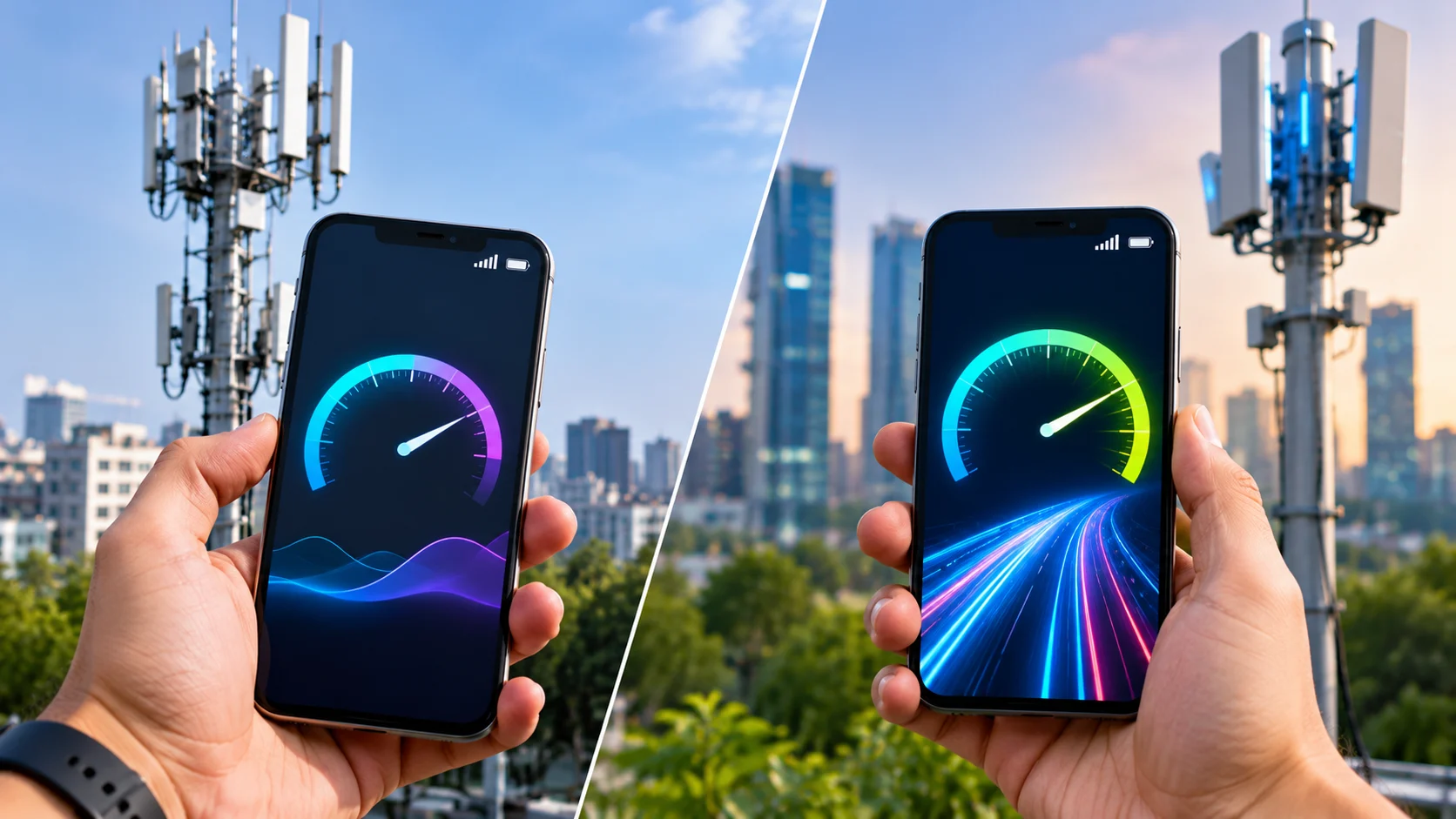
Have you ever noticed a 5GE symbol on your smartphone and wondered whether you were connected to a real 5G network? The term can be confusing because it looks similar to 5G, but the underlying technology is different. Understanding what is 5GE helps you recognize your actual mobile network connection and avoid misunderstandings about internet speeds.
5GE stands for 5G Evolution, a marketing term introduced by AT&T for an enhanced version of its 4G LTE network. Although it offers improvements over some older LTE connections, it is not genuine fifth-generation wireless technology. This guide explains how 5GE works, its advantages, speed differences, network compatibility, and how it compares with real 5G connectivity.
What Is 5GE? Simple Definition
5GE stands for 5G Evolution, a branding term introduced by AT&T to describe an upgraded 4G LTE network. Despite its name, 5GE does not use the same radio technology that defines genuine 5G connections. Instead, it relies on LTE Advanced technologies that improve network performance. These improvements can provide faster data transfers and better capacity compared with older LTE configurations.
The 5GE symbol became widely recognized when AT&T began displaying it on compatible smartphones. Many users initially assumed the icon meant their devices had connected to a newly launched 5G network. However, the technology remained part of the fourth-generation cellular network family. The branding reflected improvements to existing LTE infrastructure rather than a complete transition to 5G.
Understanding this distinction is important when comparing mobile networks and devices. A phone displaying 5GE may provide a reliable internet experience, but the symbol does not confirm genuine 5G connectivity. Actual network performance depends on signal quality, congestion, and device capabilities. The name alone cannot accurately describe the speeds or technologies available to a user.
Why Did AT&T Introduce the 5GE Network?
AT&T introduced 5G Evolution as part of its strategy to highlight improvements to its existing wireless infrastructure. During the industry’s transition toward fifth-generation networks, several carriers were upgrading their LTE services. AT&T wanted to distinguish its enhanced LTE coverage from earlier configurations. The 5GE branding was intended to communicate that these network improvements offered better mobile connectivity.
The company began displaying 5GE indicators on selected Android smartphones and iPhones around 2019. This happened during a period when telecommunications companies were actively promoting their upcoming 5G services. However, the displayed symbol did not mean that those phones had gained genuine 5G capabilities. It represented an enhanced LTE connection operating through existing fourth-generation network standards.
The marketing approach attracted criticism because the name closely resembled actual 5G terminology. In 2020, the National Advertising Review Board recommended that AT&T discontinue certain 5G Evolution advertising claims. The controversy highlighted the importance of distinguishing technical standards from commercial branding. For consumers, understanding these differences helps prevent confusion when evaluating wireless services.
How Does 5GE Technology Work?
5GE operates through LTE Advanced technologies designed to increase the efficiency and capacity of existing cellular networks. These improvements allow compatible smartphones to communicate more effectively with supported cell towers. Rather than replacing LTE with a new generation, the network uses advanced techniques within the established fourth-generation framework. Several technical features contribute to its performance improvements.
One important feature is carrier aggregation, which combines multiple frequency carriers to increase available data capacity. Another is 4×4 MIMO, a technology that uses multiple antennas to improve wireless communication. Compatible networks may also use 256-QAM modulation to transmit more information under suitable signal conditions. Together, these technologies can improve download speeds and network efficiency.
These improvements are not exclusive to AT&T or its 5GE branding. Other mobile carriers have implemented similar LTE Advanced features under different service names. Their actual performance depends on available spectrum, network design, and device compatibility. Although the technology can enhance 4G connectivity, it does not automatically provide the capabilities associated with genuine 5G New Radio networks.
What Is Real 5G Technology?
5G is the fifth generation of cellular network technology developed to improve wireless speed, capacity, and communication performance. It introduces a radio access technology known as 5G New Radio, commonly abbreviated as 5G NR. This technology supports more advanced network configurations than traditional LTE. Its capabilities depend on the frequencies, infrastructure, and implementation used by each provider.
Real 5G networks can operate across different radio frequency ranges. Lower frequencies generally provide broader coverage, while higher frequencies can support greater capacity in suitable conditions. Mid-band spectrum often balances coverage and performance. Because carriers use different combinations of frequencies, the experience of connecting to 5G can vary significantly between locations.
5G networks may also use different deployment architectures. Non-standalone 5G combines 5G radio technology with existing LTE infrastructure, while standalone 5G uses a dedicated 5G core network. Both are genuine forms of 5G when they use 5G NR. This is an important difference from 5GE, which remains an LTE Advanced service.
5GE vs. 5G: Understanding the Main Differences
The biggest difference between 5GE and 5G is the underlying network technology. 5GE uses enhanced fourth-generation LTE, while genuine 5G uses fifth-generation radio standards. Although both support mobile internet access, they have different technical capabilities and development paths. A smartphone displaying 5GE is therefore not necessarily connected to a real 5G network.
Network performance is another important distinction. Genuine 5G can provide higher peak speeds, greater capacity, and lower latency under suitable conditions. However, a strong LTE Advanced connection may sometimes perform better than a weak or congested 5G connection. This means users should consider actual performance rather than assuming that every 5G connection is automatically faster.
Device compatibility also separates the two technologies. Many older LTE smartphones can display 5GE without containing a 5G modem. Genuine 5G connectivity requires compatible hardware and access to a supported network. Users may also need an appropriate service plan and carrier settings. Checking these requirements provides a more accurate understanding of available connectivity.
Is 5GE Faster Than Regular 4G LTE?
5GE can be faster than some older 4G LTE connections because it incorporates additional LTE Advanced capabilities. Features such as carrier aggregation and improved antenna technology may increase data throughput. These improvements can make browsing, streaming, and downloading more responsive. However, the actual speed difference depends on the network conditions and smartphone capabilities.
A device connected to enhanced LTE may achieve impressive speeds when signal quality is strong and network congestion is low. Conversely, crowded cell towers or weak reception can reduce performance significantly. A 5GE symbol does not guarantee a particular download speed. Different locations may provide noticeably different results even when the same network indicator appears.
It is also important to understand that LTE Advanced technology is widely available beyond AT&T’s historical 5GE branding. Other carriers may offer comparable improvements while displaying ordinary LTE or 4G symbols. Therefore, comparing network names alone can be misleading. Real-world speed tests and consistent coverage are more useful when evaluating mobile internet performance.
How Fast Is 5GE Compared With Real 5G?
5GE speeds vary depending on radio conditions, available spectrum, device capabilities, and network traffic. In favorable circumstances, enhanced LTE networks can deliver download speeds reaching hundreds of megabits per second. However, many connections operate considerably below their theoretical capabilities. The 5GE indicator does not represent a fixed speed range or guaranteed performance level.
Genuine 5G can deliver substantially higher speeds, particularly on well-provisioned mid-band and high-band networks. Some implementations can reach gigabit-level download performance under suitable conditions. However, low-band 5G may provide speeds closer to LTE in certain locations. This explains why a newer network label does not always produce a dramatic improvement during ordinary browsing.
For everyday activities, the noticeable difference may depend on how you use your smartphone. Messaging, email, and standard web browsing often work comfortably on a strong LTE connection. Large file downloads and demanding streaming activities may benefit more from faster 5G service. Comparing actual connection speeds provides a clearer picture than relying on marketing terminology.
Does 5GE Offer Lower Latency Than 5G?
Latency describes the time required for information to travel between a device and a network destination. Lower latency can make online activities feel more responsive, especially interactive applications. LTE Advanced improvements may reduce certain performance limitations, but they do not automatically provide the lowest latency possible. Network congestion and routing also influence response times.
Genuine 5G technology supports network features designed to improve latency under appropriate conditions. Standalone 5G networks, in particular, can support more advanced low-latency capabilities. However, actual results depend on network deployment, application design, and distance to the relevant services. A 5G connection does not guarantee consistently low latency in every situation.
For most smartphone users, latency differences become noticeable during activities requiring rapid responses. Online gaming, real-time communication, and certain cloud applications may benefit from responsive connections. However, connection stability can be just as important as raw latency measurements. A reliable LTE Advanced connection may sometimes provide a better experience than an unstable 5G signal.
Why Does Your Phone Display 5GE Instead of 5G?
If your smartphone displays 5GE, it generally indicates that the device recognizes AT&T’s enhanced LTE network branding. This symbol became common on certain compatible phones following carrier software updates. The change did not automatically upgrade the device’s cellular hardware. Instead, the network indicator reflected the LTE technology and carrier settings associated with that connection.
Some older smartphones may display 5GE even though they cannot connect to genuine 5G networks. This happens because their cellular modems support LTE Advanced rather than 5G NR. The symbol can therefore create confusion about the device’s capabilities. Checking the manufacturer’s technical specifications provides a more reliable way to determine whether a phone supports real 5G.
A 5G-capable phone may also connect to LTE when fifth-generation coverage is unavailable or conditions favor another connection. Network settings, service plans, and carrier configurations can influence the displayed indicator. If your phone unexpectedly shows 5GE or LTE, it does not necessarily indicate a problem. The device may simply be using the available fourth-generation network.
Can 5GE Phones Connect to Real 5G Networks?
A phone showing 5GE cannot necessarily connect to a genuine 5G network. Compatibility depends on whether the device includes a modem designed for 5G NR technology. Many smartphones released before widespread 5G adoption support only LTE networks. Their software may display 5GE, but this does not change their physical hardware capabilities.
For example, several older iPhone models displayed 5GE while using AT&T’s enhanced LTE network. These devices could benefit from LTE Advanced features without supporting genuine 5G connectivity. Apple introduced 5G support with the iPhone 12 family. This illustrates why the device model matters more than the symbol shown in its status bar.
If you want to use real 5G, review your smartphone’s cellular specifications. Look for explicit support for 5G NR and the frequency bands used by your mobile provider. A compatible service plan and adequate network coverage may also be necessary. These checks help determine whether upgrading your phone or changing network settings would provide meaningful benefits.
Is 5GE Still Useful for Everyday Smartphone Users?
Although 5GE is not real 5G, the underlying LTE Advanced technology can still provide useful mobile connectivity. Many everyday applications work efficiently on modern LTE networks. Browsing websites, watching videos, using navigation services, and communicating through messaging applications do not always require fifth-generation speeds. Connection quality often matters more than the displayed network label.
Enhanced LTE remains valuable in places where 5G coverage is limited or inconsistent. Smartphones can continue using compatible LTE infrastructure when stronger fifth-generation signals are unavailable. This network flexibility helps maintain mobile connectivity across different environments. For users with moderate internet requirements, upgrading solely because of the 5GE label may offer limited practical value.
However, people who regularly transfer large files or use demanding mobile applications may benefit from genuine 5G access. The advantages depend on local coverage, pricing, and supported devices. Consider your actual usage patterns before selecting a new smartphone or wireless plan. A dependable connection that meets your needs is more important than an impressive network name.
How to Check Whether You Are Using Real 5G
The first step in checking your connection is to examine your smartphone’s network indicator. A 5GE symbol refers to enhanced LTE rather than genuine 5G. A standard 5G indicator generally means that the device recognizes supported fifth-generation service. However, some indicators reflect network availability rather than continuous use of a 5G radio connection.
Next, review your smartphone’s specifications and cellular settings. Confirm that the device supports 5G NR and compatible frequency bands. Your wireless provider’s coverage information can help determine whether genuine 5G service is available in your area. Remember that indoor reception, network congestion, and local infrastructure can affect the connection.
You can also use a reputable speed testing application to understand your practical internet performance. However, speed results alone cannot conclusively identify the network technology being used. Some LTE connections can outperform slower 5G connections. For more precise information, compatible diagnostic tools may display technical connection details, although their availability varies between smartphones.
Conclusion
5GE stands for 5G Evolution, a marketing name used by AT&T for an enhanced 4G LTE network. Despite its similar appearance to 5G, it does not use genuine fifth-generation radio technology. Instead, it relies on LTE Advanced improvements that can increase network capacity and performance. Understanding this difference helps users interpret smartphone network indicators more accurately.
Real 5G uses 5G NR technology and supports capabilities beyond traditional LTE networks. These may include higher data speeds, improved capacity, and advanced low-latency features. However, actual performance varies depending on coverage, network configuration, and device compatibility. A strong LTE Advanced connection can still provide an excellent experience for many everyday activities.
Before upgrading a smartphone or changing your mobile plan, consider your actual connectivity needs. Check device specifications, available coverage, and real-world performance rather than relying only on network labels. Knowing the difference between 5GE and real 5G allows you to make more informed decisions. The best mobile connection is one that delivers reliable performance for your daily activities.
Frequently Asked Questions
What does 5GE mean on my phone?
5GE stands for 5G Evolution, AT&T’s branding for an enhanced 4G LTE network. It indicates LTE Advanced capabilities rather than a genuine fifth-generation wireless connection, even though the name resembles 5G.
Is 5GE the same as real 5G?
No, 5GE uses enhanced LTE technology, while real 5G uses 5G New Radio standards. Although both provide mobile internet connectivity, genuine 5G supports additional network capabilities and potentially faster performance.
Is 5GE faster than 4G LTE?
5GE can offer improved speeds compared with older LTE configurations because it uses advanced network technologies. However, performance varies, and other carriers may provide comparable LTE Advanced speeds without displaying the 5GE symbol.
Why does my iPhone say 5GE instead of 5G?
Some older iPhones display 5GE because of AT&T’s carrier branding for enhanced LTE. The symbol does not mean the phone supports real 5G, which requires compatible fifth-generation cellular hardware.
Do I need a new phone to switch from 5GE to 5G?
If your current phone supports only LTE, you need a 5G-compatible device to access genuine 5G networks. You may also need suitable carrier coverage, supported frequency bands, and an eligible service plan.