
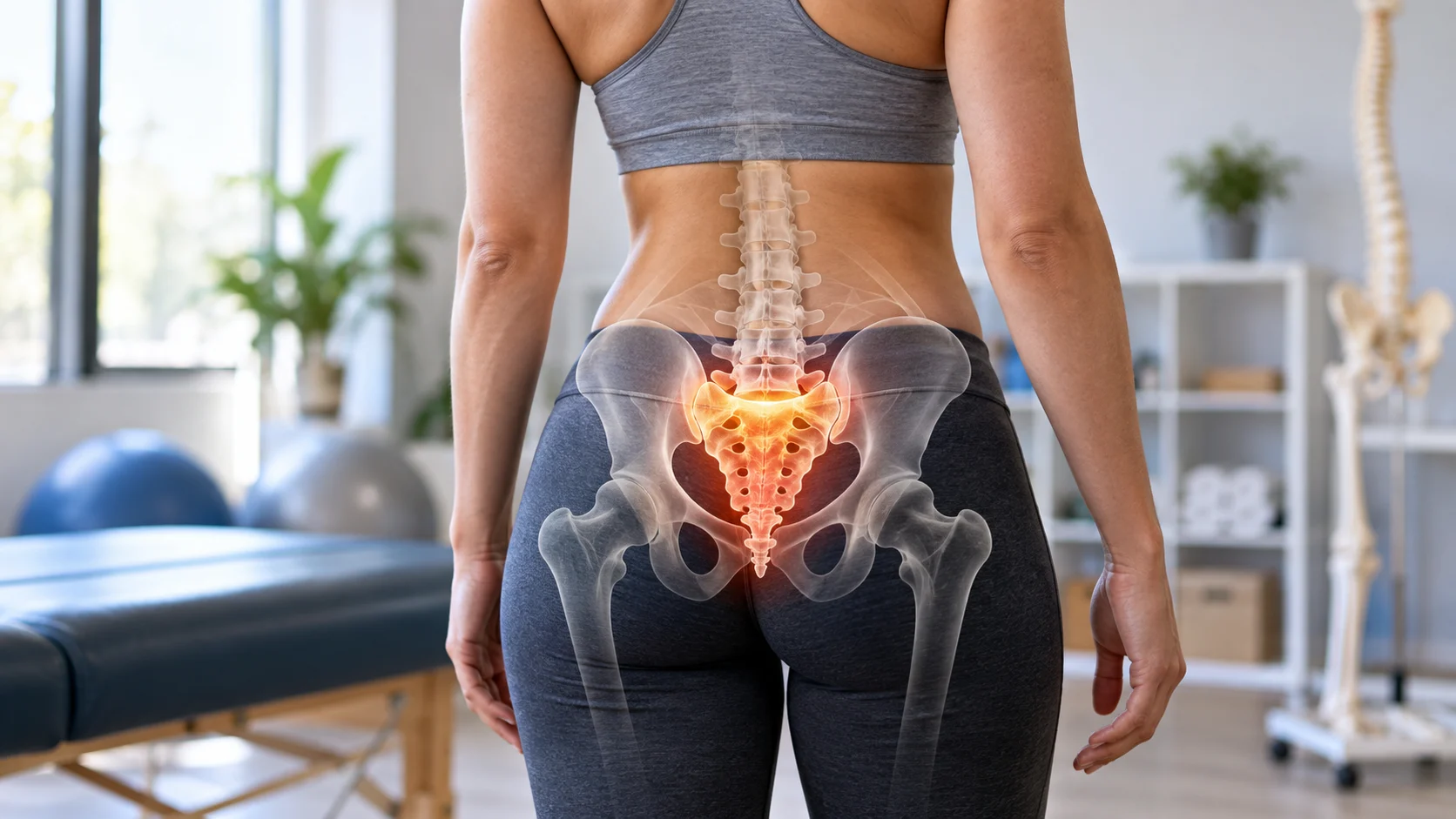
What Is the Sacrum?
The sacrum is a large, triangular bone located at the base of the spine. It sits between the two sides of the pelvis and forms an important connection between the spinal column and lower body. Although it feels like one solid bone in adults, the sacrum develops from several individual vertebrae that gradually fuse together.
Its position makes the sacrum important for supporting body weight and transferring force between the upper body and legs. Every time you stand, walk, climb stairs, or lift something, forces travel through the spine toward the pelvis. The sacrum helps distribute those forces across the pelvic ring and into the lower limbs.
The sacrum also provides attachment points for numerous muscles and ligaments that support the pelvis and spine. It sits close to nerves that travel toward the lower body, which is one reason problems in this region can sometimes produce symptoms beyond the exact location of the bone.
Where Is Your Sacrum Located?
Your sacrum is located directly below the lumbar spine and above the coccyx, or tailbone. If you place your hand over the center of your lower back and move downward toward the top of the buttocks, the sacrum lies deeper beneath this central area. It forms the back portion of the pelvis.
On each side, the sacrum connects with the ilium, which is one of the major bones of the pelvis. These connections form the sacroiliac joints, commonly called SI joints. The sacrum therefore sits at an important crossroads between the lower spine and the left and right sides of the pelvis.
Although the sacrum is located centrally, discomfort related to surrounding joints or soft tissues may sometimes feel stronger on one side. Pain can appear near the upper buttock, lower back, or just above the hip rather than directly over the middle of the sacrum.
How Is the Sacrum Structured?
The sacrum is typically formed from five vertebrae labeled S1 through S5. During childhood and adolescence, these bones are separate, but they gradually fuse into one solid structure. This fusion creates a strong base that can handle the forces passing between the spine, pelvis, and legs.
The upper part of the sacrum connects with the fifth lumbar vertebra, known as L5. The lower portion joins the coccyx, while the sides connect with the pelvic bones. Several openings called sacral foramina allow nerves to pass through the bone and travel toward structures in the pelvis and lower body.
The front surface of the sacrum faces the pelvic cavity, while the back surface can be felt indirectly through the tissues of the lower back. Ridges and other bony landmarks provide attachment points for ligaments and muscles that help stabilize the pelvis and support movement.
What Does the Sacrum Do?
One of the sacrum’s most important jobs is transferring body weight from the spine into the pelvis. When you stand upright, weight travels through the lumbar spine and reaches the sacrum before being distributed toward both hips and legs. This makes the sacrum essential for stable weight-bearing movement.
The sacrum also helps create a strong pelvic ring. By connecting the spine with the pelvic bones, it provides structural support during walking, running, lifting, and changing direction. The bone itself moves very little compared with the lumbar vertebrae, but the surrounding joints and tissues allow controlled movement.
Another important function involves protecting nerves. Sacral nerves travel through openings within and around the bone and contribute to sensation and muscle control in parts of the pelvis and lower limbs. This relationship explains why some conditions affecting the region can create pain, tingling, or other symptoms nearby.
What Are the Sacroiliac Joints?
The sacroiliac joints are the connections between the sacrum and the left and right pelvic bones. They sit deep near the dimples that some people can see at the bottom of the lower back. These joints move only a small amount, but that limited movement helps absorb and transfer forces during everyday activities.
Strong ligaments surround the SI joints and provide stability. Muscles around the hips, lower back, abdomen, and pelvis also help manage the forces passing through this region. During walking, the SI joints participate in subtle movements as weight shifts from one leg to the other.
Pain around an SI joint can sometimes be confused with ordinary lower-back pain because the areas are close together. Symptoms may appear around one side of the upper buttock or just below the belt line. A professional assessment is often needed because several nearby structures can produce similar discomfort.
Sacrum and Lower-Back Pain
Pain around the sacrum may come from nearby muscles, ligaments, SI joints, lumbar structures, or other tissues rather than from the bone itself. The discomfort can feel aching, sharp, stiff, or tender. Sitting, standing, bending, walking, or rolling in bed may change symptoms depending on the cause.
One-sided discomfort can be particularly confusing because sacral and lumbar pain can overlap. If your symptoms are concentrated higher on one side, learning about left-sided lower back pain may help you understand other possible structures involved. Location alone does not confirm which tissue is responsible.
Most mild musculoskeletal pain improves with sensible activity, recovery, and gradual movement. However, persistent pain should not automatically be blamed on the sacrum. Hip problems, nerve irritation, kidney issues, and other conditions can sometimes create discomfort in a similar area.
Common Causes of Pain Around the Sacrum
Muscle strain is a common source of discomfort near the sacrum, especially after lifting, twisting, unfamiliar exercise, or prolonged physical work. Muscles attached around the pelvis and lower spine can become sore or irritated, creating pain that may feel as though it comes directly from the sacral bone.
Sacroiliac joint irritation is another possible cause. Symptoms may become more noticeable when standing on one leg, climbing stairs, walking long distances, or changing position in bed. Pregnancy, previous injury, and changes in activity can sometimes affect how the region feels, although symptoms vary widely between individuals.
Falls directly onto the buttocks can also injure structures near the sacrum and coccyx. More significant trauma may cause fractures, particularly in people with reduced bone density. Severe pain after a fall, difficulty walking, or substantial tenderness should be evaluated rather than treated only with home stretching.
How Sitting and Walking Affect the Sacral Area
Long periods of sitting can make the lower back, hips, and pelvic region feel stiff. Sitting places sustained pressure through the pelvis, and reduced movement may cause nearby muscles to feel tight or fatigued. Changing position regularly is usually more practical than trying to maintain one supposedly perfect sitting posture all day.
Walking creates repeated but generally healthy movement through the pelvis and lower spine. Each step transfers weight from one side to the other, requiring the hips, core, and sacroiliac region to manage force. Gentle walking can often be useful during recovery from mild mechanical discomfort when it does not significantly increase symptoms.
If walking clearly worsens pain, shorten the distance or reduce the pace temporarily. You may also need to review footwear, training volume, or whether symptoms originate from another structure. Severe pain, limping, or increasing neurological symptoms are reasons to stop and seek medical advice.
Can Exercise Support Sacral and Pelvic Stability?
General strengthening can support the muscles that help control the pelvis and lower spine. Bridges, bird dogs, step-ups, squats, and other controlled exercises can train the glutes, trunk, and legs. These muscles help distribute load during everyday movement rather than forcing one small area to manage all the stress.
Balance and single-leg exercises can also challenge pelvic control because walking repeatedly places the body over one leg. Begin with simple movements near a stable surface if balance is limited. As strength improves, gradually progress toward more demanding exercises instead of jumping immediately into heavy resistance or complicated drills.
Exercise should remain tolerable and should not create sharp pain, numbness, or increasing symptoms. Mild muscular effort is expected, but significant pain that continues worsening after exercise suggests the routine may need modification. A physiotherapist can help choose exercises when the exact source of sacral-area discomfort is unclear.
Sacrum Changes During Pregnancy
Pregnancy changes the forces passing through the pelvis as body weight, posture, and abdominal shape gradually shift. Hormonal changes also affect ligaments around the pelvis, including those supporting the sacroiliac joints. Some pregnant people therefore notice new discomfort around the lower back, sacrum, hips, or pelvic region.
These symptoms do not necessarily mean the sacrum itself is injured. Muscles, joints, pelvic floor structures, and changes in movement can all contribute. Comfortable walking, pregnancy-appropriate strength work, and position changes may help some people, depending on individual symptoms and guidance from their maternity care provider.
Pregnancy-related back or pelvic pain should be assessed when it becomes severe, persistent, or significantly limits normal movement. Bleeding, fluid leakage, fever, regular contractions, reduced fetal movement, or other concerning symptoms require prompt contact with a healthcare professional rather than being treated as ordinary musculoskeletal discomfort.
When Should You Get Medical Help for Sacral Pain?
Seek medical care after a significant fall, accident, or other trauma if pain around the sacrum is severe. Difficulty standing or walking, major swelling, numbness, or rapidly increasing pain may indicate a more significant injury. Imaging may sometimes be needed to determine whether a fracture or another structural problem is present.
Neurological symptoms also deserve prompt attention. New weakness in the legs, numbness around the groin or saddle area, or loss of bladder or bowel control can indicate serious nerve involvement. These symptoms require urgent medical evaluation and should not be managed only with exercise, massage, or stretching.
Persistent pain that lasts for several weeks or repeatedly returns should also be assessed. A healthcare professional can examine the lumbar spine, hips, SI joints, muscles, and nerves to identify possible causes. Getting the right diagnosis is more useful than assuming every pain near the base of the spine comes directly from the sacrum.
Conclusion
The sacrum is a triangular bone located at the base of the spine between the two sides of the pelvis. It sits below the lumbar vertebrae and above the coccyx. Its central position allows it to connect the upper body with the pelvis and lower limbs.
The sacrum supports weight transfer, contributes to pelvic stability, protects nearby nerves, and forms the sacroiliac joints. Muscles and ligaments around the region provide additional control during walking, standing, lifting, and exercise. Pain in this area can come from several surrounding structures rather than the sacral bone itself.
Mild discomfort may improve with comfortable activity and gradual strengthening, but severe or persistent symptoms deserve assessment. Trauma, progressive weakness, numbness, or bladder and bowel changes require particular attention. Understanding where the sacrum is can make lower-back and pelvic anatomy much easier to interpret.
FAQs
Where exactly is the sacrum located?
The sacrum sits at the base of the spine between the two pelvic bones. It is located below the lumbar spine, above the coccyx, and behind the pelvic cavity.
Is the sacrum part of the spine or pelvis?
The sacrum is part of both the spinal column and the pelvic structure. It forms the lower end of the spine while connecting directly with the pelvic bones through the sacroiliac joints.
What does sacrum pain feel like?
Pain around the sacrum may feel like aching, stiffness, tenderness, or sharp discomfort near the lower back or upper buttocks. Symptoms can sometimes be stronger on one side.
Can the sacrum move?
The fused sacral bone itself does not move like individual lumbar vertebrae. However, small movements occur at the sacroiliac joints where the sacrum connects with the pelvis.
When should I worry about pain near the sacrum?
Seek medical care for severe pain after trauma, progressive weakness, numbness, difficulty walking, or bladder and bowel changes. Persistent pain that lasts several weeks also deserves professional assessment.