
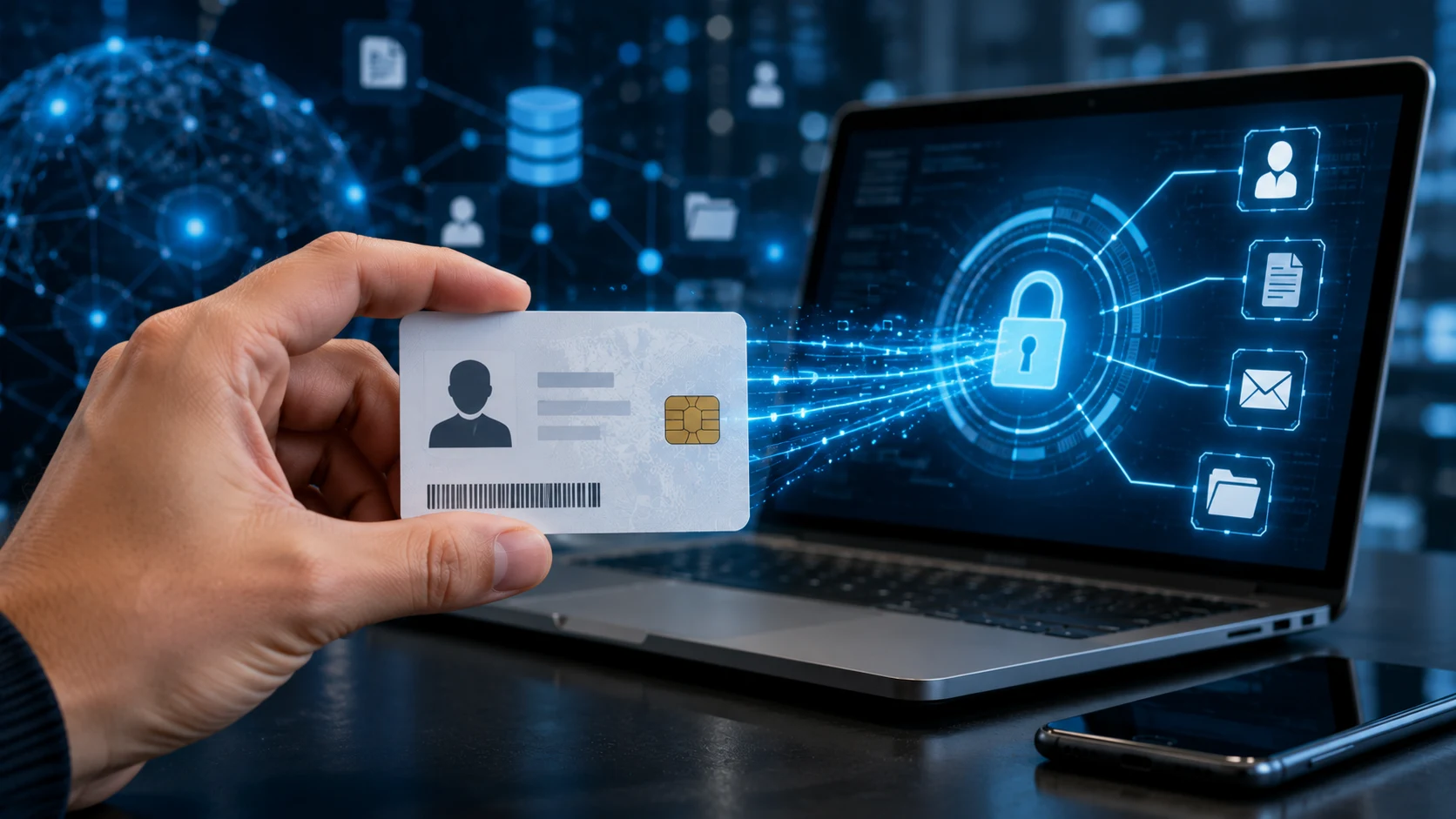
What Is a UID? Unique Identifiers Explained
A UID, short for unique identifier, is a value used to distinguish one user, device, record, object, account, or resource from another. UIDs appear throughout computing, databases, software systems, identity management, mobile platforms, operating systems, and digital services. Their main purpose is simple: they help systems recognize exactly which entity they are dealing with. A UID may look like a number, a string of characters, a code, or a more complex value such as a UUID. Even when names, labels, or other attributes change, the identifier can remain consistent. This makes UIDs essential for organizing data, managing permissions, preventing confusion, and maintaining reliable relationships between records.
In everyday technology, people often interact with systems that use unique identifiers without realizing it. A social platform may assign every account a UID, an operating system may give each user a numeric identifier, and a database may assign unique keys to customer records. Mobile apps may also create device or installation identifiers so activity can be linked to the correct application instance. These values work behind the scenes and are rarely meant to be memorable. Their importance comes from uniqueness and consistency rather than readability. As digital systems grow larger, reliable identifiers become increasingly important for keeping users, files, transactions, devices, and other resources separate.
The exact UID meaning depends on context. In Unix-like operating systems, UID commonly refers to a numeric user identifier associated with an account. In database systems, the term may describe a unique value assigned to a row or object. In hardware and networking, devices may have unique identifiers that help distinguish individual units. Some applications use internal account IDs that users never see. The word “unique” is important because the system expects the identifier to refer to one specific entity within its intended scope. However, uniqueness may apply globally, within one database, or only inside a particular system.
UIDs are especially valuable because human-readable information is not always reliable as a permanent identifier. Two employees can have the same name, usernames can change, email addresses can be updated, and product descriptions can be edited. If a system depended only on these attributes, records could become difficult to distinguish. A stable unique identifier provides a more dependable reference. The system can continue associating permissions, transactions, preferences, files, or history with the same entity even after visible details change. This separation between identity and display information is a fundamental principle in modern software and data management.
Understanding what a UID is helps explain how software keeps track of millions of users and resources without mixing them up. It also clarifies concepts such as primary keys, UUIDs, account IDs, device identifiers, user IDs, and access permissions. Although these terms are related, they are not always interchangeable. The following sections explain how UIDs work, where they are used, how they differ from other identifiers, and why they matter for security and data integrity. Practical examples make the concept easier to understand whether you are studying programming, databases, system administration, networking, or general technology.
What Is a UID?
A UID is a unique identifier assigned to a specific entity so a system can distinguish it from other entities. That entity might be a person, user account, device, database record, file, transaction, product, or application object. The identifier acts like an internal label that should refer to one specific item within a defined environment. Depending on the system, a UID can be numeric, alphabetic, hexadecimal, or composed of multiple character groups. The format matters less than its ability to uniquely identify the intended object. Systems use these values to retrieve information, apply permissions, connect related records, and avoid ambiguity.
A simple example can be found in a customer database. Imagine two customers named Ali Khan. If the company stored only their names, the system could easily confuse their orders, addresses, or support history. By assigning one customer UID such as 10482 and another such as 10736, the database can keep the records separate even though the names match. Employees may still see the customers’ names in the interface, but software relies on the unique identifiers internally. This approach prevents duplicate names from causing problems. It also allows visible information to change without breaking the connection between related records.
UIDs may be generated in several ways. Some systems assign sequential numbers such as 1001, 1002, and 1003. Others generate random or pseudo-random strings that are much harder to predict. Large distributed systems may use UUIDs or similar formats designed to minimize the chance of duplication across different machines. The method depends on scale, architecture, security requirements, and how widely the identifier needs to remain unique. A small internal application can often use simple database-generated IDs, while a global platform may need identifiers that can be generated independently across many servers without collisions.
The scope of uniqueness is another important concept. A UID does not always have to be unique across the entire world. It only needs to be unique within the system or namespace where it is used. For example, user number 500 may exist in two unrelated applications without causing any conflict because the applications maintain separate user databases. Within each application, however, two active records should not share the same UID if the system expects one-to-one identification. Understanding scope helps explain why the same number can safely appear in different technologies. Uniqueness is defined by context rather than appearance alone.
A UID is therefore best understood as an internal identity reference rather than simply a visible username or label. Its purpose is to give software a stable way to refer to one particular entity. The identifier can remain unchanged even when descriptive attributes are edited. This stability is why unique identifiers are widely used in databases, operating systems, APIs, cloud services, e-commerce platforms, and security systems. Without them, maintaining accurate relationships between large numbers of digital objects would become much more difficult. UIDs create the foundation that allows complex software systems to know precisely which user, object, or record they are processing.
How Does a UID Work?
A UID works by assigning a distinct value to an entity when that entity is created, registered, or first recognized by a system. For example, when a new account is created, the application may automatically generate a unique numeric or alphanumeric ID. This value is stored with the account record and becomes the system’s internal reference to that user. Other tables or services can then use the UID to link orders, settings, messages, permissions, and activity to the correct account. The user may never see the identifier, but it continues operating behind the interface. This allows the system to maintain consistent relationships even as visible profile information changes.
When the system needs information about that entity, it can query or reference the UID rather than relying on descriptive fields. Suppose a customer updates their email address. If the email were the primary identifier, changing it could complicate links to previous purchases or support tickets. If the account has a stable UID, the email can change while all related records continue pointing to the same underlying customer. This is one reason identifiers are often separated from attributes. Names, emails, titles, and descriptions are useful for humans, while UIDs provide stable references that software can use reliably.
The identifier also helps enforce relationships between different parts of a database. An orders table might store a customer UID so every order can be associated with the correct customer record. A permissions table might store a user UID to determine which resources that person can access. A messaging platform may associate each conversation with participant UIDs rather than names. These relationships are commonly created through database keys or application logic. Because the identifier is unique, software can retrieve the exact related record without ambiguity. This makes UIDs central to data integrity and application reliability.
Some systems expose UIDs through APIs or URLs, while others keep them completely internal. An API might return an object with a field such as user_id, account_id, or resource_id. Another platform might display an identifier inside an administrative dashboard for support or troubleshooting. Exposing an ID does not automatically make it sensitive, but developers should consider whether identifiers reveal information about system structure or can be abused. Sequential IDs, for example, can sometimes make it easier to guess neighboring records if access controls are weak. Security must therefore depend on proper authorization rather than secrecy of the identifier alone.
The lifecycle of a UID also matters. Many systems avoid reusing identifiers after an entity is deleted because reuse could create confusion in logs, backups, or historical records. If user 1050 is removed and the same UID is later assigned to someone else, old activity could appear to belong to the new user. Keeping identifiers unique over time reduces this risk. Some applications preserve inactive records, while others maintain tombstones or audit entries. The exact implementation varies, but stable and non-recycled identifiers generally make long-term data management easier and more reliable.
UID Meaning in Operating Systems
In Unix and Linux environments, UID commonly means user identifier, a numeric value associated with a user account. The operating system uses this number internally to determine file ownership, process ownership, permissions, and other security-related relationships. A person may log in using a username such as “alex,” but the system maps that name to a numeric UID. Programs and the kernel rely heavily on the numeric identifier rather than the human-readable username. This separation allows account names to change without necessarily changing ownership relationships. It is a fundamental part of how Unix-like systems manage multiple users securely.
Every process running on a Unix-like system operates in the context of one or more user identifiers. These identifiers help the operating system determine what the process is allowed to access. If a process attempts to open a protected file, the system can compare the process’s user identity with the ownership and permission settings on the file. This makes UIDs an important part of access control. Different processes can run under different user accounts to reduce risk. Services are often configured with dedicated system users so a compromised application does not automatically gain broad privileges across the entire machine.
The root account is a well-known example because it traditionally uses UID 0 on Unix-like systems. UID 0 represents highly privileged access, allowing the associated account to perform administrative actions that ordinary users cannot. This is why administrators treat root access carefully. Standard user accounts normally receive other numeric identifiers according to operating system conventions and local configuration. System accounts used by services may occupy particular ranges, while human users may receive values from another range. Exact numbering practices can differ between operating systems and distributions, so the number alone should always be interpreted within its system context.
File ownership also relies on UIDs. When a file is created, the filesystem typically records the UID of the owning user along with group and permission information. Commands may display the corresponding username for convenience, but the underlying filesystem metadata uses numeric values. This becomes especially noticeable when files are moved between systems where the same UID maps to a different username. A file could appear to belong to an unexpected person if user databases are not aligned. Networked environments therefore need consistent identity management when users access shared storage across multiple systems.
System administrators frequently work with UIDs when managing accounts, permissions, containers, shared storage, and security policies. Duplicate user identifiers can create serious permission problems because the system may treat two account names as the same underlying identity. Administrators therefore need to maintain consistent UID assignments where systems share files or identity information. Understanding this Unix UID meaning is important for Linux administration, cybersecurity, DevOps, and server management. Although it is a specialized use of the term, it is one of the most common technical contexts in which people encounter UID.
UID in Databases and Software Applications
Databases rely heavily on unique identifiers because they need dependable ways to distinguish individual records. A table containing customers, employees, products, or orders may include an ID column that uniquely identifies every row. This field is often configured as a primary key, although the exact design depends on the database. A customer might have UID 80041, while a product has a completely separate identifier in another table. These values make it possible to connect related information without depending on names or descriptions. As databases grow, reliable identifiers become essential for maintaining accurate relationships and efficient queries.
Sequential numeric IDs are common because they are simple and compact. A database can automatically generate the next value whenever a new row is inserted. This approach works well for many business applications and is easy to index. However, sequential IDs may not be ideal for every architecture. Distributed systems can have difficulty generating a single global sequence without coordination. They may also reveal approximate record counts or creation order when exposed publicly. For these reasons, some applications use random identifiers, UUIDs, or other schemes. The best choice depends on performance, security, distribution, and integration requirements.
Software applications often maintain both an internal UID and a user-facing identifier. A customer may choose a username such as “techlover92,” while the platform internally assigns a permanent account ID. The username can potentially change, but the internal UID remains stable. This separation gives users flexibility without disrupting database relationships. Social platforms, gaming systems, e-commerce applications, and productivity tools frequently follow this pattern. Developers can link posts, purchases, preferences, and permissions to the UID rather than a name that may be editable. Stable internal IDs simplify long-term application maintenance.
APIs also use unique identifiers extensively. When one service requests information about a user, order, file, or product, it often includes the object’s ID in the request. The receiving service can then retrieve the correct resource. This approach reduces ambiguity and works efficiently even when multiple resources have similar names. API responses may return identifiers so client applications can reference the same objects later. Developers should ensure that exposing an identifier does not bypass authorization controls. Knowing an object’s UID should never automatically grant permission to view or modify it.
Unique identifiers also support auditing and data history. When an employee changes a record, an application can store that employee’s UID with the audit event. If an order changes status, the system can record the order ID and the account responsible for the update. These identifiers allow administrators to reconstruct activity accurately even if names change later. Reliable auditing is important for troubleshooting, compliance, security investigations, and business reporting. By giving every relevant object a stable identity, software can preserve relationships and history more accurately over long periods.
UID vs UUID: What Is the Difference?
UID and UUID are related terms, but they do not mean exactly the same thing. UID is a broad concept meaning unique identifier, while UUID stands for Universally Unique Identifier. Any value that uniquely identifies an entity within its intended system can be considered a UID. A UUID, by contrast, follows a standardized 128-bit identifier format designed to provide an extremely low probability of duplication. In other words, every UUID can function as a unique identifier, but not every UID is a UUID. A simple database value such as 1527 can be a UID without being a UUID.
UUIDs commonly appear as long hexadecimal strings separated by hyphens. Their format makes them much longer than ordinary sequential database IDs. The advantage is that different systems can generate UUIDs independently without relying on one central counter. This is valuable in distributed applications where multiple servers, devices, or services may create records simultaneously. If each component had to request the next numeric ID from a central source, that dependency could become inconvenient or limiting. UUID generation helps reduce the need for that coordination while maintaining extremely strong uniqueness properties.
A simple numeric UID can still be preferable in many applications. Integers are compact, easy to index, fast to compare, and convenient for internal database relationships. If one database controls record creation, an auto-incrementing primary key may be entirely sufficient. UUIDs become more attractive when records are created across multiple systems, need identifiers before reaching the central database, or must be merged without collisions. There is no universal rule that UUIDs are better. Identifier design should match application architecture and operational requirements.
Privacy and security considerations can also influence the choice. Sequential IDs can be predictable, which may expose information about creation order or approximate record volume. A URL ending in /customer/1001 might suggest that /customer/1002 also exists. However, switching to UUIDs does not replace authorization. An application must still verify whether the requesting user has permission to access each resource. Random-looking identifiers reduce easy guessing but should be considered defense in depth rather than a primary access control. Secure systems assume identifiers may become known and enforce permissions independently.
Understanding the difference helps when reading technical documentation. If a system mentions UID, it may simply mean whatever unique ID scheme that application uses. If it specifically mentions UUID, the identifier is likely based on a standardized universally unique format. Other identifier types exist as well, including GUIDs, database keys, hashes, serial numbers, and custom account IDs. These terms overlap in purpose but differ in format and generation method. The key question is not only whether an identifier is unique but also where it must be unique and how the system creates and manages it.
UID vs User ID and Username
The terms UID, user ID, and username are sometimes used interchangeably, but they can represent different things. A UID is generally an internal unique identifier assigned to a user or other entity. A user ID may mean the same thing in some systems, but in others it can refer to a login identifier or account number visible to the user. A username is usually a human-readable name selected or assigned for logging in or displaying an account. Because terminology varies between platforms, context matters. The safest approach is to determine whether the value is intended as a permanent internal identifier or a changeable human-facing label.
A username is often designed to be memorable. Examples might include “jordan123” or “marketing_team.” Users can type these values during login or share them with others. A UID, by contrast, might look like 8749213 or a long random string. The system does not expect users to memorize it. This difference reflects their purposes. Usernames support human interaction, while internal identifiers support consistent machine-level relationships. A platform can therefore allow someone to change a username without needing to rebuild all references to that person’s posts, files, messages, or purchases.
Email addresses provide another useful example. Many services allow users to log in with an email address, so the email may feel like the account’s identity. However, the application may still maintain a hidden UID underneath. If the user changes the email address, their orders and account history remain connected because those records reference the internal identifier. Treating email addresses as permanent database keys can cause complications because addresses can change or be reassigned. Stable UIDs solve this problem by separating identity from contact information.
Some systems expose user IDs publicly. Social networks, game platforms, support systems, and enterprise software may display numeric account IDs for troubleshooting or profile links. In those cases, the user ID can effectively be the platform’s UID for that account. Other applications keep internal IDs hidden and expose only usernames. Neither design is automatically better. Developers choose based on usability, privacy, integration, and system architecture. What matters is that the application maintains a dependable way to distinguish accounts internally.
Understanding these differences prevents confusion during account management and software development. Changing a username usually changes how an account is displayed, while changing a fundamental UID could affect relationships across many systems. This is why internal identifiers are often immutable after creation. Developers should avoid using editable fields as permanent references when a stable ID is available. For users, recognizing that the visible username is not always the underlying account identity helps explain why platforms can rename accounts without losing history or settings.
UID in Devices and Hardware
Devices often use unique identifiers so systems can distinguish one physical unit from another. A manufacturer may assign a serial number during production, while a software platform may create additional device IDs when the device is registered. These values can help with inventory, warranty management, configuration, troubleshooting, and remote administration. A company managing thousands of laptops, phones, sensors, or industrial machines needs a reliable way to identify each one individually. Device names alone are not sufficient because names can be duplicated or changed. Unique identifiers provide a more stable reference.
Mobile devices may contain multiple identifiers serving different purposes. Hardware components, operating systems, cellular networks, and applications can each maintain their own identity values. Some identifiers are tied closely to hardware, while others can reset when software is reinstalled or settings are erased. Modern platforms increasingly limit access to persistent device identifiers because they can create privacy concerns when used for tracking. Developers may instead receive application-specific or resettable identifiers. This shows that a UID is not automatically permanent or universally accessible simply because it is unique within one context.
Industrial and Internet of Things devices also depend on unique identification. A smart sensor in a factory may have a UID that allows the management platform to associate measurements with the correct physical location. If hundreds of identical temperature sensors are installed, their model numbers alone cannot distinguish them. Each device needs an individual identity. The platform can then store configuration, firmware status, maintenance history, and telemetry against that identifier. Device UIDs become especially important as IoT networks scale to thousands or millions of connected endpoints.
Hardware identifiers may also be used in licensing or access control. Software could associate a license with a particular machine or create a fingerprint based on selected device characteristics. However, these approaches need careful design because hardware can be replaced and virtualized environments can change identifiers unexpectedly. Relying too heavily on one hardware ID can make legitimate upgrades difficult. Security systems also should not assume that every device identifier is impossible to spoof. The strength of an identity mechanism depends on how the value is generated, stored, validated, and protected.
For asset management, UIDs provide a consistent link between physical equipment and digital records. An administrator can scan an asset tag, retrieve the corresponding record, and view ownership, location, maintenance, or compliance information. If the device’s hostname changes, the asset identifier can remain the same. This separation makes large inventories easier to manage. Whether the identifier is a serial number, custom asset ID, UUID, or vendor-specific code, the principle is similar. A stable unique value helps software know exactly which physical device it is dealing with.
Why Unique Identifiers Are Important
Unique identifiers are important because modern systems contain large numbers of objects that may look similar or share the same names. Without dependable IDs, software could easily associate information with the wrong record. Two customers can have identical names, two files can share the same filename in different locations, and thousands of devices can be the same model. UIDs remove this ambiguity by giving each entity a distinct reference. This supports accurate data retrieval and prevents one object’s information from accidentally being applied to another. Reliable identification is therefore fundamental to software correctness.
Data relationships also depend heavily on UIDs. A database may contain separate tables for customers, invoices, products, payments, and support tickets. Unique identifiers allow these records to be connected without repeating large amounts of information. An invoice can store a customer UID instead of copying the customer’s full profile into every transaction. If the address changes, the customer record can be updated without changing the identity itself. This structure reduces duplication and supports cleaner database design. It also helps applications retrieve related information efficiently.
Security and permissions are another major reason identifiers matter. Access control systems need to know which user or service is requesting a resource. If permissions were based only on names that could change or duplicate, authorization would be unreliable. Stable user identifiers allow systems to associate roles, groups, ownership, and policy decisions with the correct identity. File systems, cloud platforms, databases, and enterprise applications all use this principle. However, a UID itself is not proof of identity. Authentication verifies who is making the request, while the identifier helps the system reference the resulting identity consistently.
Logging and troubleshooting also become more accurate when systems use stable identifiers. Imagine an application log reporting that “John” changed a configuration setting. If several employees have that name, the record is ambiguous. Logging a unique user ID removes the uncertainty. Similar benefits apply to devices, transactions, API requests, and application objects. Support teams can trace events across multiple services when the same identifier is propagated consistently. This makes diagnosing failures easier in complex distributed systems. Reliable IDs therefore support observability as well as data organization.
Unique identifiers also help systems evolve over time. Usernames can change, products can be renamed, departments can reorganize, and devices can receive new hostnames. If relationships depend on stable UIDs, these descriptive changes do not break internal connections. This flexibility makes software easier to maintain and data easier to migrate. Developers can update display information while preserving historical relationships. In large systems, this stability becomes increasingly valuable because thousands of services and records may depend on the same underlying identity. UIDs provide continuity while other attributes change.
UID Security and Privacy Considerations
A UID should generally be treated as an identifier, not as a secret. Developers sometimes assume that hiding or randomizing an ID is enough to protect a resource, but secure applications must enforce authorization independently. If a user discovers another account’s ID, they should not automatically gain access to that account’s data. The server must verify whether the authenticated requester is allowed to view or modify the requested resource. This protects against common access-control problems where changing an ID in a URL or API request exposes another user’s information. Security must come from permissions rather than obscurity.
Predictable identifiers can still create additional risk. Sequential account numbers make it easy to guess nearby values, which can help an attacker test whether authorization controls are weak. Random or UUID-style identifiers make this guessing more difficult, but they should only be considered an additional protective layer. An unpredictable ID may also reduce accidental disclosure of record counts or creation order. However, random identifiers can appear in logs, emails, or shared links just like sequential ones. Applications should therefore assume IDs may eventually be observed and design security accordingly.
Privacy becomes more important when identifiers are persistent across different contexts. A stable device ID or advertising identifier can potentially be used to link activity over time. If the same UID is shared across unrelated services, organizations may be able to build detailed behavioral profiles. Modern privacy-focused designs often limit identifier scope, rotate values, or provide users with controls for resetting certain IDs. Application-specific identifiers can reduce cross-service tracking because the same device appears differently to different apps. The correct approach depends on the purpose and sensitivity of the data being processed.
Logging practices also deserve attention. UIDs are useful for debugging, but logs can become privacy-sensitive when identifiers are combined with personal information, location, health data, financial activity, or other sensitive attributes. Organizations should control who can access logs and how long they are retained. When possible, developers can avoid storing unnecessary personal details alongside identifiers. Pseudonymous IDs can reduce direct exposure, although they may still qualify as personal data when they can be linked back to individuals. Good privacy design considers the entire data relationship rather than the appearance of the ID alone.
Identifier security also includes preventing collisions and unauthorized modification. If two records accidentally receive the same UID, the system could mix data or permissions. Databases often enforce uniqueness constraints to reduce this risk. Applications should also protect identity fields from inappropriate user changes. A person may be allowed to edit a display name while remaining unable to alter their internal account ID. Strong identifier management therefore combines uniqueness, immutability where appropriate, access control, and privacy-aware design. These practices help ensure that UIDs support reliable identity rather than becoming a source of security problems.
Common Examples of UIDs
A user account ID is one of the simplest UID examples. When someone creates an account on a website or application, the system may assign a number such as 748302. That number remains associated with the account even if the person later changes their username or email address. Orders, messages, saved preferences, and permissions can reference the internal account ID. This provides a stable foundation for account management. The customer may never need to know the value, but the application depends on it constantly. Many online services use this pattern because it separates permanent identity from editable profile details.
Database primary keys are another common example. A products table might assign product ID 501 to one item and 502 to another. An orders table can then store those values to identify exactly which products were purchased. This avoids relying on product names, which could be duplicated or renamed. Primary keys also help databases index and retrieve rows efficiently. The identifier can be a sequential integer, UUID, or another unique format. Regardless of implementation, the objective remains consistent: each record needs a dependable identity within the table.
Operating system user identifiers provide another clear example. Linux and other Unix-like systems assign numeric UIDs to user accounts. File ownership and process permissions are associated with these numbers internally. A username acts as a human-readable label, while the numeric UID provides the underlying system identity. Administrators may encounter these identifiers when viewing files, configuring permissions, or managing shared storage. This use demonstrates how a UID can influence security directly. The operating system depends on unique user identities to determine which actions each account is allowed to perform.
Devices may also receive UIDs when registered with management platforms. A company laptop, industrial sensor, or connected appliance can be associated with a unique value in an inventory system. Administrators then attach information such as location, firmware version, assigned employee, or maintenance history to that ID. Even if the device name changes, the underlying record remains connected. This is especially valuable in large organizations where thousands of similar devices need to be tracked accurately. Unique device identities make automation and remote management much more reliable.
Transactions often receive unique identifiers as well. An e-commerce purchase, bank transfer, payment attempt, or support request can be assigned a transaction or case ID. These identifiers help businesses trace individual events through complex systems. Customer support may ask for an order number so the correct transaction can be retrieved quickly. Payment systems can use unique IDs to prevent duplicate processing or reconcile records between services. This illustrates how unique identifiers extend far beyond users. Any digital object or event that needs reliable tracking can benefit from having a distinct identity.
How UIDs Are Generated
One of the simplest ways to generate UIDs is through sequential numbering. A database maintains a counter and assigns the next available number whenever a new record is created. If the previous user received ID 1005, the next may receive 1006. This method is easy to implement, efficient to index, and suitable for many centralized applications. However, it requires coordination if multiple systems create records independently. It can also expose creation order when IDs are public. Despite these limitations, auto-incrementing integers remain widely used because they are simple and perform well.
Random identifiers provide another option. Instead of assigning the next predictable number, software generates a value from a sufficiently large range. If the range is large and the random generation process is good, the probability of collisions can be very low. The system may still check whether a generated ID already exists before accepting it. Random IDs can make public resources harder to enumerate than sequential numbers. They are useful when predictability is undesirable. However, the identifier space must be large enough to keep collision risk acceptably low as the system grows.
UUIDs are commonly used when identifiers need to be generated across distributed systems. Their 128-bit format provides an enormous identifier space, making accidental duplication extremely unlikely when generated correctly. Different UUID versions use different generation strategies, such as randomness, time-related information, or name-based calculations. Applications can create them without requesting a central sequential counter. This makes UUIDs useful for offline devices, microservices, distributed databases, and systems that create records in multiple locations. Their main tradeoffs include larger storage requirements and less human-readable values.
Some identifiers are derived from other information. A system might generate an ID based on a hash of specific data or combine timestamps with machine identifiers and counters. Distributed ID schemes can encode time, server identity, and sequence information into one numeric value. These methods help systems generate sortable or globally unique identifiers efficiently. However, encoding information inside IDs can reveal system details if the values are exposed publicly. Developers should understand what information an identifier may disclose. Good identifier design balances uniqueness, performance, scalability, privacy, and operational needs.
Regardless of generation method, systems should have safeguards against duplication. Databases can enforce unique constraints so two rows cannot accidentally receive the same primary identifier. Applications should handle collision errors correctly rather than assuming they can never occur. Identifier formats should also be large enough for expected system growth. A numbering scheme that works for a small application may eventually run out of values at larger scale. Planning for uniqueness over the full lifecycle of the system helps prevent difficult migration problems later. UID generation may seem simple, but it is a foundational design decision.
Conclusion
A UID, or unique identifier, is a value that allows a system to distinguish one entity from another. That entity can be a user, database record, device, transaction, file, product, or almost any other digital object. The identifier is designed to provide a stable reference that software can use even when visible details change. This makes UIDs essential for organizing data and maintaining accurate relationships. Names and descriptions can duplicate or change, but a properly managed UID remains tied to one specific entity. That stability is the main reason unique identifiers are used throughout modern computing.
Different systems use different UID formats. A small database may rely on sequential integers, while a distributed application may use UUIDs. Unix operating systems commonly use numeric UIDs to identify user accounts and enforce file or process permissions. Device platforms may create hardware or application-specific identifiers. E-commerce systems assign unique values to customers and transactions. These examples all follow the same underlying principle. Each object needs an identity that software can reference reliably without ambiguity.
UIDs should also be distinguished from usernames, email addresses, and other human-readable attributes. A username may be editable, while an internal account UID usually remains stable. This allows platforms to update display information without breaking references to messages, purchases, permissions, or settings. Similarly, a product can be renamed while its internal product ID remains unchanged. Separating identity from descriptive information makes databases and applications easier to maintain. It also reduces the risk of confusion when different entities share the same visible name.
Security and privacy remain important considerations. Knowing a UID should never automatically grant access to a protected resource. Applications must enforce authentication and authorization independently. Predictable IDs may make enumeration easier, while persistent identifiers can create privacy concerns if they are used to track activity across contexts. Developers should therefore choose identifier formats carefully and limit unnecessary exposure. Strong UID design combines uniqueness with appropriate access controls, lifecycle management, and privacy practices. The goal is dependable identification without creating avoidable risk.
Ultimately, understanding what a UID is provides a useful foundation for learning databases, operating systems, APIs, cybersecurity, cloud computing, and software development. Unique identifiers quietly support many of the digital services people use every day. They help systems know which user owns a file, which customer placed an order, which device sent a measurement, and which record should be updated. Although users may rarely notice them, UIDs are essential to accurate digital identity and data organization. Their role is simple but fundamental: give every important entity a reliable identity that software can distinguish from all others.
Frequently Asked Questions About UIDs
What does UID stand for?
UID commonly stands for unique identifier or user identifier, depending on the context. It is a value used to distinguish one user, record, device, or other entity from others within a system.
Is a UID the same as a username?
Not necessarily. A username is usually a human-readable account name, while a UID is often an internal value that remains stable even if the username changes.
What is a UID in Linux?
In Linux and other Unix-like systems, a UID is a numeric user identifier assigned to each account. The operating system uses it for file ownership, process identity, permissions, and access control.
What is the difference between UID and UUID?
UID is a general term for any unique identifier, while UUID refers to a standardized 128-bit universally unique identifier format. A UUID can serve as a UID, but many UIDs use simpler formats such as integers.
Why are UIDs important?
UIDs prevent confusion between users, devices, transactions, and other records that may have similar names or attributes. They also help systems maintain stable relationships, enforce permissions, track activity, and preserve data integrity.