
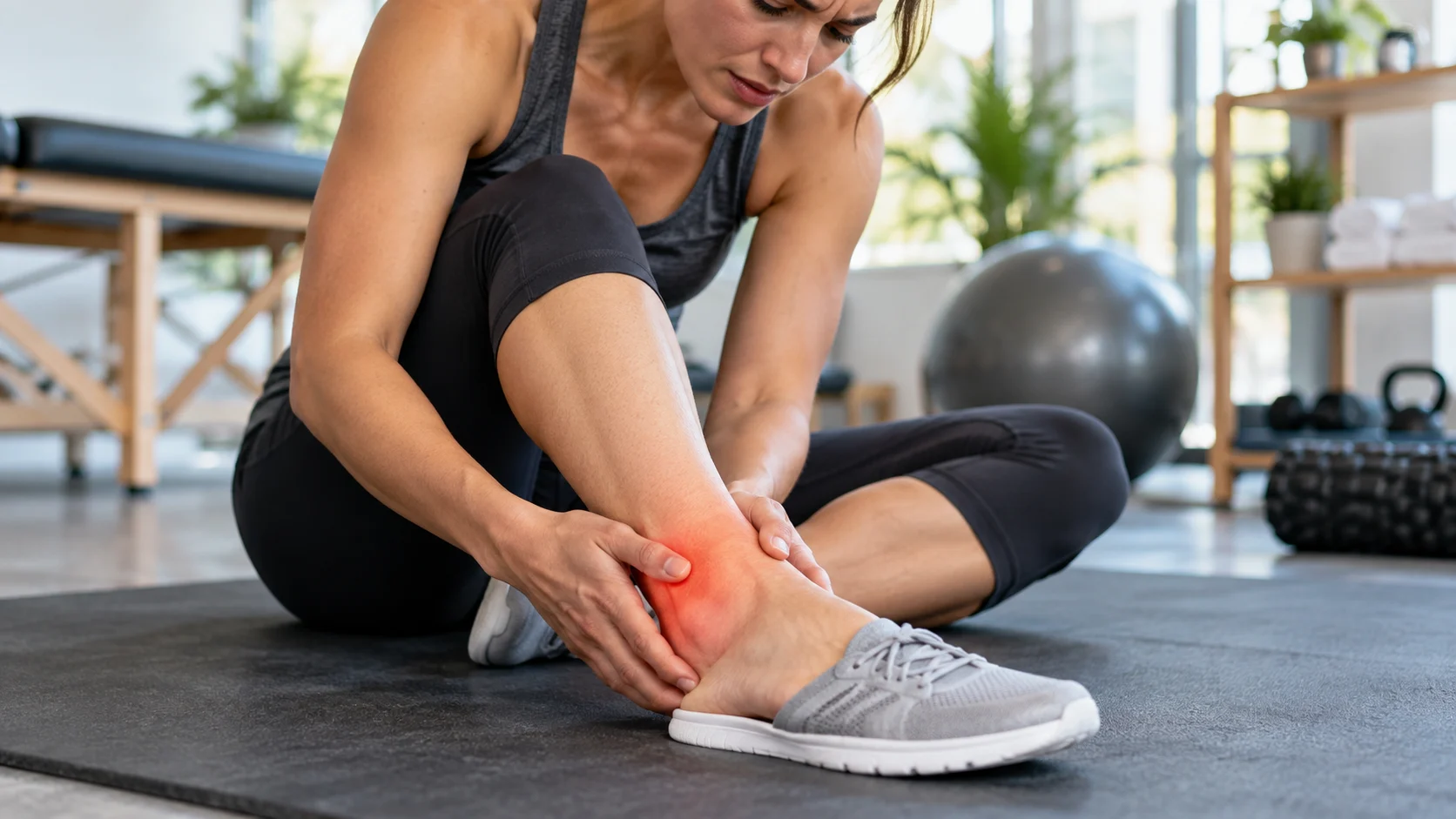
What Is Ankle Bursitis?
Ankle bursitis happens when a small fluid-filled sac called a bursa becomes irritated or inflamed around the ankle or heel. Bursae help reduce friction between bones, tendons, skin, and other tissues. When repeated pressure or irritation affects one of these sacs, walking, wearing shoes, or moving the ankle may become uncomfortable.
Bursitis around the ankle is less commonly discussed than bursitis at the shoulder, hip, or knee, but it can still interfere with everyday movement. The discomfort often develops around areas exposed to pressure, particularly near the back of the heel. Symptoms can appear gradually or follow repeated friction from exercise, footwear, or certain activities.
Ankle bursitis should not automatically be assumed whenever the ankle feels sore. Tendon problems, sprains, arthritis, fractures, and other conditions can cause similar symptoms. Paying attention to the location of pain, swelling, footwear pressure, and recent activity can help identify whether bursitis may be contributing.
Where Can Bursitis Develop Around the Ankle?
One important bursa sits near the Achilles tendon at the back of the heel. Retrocalcaneal bursitis affects the bursa located between the Achilles tendon and heel bone. Pain is often felt deep at the back of the ankle and may become more noticeable when walking uphill, running, or bending the ankle forward.
Another bursa can become irritated closer to the skin behind the heel. This type of inflammation may be associated with repeated rubbing from shoes, particularly footwear with a stiff heel counter. The area can become tender, puffy, or sensitive whenever the back of the shoe presses against it.
Because the Achilles tendon, heel bone, and bursae are located close together, symptoms can overlap. Someone may have bursitis, Achilles tendon irritation, or both conditions at the same time. A healthcare professional can assess the area when symptoms persist or the exact source of pain is difficult to identify.
Common Causes of Ankle Bursitis
Repeated friction or pressure is one of the most common triggers for ankle bursitis. Tight shoes, stiff boots, or footwear that repeatedly rubs the back of the heel can irritate nearby tissue. The problem may become more noticeable after long periods of walking, standing, hiking, or wearing unfamiliar shoes.
Sudden increases in exercise can also overload structures around the ankle. Running more miles, adding hills, starting a new sport, or increasing training frequency quickly can raise stress around the heel. The bursa may become irritated alongside the Achilles tendon when the area is exposed to more load than it is prepared to handle.
Less commonly, inflammatory conditions or infection can contribute to bursitis. These causes require different treatment from simple mechanical irritation. Significant redness, warmth, fever, or rapidly worsening swelling should therefore be taken more seriously than ordinary soreness after activity.
What Does Ankle Bursitis Feel Like?
Ankle bursitis often causes localized pain and tenderness near the affected bursa. The discomfort may feel aching, sharp, or sensitive to pressure, especially when shoes rub against the area. Some people notice stiffness when first standing after rest or during the first few steps in the morning.
Swelling can occur around the back of the heel or ankle, depending on which bursa is irritated. The area may feel puffy or slightly warm, although severe redness or intense heat is less typical of uncomplicated overuse. Symptoms often become more noticeable during activity and ease somewhat with reduced pressure.
Pain may also increase when the ankle bends deeply or when you rise onto your toes. These movements place more demand around the Achilles tendon and heel. Because similar symptoms can occur with tendon problems, a precise diagnosis can be useful when discomfort does not improve as expected.
Ankle Bursitis vs. Achilles Tendon Pain
Achilles tendinopathy affects the tendon connecting the calf muscles to the heel bone, while bursitis involves a nearby fluid-filled sac. Both problems can cause pain at the back of the ankle, which makes them easy to confuse. The exact location and movements that trigger symptoms can provide useful clues.
Achilles tendon pain is often felt directly within the tendon and may become more noticeable during calf raises, running, or jumping. Bursitis may feel deeper near the heel bone or more sensitive to direct pressure from footwear. However, the two conditions can coexist, making self-diagnosis difficult.
Treatment also differs slightly depending on the structure involved. Tendons usually benefit from carefully progressed strengthening, while an irritated bursa may need more emphasis on reducing friction and pressure initially. Persistent symptoms deserve assessment so rehabilitation can target the correct tissues.
How Footwear Can Make Ankle Bursitis Worse
Footwear can play a major role when bursitis develops around the back of the heel. Shoes with rigid heel counters may repeatedly press against the irritated area. Even properly sized shoes can become uncomfortable if their shape places direct pressure exactly where the bursa is sensitive.
Switching temporarily to shoes with a softer or more open heel may reduce friction. The goal is not necessarily to buy specialized footwear immediately, but to stop repeatedly compressing the irritated area. Small adjustments can sometimes make walking much more comfortable while inflammation begins to settle.
Avoid assuming that one shoe style is universally best. Foot shape, activity, walking mechanics, and comfort vary widely between people. Choose footwear that feels secure without creating pressure points, and replace pairs that consistently cause rubbing, blistering, or heel discomfort.
Can Pregnancy Affect Ankle Discomfort?
Pregnancy can change body weight, fluid distribution, ligament behavior, and walking patterns, which may make the feet and ankles feel different. Some people notice swelling or greater sensitivity around the lower legs as pregnancy progresses. These changes do not automatically mean bursitis is present, but they may influence comfort and footwear fit.
Shoes that previously felt comfortable may become tighter as the feet or ankles change. Increased pressure around the heel can potentially aggravate an already sensitive bursa. Comfortable footwear, regular position changes, and advice from a maternity healthcare provider can be useful when ankle symptoms develop during pregnancy.
Pregnancy also brings many unrelated health and lifestyle questions. For broader information about another common topic, this guide to sex during pregnancy explains what many people can expect throughout different trimesters. Any new or significant ankle swelling during pregnancy should still be discussed with a healthcare professional.
Simple Relief Options for Mild Ankle Bursitis
Start by reducing activities or footwear that clearly increase pressure around the painful area. This may mean shortening walks, temporarily reducing running, or switching shoes. Complete inactivity is not always necessary if normal movement remains comfortable and symptoms do not progressively worsen.
A wrapped cold pack may provide temporary relief when the ankle feels irritated or swollen. Apply it for a short period and protect the skin rather than placing ice directly against it. Elevating the foot during rest may also feel helpful when mild swelling is present.
The most important early strategy is often removing the repeated source of irritation. Continuing to wear the same rubbing shoes or maintaining the same high training load can prevent the bursa from settling. Once symptoms improve, activity can usually be rebuilt gradually rather than resumed at full intensity immediately.
Gentle Mobility and Strength Exercises
Gentle ankle movement can help prevent excessive stiffness while symptoms settle. Slowly point and flex the foot or perform controlled ankle circles through a comfortable range. Avoid forcing deep ankle movement if it produces sharp pain around the heel or noticeably increases swelling afterward.
Calf strengthening may eventually be useful, especially when returning to walking, running, or sport. Begin with controlled double-leg calf raises if they feel comfortable, then progress gradually. Exercise should challenge the muscles without repeatedly compressing or aggravating the painful bursa.
Strength around the hips and legs can also support overall lower-body movement. Step-ups, balance exercises, and other controlled movements may be added as symptoms improve. The goal is to rebuild capacity throughout the leg rather than treating the ankle as an isolated structure.
What to Avoid With Ankle Bursitis
Avoid repeatedly rubbing or pressing the painful area simply to test whether it still hurts. Direct pressure can keep an irritated bursa sensitive, particularly when the problem is related to footwear friction. Give the area time away from the pressure that initially triggered the symptoms.
Aggressive stretching can also be counterproductive when deep ankle bending compresses the inflamed bursa. Mobility should remain comfortable rather than forced. If a stretch produces sharp pain at the back of the heel, reduce the range or choose another movement until the irritation settles.
Do not immediately return to long runs, steep hills, or high-impact training once the pain improves slightly. The tissues still need time to tolerate higher loads. Gradual progression lowers the chance that symptoms will flare again after only one or two demanding sessions.
How Long Does Ankle Bursitis Take to Improve?
Recovery time depends on how irritated the bursa is and whether the aggravating factor can be removed. Mild cases related to footwear pressure or temporary overuse may improve over several days or weeks. Persistent symptoms can last longer when the area continues to experience friction or heavy activity.
Improvement should generally be gradual rather than dramatic. You may first notice less pain while wearing shoes, followed by greater comfort during walking and exercise. Returning to full activity should depend on how the ankle responds rather than simply waiting for a certain number of days.
If symptoms remain unchanged or worsen despite reducing pressure and training load, another problem may be involved. Achilles tendinopathy, bone irritation, arthritis, or other conditions can resemble bursitis. Professional assessment can help confirm the diagnosis and guide more specific treatment.
When Should You Get Medical Help?
See a healthcare professional if ankle or heel pain persists for several weeks, repeatedly returns, or makes normal walking difficult. A clinician can examine the location of tenderness, ankle movement, Achilles tendon, footwear factors, and other possible causes. Imaging may sometimes be considered when symptoms remain unclear.
Seek medical attention sooner if swelling becomes significant or the area develops marked redness and warmth. Fever, drainage, or feeling generally unwell may suggest infection rather than simple mechanical bursitis. Infected bursae require medical treatment and should not be managed only with rest or cold packs.
Prompt evaluation is also appropriate after major trauma, inability to bear weight, obvious deformity, or sudden severe pain. These symptoms could indicate a fracture, tendon injury, or another problem. Getting the correct diagnosis helps ensure that rehabilitation matches the actual condition.
Conclusion
Ankle bursitis occurs when a small fluid-filled sac around the ankle or heel becomes irritated. Repeated footwear friction, overuse, running, and sudden training changes are common possible triggers. Pain often develops near the back of the heel and may become more noticeable during walking or when shoes press against the area.
Mild cases may improve by reducing friction, adjusting footwear, modifying activity, and using cold or elevation for comfort. Gentle ankle movement and progressive strengthening can be introduced as symptoms settle. Avoid aggressive stretching or rapid return to demanding exercise while the area remains sensitive.
Persistent pain, significant swelling, redness, warmth, fever, or difficulty bearing weight should be professionally assessed. Not every pain near the heel is bursitis, and Achilles or other ankle problems can feel very similar. An accurate diagnosis can help you choose the safest and most effective recovery approach.
FAQs
What causes bursitis in the ankle?
Ankle bursitis can result from repeated footwear pressure, running, increased activity, or irritation near the Achilles tendon. Inflammatory conditions and infection can also cause bursitis in some cases.
What does ankle bursitis feel like?
It may cause localized heel or ankle pain, tenderness, swelling, and discomfort when shoes press against the area. Walking, running, or bending the ankle may make symptoms more noticeable.
Can you walk with ankle bursitis?
Light walking may be possible if symptoms remain mild and do not worsen. Reduce distance or pressure if walking increases pain, and avoid footwear that repeatedly rubs the irritated area.
Is stretching good for ankle bursitis?
Gentle mobility may help maintain movement, but aggressive stretching can compress and irritate some bursae. Avoid forcing the ankle into positions that produce sharp pain at the back of the heel.
When should I see a doctor for ankle bursitis?
Seek care for persistent pain, major swelling, redness, warmth, fever, or difficulty bearing weight. Severe symptoms after trauma or suspected infection should be evaluated promptly.