
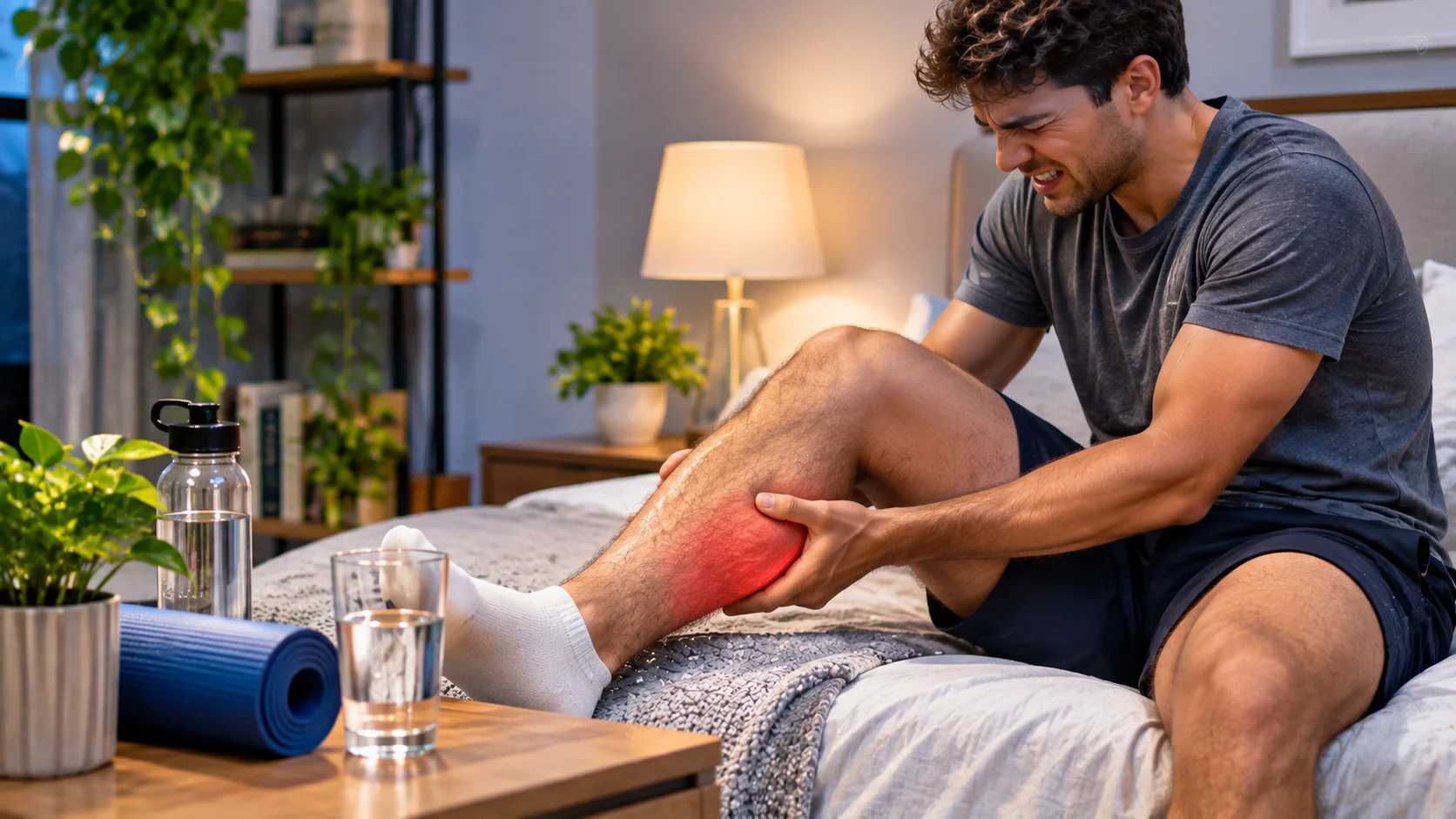
Leg cramps can strike suddenly, causing sharp pain and tightness that makes moving uncomfortable. These involuntary muscle contractions commonly affect the calves, thighs, and feet. If you want to know how to stop leg cramps immediately, gentle stretching, relaxing the affected muscle, and changing your position may provide quick relief.
A leg cramp occurs when a muscle suddenly contracts and cannot relax normally. The discomfort may last a few seconds or several minutes, sometimes leaving the affected area sore afterward. Although most leg cramps are harmless, frequent episodes can interfere with sleep, exercise, and everyday activities.
Understanding what causes leg cramps can help you choose appropriate relief methods and recognize when medical attention is necessary. This guide explains practical ways to ease muscle cramps, manage nighttime symptoms, and reduce recurring episodes. You will also learn which home remedies may help and which symptoms should never be ignored.
What Are Leg Cramps and Why Do They Happen?
Leg cramps are sudden, involuntary contractions of one or more muscles in the legs. The affected muscle becomes tight and painful, sometimes creating a noticeable hard area beneath the skin. Most episodes affect the calf muscles, although cramps can also occur in the thighs and feet.
Muscle cramps may develop during physical activity, while resting, or unexpectedly during sleep. Their exact cause is not always clear, particularly when they occur without an obvious trigger. Muscle fatigue, prolonged positioning, dehydration, and certain medical conditions may contribute to some episodes, but not every cramp results from these factors.
Most ordinary muscle cramps disappear without causing lasting damage. However, temporary soreness can remain after the contraction stops, especially when the cramp was intense. Understanding the difference between a typical muscle cramp and other causes of leg pain is important when deciding whether home treatment is appropriate.
How to Stop Leg Cramps Immediately
When a leg cramp begins, stop the activity you are performing and avoid forcing the affected muscle. Gently stretching the contracted muscle is often one of the most useful immediate relief techniques. The correct movement depends on whether the cramp affects your calf, thigh, or another muscle group.
For a calf cramp, slowly straighten your knee and bring your toes toward your shin. This movement lengthens the calf muscles and may help the contraction relax. You can perform it while sitting, keeping the movement gentle and avoiding any position that creates additional sharp pain.
If the cramp begins to settle, gradually move the leg through a comfortable range of motion. Some people find that standing or walking slowly afterward helps restore normal movement. However, avoid aggressive stretching or continuing demanding exercise until the muscle feels comfortable and the painful contraction has passed.
Stretch Your Calf to Relieve a Leg Cramp
Calf cramps are among the most common types of sudden leg muscle contractions. They can interrupt walking, exercise, or sleep because the calf becomes temporarily tight and painful. A gentle calf stretch may help relax the muscle and reduce discomfort without requiring complicated equipment.
Sit on a stable surface with the affected leg extended comfortably in front of you. Slowly pull your toes toward your body while keeping the knee reasonably straight. You should feel gentle tension along the back of your lower leg, but the movement should not create worsening pain.
Maintain the stretch briefly until the muscle begins relaxing, then release it gradually. If necessary, repeat the movement gently rather than pulling harder. People with recent leg injuries or unexplained swelling should avoid forcing stretches and seek assessment when the symptoms do not resemble their usual muscle cramps.
Try a Standing Calf Stretch for Quick Relief
A standing calf stretch may help relieve a cramp when you can safely stand and maintain your balance. This technique uses a supported position to gradually lengthen the tight muscle. It is particularly useful when the contraction affects the back of the lower leg.
Stand facing a wall and place your hands against it for support. Move the affected leg slightly backward while keeping its heel on the floor. Gently bend the front knee and shift your weight forward until you feel a comfortable stretch in the affected calf.
Avoid bouncing, forcing your heel downward, or pushing through significant pain. Return to a neutral position once the cramp begins to release. If standing makes you feel unsteady, use a seated stretch instead, since immediate cramp relief should not increase your risk of falling.
How to Stop Thigh Cramps Quickly
Thigh cramps can affect either the front or back muscles of the upper leg. These contractions may develop after demanding physical activity or occur unexpectedly during rest. The most suitable stretching technique depends on which muscle group is involved and whether the movement can be performed comfortably.
For a cramp at the back of the thigh, gently straighten the affected knee while maintaining a supported position. A mild hamstring stretch may help the muscle relax. Avoid suddenly bending forward or forcing the leg straight, particularly if the discomfort began during an injury.
If the cramp affects the front of the thigh, a gentle quadriceps stretch may be helpful. Stand with stable support and carefully bend your knee only as far as comfortable. Stop if the movement causes joint pain, and seek medical guidance if symptoms include weakness, swelling, or persistent difficulty walking.
Gentle Massage for Leg Cramp Relief
Gentle massage may help some people relax a cramped muscle and feel more comfortable. Light rubbing can also provide a soothing sensation after the contraction begins to settle. However, massage should be comfortable and should not involve forceful pressure on an area that is unusually painful.
Use your hand to apply gentle strokes over the affected muscle while maintaining a relaxed position. Avoid pressing deeply or repeatedly squeezing a muscle that feels severely tender. If the cramp improves, continue with light movement or stretching rather than attempting intense massage.
Massage is not appropriate for every cause of leg pain. Do not massage a leg with unexplained one-sided swelling, warmth, redness, or suspected blood clot symptoms. These signs require urgent medical assessment, especially when accompanied by persistent calf tenderness or other unusual symptoms.
Use Heat or Cold to Ease Muscle Discomfort
Heat may help soothe a tight or sore muscle after an ordinary leg cramp. A comfortably warm towel or heating pad can create a relaxing sensation around the affected area. However, heat does not guarantee that an active cramp will stop immediately, and its effects vary between individuals.
Cold therapy may be more comfortable when the muscle remains sore after a cramp has ended. Wrap a cold pack in a towel and apply it briefly while checking your skin. Avoid direct ice contact, particularly if you have reduced sensation, circulation problems, or another condition affecting temperature sensitivity.
Choose whichever approach feels comfortable without exposing the skin to extreme temperatures. People with diabetes-related nerve problems or poor circulation should seek professional advice before using heat or cold treatments. Neither method should replace medical evaluation when severe pain or unexplained swelling is present.
Can Drinking Water Stop Leg Cramps?
Dehydration may contribute to muscle cramps in certain situations, especially when fluid losses occur during prolonged activity in hot conditions. Drinking water can help restore hydration when you have not consumed enough fluids. However, drinking water does not reliably stop every active leg cramp because many cramps have other causes.
If you suspect dehydration, drink water gradually according to your comfort and thirst. Avoid consuming excessive amounts quickly in an attempt to make a cramp disappear. For ordinary nighttime cramps, gentle stretching is generally a more direct relief method than expecting immediate results from drinking fluids.
People who exercise heavily or sweat for long periods may need additional attention to fluid and electrolyte replacement. Individual requirements depend on activity duration, weather, and overall health. Those with medical conditions requiring fluid restrictions should follow their healthcare professional’s advice rather than increasing water intake without guidance.
Do Electrolytes Help Prevent Muscle Cramps?
Electrolytes are minerals that help regulate nerve signals, muscle contractions, and fluid balance. Important examples include sodium, potassium, calcium, and magnesium. Significant imbalances may contribute to muscle problems, although ordinary leg cramps are not always caused by an electrolyte deficiency.
Eating a varied diet generally helps provide the minerals your body needs. Foods such as fruits, vegetables, dairy products, beans, and whole grains contain different important nutrients. However, taking extra minerals does not automatically prevent recurring cramps when your electrolyte levels are already normal.
Magnesium supplements are sometimes promoted as a treatment for nighttime leg cramps, but evidence of meaningful benefit for typical cramps is limited. Supplements can also cause side effects or interact with medications. Speak with a healthcare professional before using them specifically to treat frequent cramps, especially if you have kidney problems.
How to Stop Leg Cramps at Night
Nighttime leg cramps can interrupt sleep and make the affected muscles feel suddenly tight. They often involve the calf or foot and may occur without an obvious trigger. The pain can be intense enough to wake you, even when your legs felt completely comfortable before falling asleep.
When a nighttime calf cramp begins, gently straighten your leg and bring your toes toward your shin. Sitting upright may make this position easier to control. If the muscle begins to relax, move your ankle slowly and avoid returning immediately to a position that reproduces the contraction.
Frequent nighttime cramps deserve attention when they repeatedly disturb sleep or affect normal activities. A healthcare professional can review possible contributing conditions and medications. Although gentle stretching before bed may help some people, it does not reliably prevent every episode, and persistent symptoms may require individualized treatment.
Why Leg Cramps Happen During Sleep
Nocturnal leg cramps are common muscle contractions that occur during sleep or while resting in bed. Their exact cause often remains uncertain, particularly in otherwise healthy individuals. Changes in muscle positioning, nerve activity, and other factors may influence symptoms, but there is no single explanation for every episode.
Some people experience cramps after prolonged standing, demanding exercise, or unusual physical activity earlier in the day. Others notice them without any clear relationship to exercise or hydration. Certain medications and medical conditions may also be associated with recurring nighttime muscle cramps.
Sleeping position may affect comfort for people who frequently experience calf contractions. Keeping the feet in a relaxed position rather than strongly pointing the toes downward may be helpful for some individuals. However, persistent nighttime cramps should not automatically be blamed on posture without considering other possible causes.
How to Prevent Leg Cramps Before Bed
A gentle bedtime routine may help reduce muscle tightness and support comfortable movement before sleep. Some people benefit from light calf stretching or relaxed ankle movements. These activities should remain comfortable and should not involve intense stretching immediately before getting into bed.
For a simple calf stretch, stand facing a wall and place one leg behind the other. Keep your back heel on the floor and gently shift forward until the calf feels mildly stretched. Hold briefly, breathe normally, and repeat on the opposite leg without forcing the movement.
Maintaining suitable activity levels and comfortable sleeping positions may also support nighttime comfort. However, no routine guarantees complete prevention of nocturnal leg cramps. If symptoms remain frequent, discuss them with a healthcare professional rather than continually increasing stretching intensity or relying on unproven remedies.
Leg Cramps After Exercise: What to Do
Exercise-related muscle cramps may occur during or after demanding physical activity. Fatigue, training intensity, environmental conditions, and other factors may contribute to these contractions. They are particularly noticeable during activities requiring repeated or sustained muscle effort, including running, cycling, and certain team sports.
When a cramp develops, stop the aggravating activity and allow the muscle to relax. Gentle stretching may provide relief, especially when the cramp affects the calf. Avoid returning immediately to intense exercise if the muscle remains painful, weak, or uncomfortable during ordinary movement.
After the episode, review whether your training intensity increased too quickly or recovery was insufficient. Gradual conditioning and suitable rest can help your muscles adapt to physical demands. Recurrent exercise cramps may require professional assessment when they interfere with performance or occur alongside unusual symptoms.
Common Causes of Frequent Leg Cramps
Frequent leg cramps can occur for several reasons, and sometimes no specific cause is identified. Prolonged muscle use, certain medications, and medical conditions may contribute to repeated episodes. Some individuals experience cramps mainly at night, while others notice them during physical activity or extended periods of standing.
Certain medications, including some diuretics, may be associated with muscle cramps or electrolyte changes. Conditions affecting nerves, circulation, or metabolic function can also contribute in selected cases. However, having frequent cramps does not automatically mean that a serious medical problem is present.
Keeping track of when cramps happen may help identify possible patterns. Note whether episodes occur during sleep, after exercise, or alongside changes in medication or daily activity. Share this information with a healthcare professional if cramps become frequent, painful, or difficult to manage through simple measures.
Leg Cramps During Pregnancy
Leg cramps can occur during pregnancy, particularly later in pregnancy and during nighttime rest. These episodes often affect the calves and may cause sudden discomfort that interrupts sleep. The exact causes are not fully understood, although several physical and physiological changes may contribute.
Gentle calf stretching may provide relief during an ordinary muscle cramp. Comfortable positioning and regular movement can also support general leg comfort when approved by a maternity healthcare professional. Avoid using supplements or medications specifically for cramps without discussing their safety during pregnancy.
Pregnancy-related leg pain should not always be assumed to be a harmless cramp. New one-sided swelling, warmth, redness, or persistent calf pain requires urgent medical evaluation because pregnancy increases the risk of blood clots. Sudden breathlessness or chest pain requires immediate emergency assistance.
Leg Cramps in Older Adults
Leg cramps become more common with increasing age, particularly during nighttime rest. Older adults may experience sudden calf contractions that interfere with sleep or daily comfort. These symptoms can occur alongside changes in mobility, medication use, or underlying medical conditions.
Gentle stretching and comfortable movement may help relieve typical muscle cramps. A supported seated calf stretch can be useful for people who have difficulty maintaining balance while standing. However, exercises should be adjusted according to individual strength, flexibility, and any existing joint or circulation problems.
Older adults who experience frequent cramps should review symptoms and medications with a healthcare professional. Certain treatments may not be suitable because of other medical conditions or potential drug interactions. A personalized approach can help identify practical relief options while avoiding unnecessary medication or supplement use.
Foods That May Support Normal Muscle Function
Muscles need adequate energy, fluids, and nutrients to function normally. A varied diet containing fruits, vegetables, whole grains, and suitable protein sources helps provide essential minerals. However, no particular food has been proven to stop an ordinary leg cramp immediately.
Potassium-rich foods include bananas, potatoes, beans, and certain fruits. Calcium can be found in dairy products and fortified alternatives, while magnesium is present in nuts, seeds, and whole grains. These nutrients support normal muscle function, but consuming extra amounts does not guarantee relief from recurring cramps.
Rather than relying on a single food or supplement, focus on regular meals and balanced nutrition. People with kidney conditions or medically prescribed dietary restrictions should follow individualized advice about mineral intake. Persistent cramps should be assessed instead of assuming that a dietary deficiency is always responsible.
Common Mistakes When Treating Leg Cramps
One common mistake is aggressively stretching a cramped muscle to force it to relax. Excessive pressure may increase discomfort or irritate the affected tissues. A gentle, controlled stretch is generally preferable to sudden movements or pulling forcefully against the painful contraction.
Another mistake is assuming that all leg pain represents a simple muscle cramp. Persistent calf pain, swelling, warmth, or redness may indicate a problem requiring medical attention. Repeatedly massaging or stretching these symptoms without assessment can delay appropriate care for potentially serious conditions.
Taking unnecessary supplements or medications is another avoidable error. Some products promoted for cramp relief have limited evidence of effectiveness and may cause harmful side effects. Quinine, for example, is not recommended for routine self-treatment of leg cramps because of potentially serious risks.
How to Reduce Recurring Leg Cramps
Reducing recurring leg cramps begins with identifying possible patterns and managing contributing factors. Gentle stretching, appropriate hydration, and gradual changes in physical activity may be helpful in selected situations. However, prevention strategies should reflect individual symptoms because there is no single method that works for everyone.
If cramps frequently occur after demanding workouts, consider whether your muscles are receiving adequate recovery. Gradually increasing exercise intensity and allowing appropriate rest may help reduce repeated overload. Maintaining comfortable mobility and avoiding sudden changes in activity can also support general muscle function.
When cramps continue despite reasonable self-care, professional evaluation can help identify medical or medication-related contributors. Treatment may involve reviewing existing prescriptions, addressing an underlying condition, or developing individualized management strategies. Avoid stopping prescribed medication without professional advice, even if you suspect it may be contributing to symptoms.
When Should You Worry About Leg Cramps?
Most short-lived leg cramps are not dangerous and improve after the muscle relaxes. However, cramps that become frequent, unusually severe, or progressively worse deserve medical attention. Persistent weakness, numbness, or difficulty walking may indicate a condition that requires more than ordinary stretching or home remedies.
Seek urgent medical assessment if you develop unexplained swelling, warmth, redness, or persistent pain in one leg. These symptoms may indicate deep vein thrombosis, especially after prolonged immobility, recent surgery, or certain medical conditions. Do not assume that all calf discomfort is caused by a muscle cramp.
Sudden chest pain, difficulty breathing, coughing blood, or fainting requires immediate emergency medical assistance. Severe muscle pain accompanied by marked weakness or dark urine after strenuous exercise also needs urgent evaluation. Recognizing these warning signs is important because potentially serious conditions require prompt treatment rather than routine cramp relief methods.
How Doctors Treat Persistent Leg Cramps
A healthcare professional may begin by reviewing your symptoms, medical history, activity patterns, and current medications. They may ask how often cramps occur, how long they last, and whether other symptoms accompany them. A physical examination can help identify muscle, nerve, or circulation-related concerns.
Blood tests or other investigations may be recommended when the history suggests an underlying medical problem. However, testing is not required for every person with occasional leg cramps. Treatment depends on the likely cause and may involve addressing medication effects, nutritional problems, or relevant medical conditions.
For ordinary nighttime leg cramps, treatment often emphasizes practical self-care and appropriate stretching. Medication options are limited because many treatments have uncertain benefits or significant risks. Working with a healthcare professional can help determine which approaches are suitable for your particular symptoms and overall health.
Conclusion
Knowing how to stop leg cramps immediately can make sudden muscle contractions easier to manage. Gentle stretching, relaxing the affected muscle, and gradually changing position are among the most practical first steps. Calf cramps often respond to carefully bringing the toes toward the shin while keeping the leg comfortably supported.
Frequent cramps may be influenced by activity patterns, certain medications, and underlying health conditions. Maintaining balanced nutrition, appropriate hydration, and suitable physical activity can support normal muscle function. However, not every leg cramp can be prevented, and supplements or home remedies should not replace proper evaluation when symptoms persist.
Most leg cramps resolve without serious consequences, but unusual symptoms deserve attention. Seek medical care for recurring severe cramps, significant weakness, or persistent discomfort, and obtain urgent help for unexplained one-sided swelling or breathing difficulties. Understanding these differences can help you respond safely and maintain greater comfort during everyday activities.
Frequently Asked Questions (FAQs)
What is the fastest way to stop a leg cramp?
Gently stretch the affected muscle without forcing the movement. For a calf cramp, straighten your leg comfortably and slowly pull your toes toward your shin until the muscle begins relaxing.
Why do I suddenly get cramps in my legs?
Sudden leg cramps can occur because of muscle fatigue, prolonged positioning, certain medications, or medical conditions. However, many ordinary cramps have no clearly identifiable cause, particularly when they happen during sleep.
Does drinking water stop leg cramps immediately?
Drinking water may help when dehydration contributes to muscle problems, but it does not reliably stop an active cramp immediately. Gentle stretching is usually a more direct approach for ordinary calf cramps.
How do I stop leg cramps while sleeping?
When a nighttime calf cramp occurs, gently straighten your leg and bring your toes toward your shin. Regular comfortable movement and bedtime stretching may help some people reduce recurring episodes.
When are leg cramps a sign of something serious?
Leg cramps deserve medical attention when they are severe, frequent, or accompanied by weakness or numbness. Unexplained one-sided swelling, warmth, or persistent calf pain requires urgent assessment for possible blood clots.