
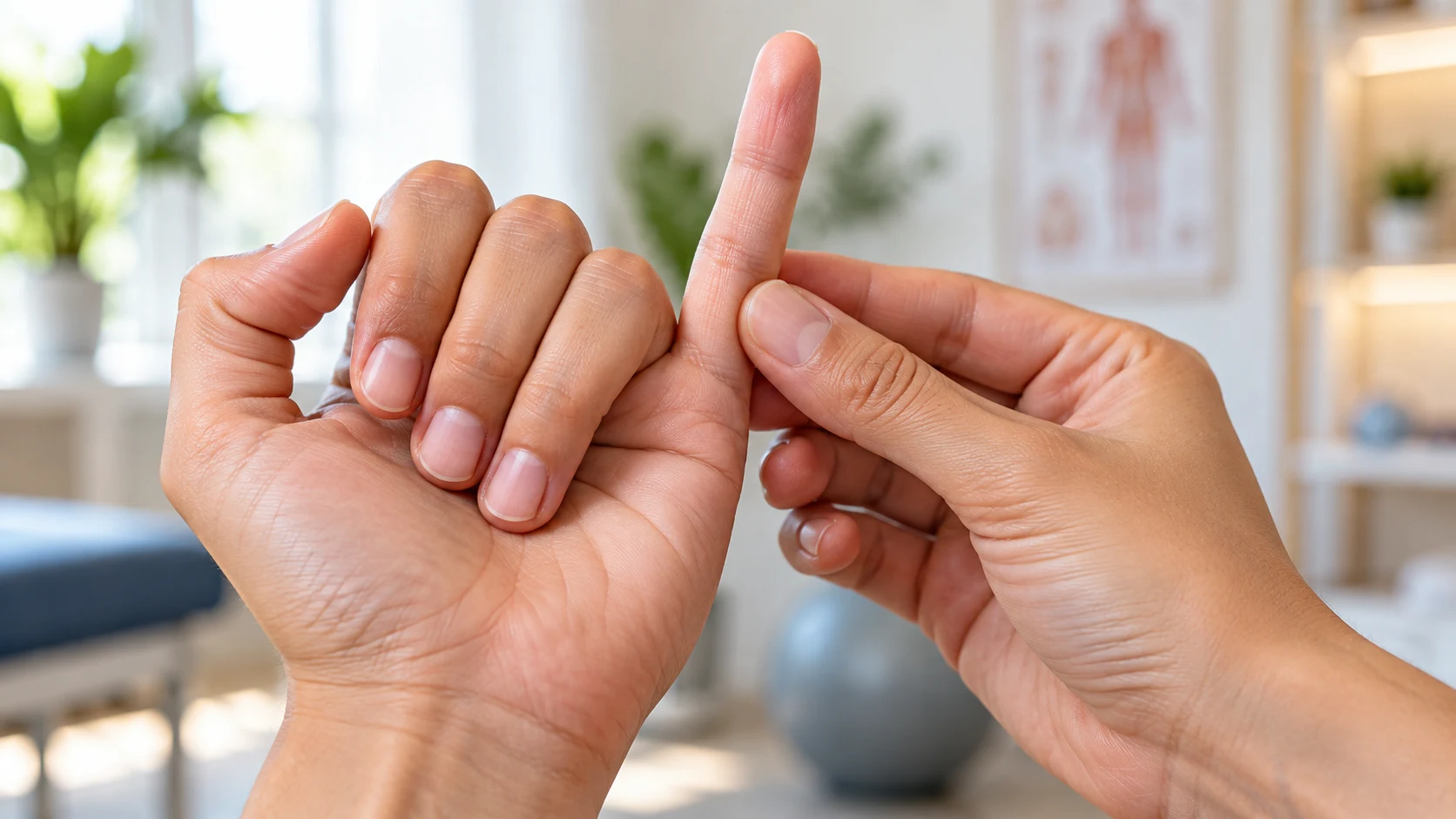
What Is the Pinky Finger?
The pinky finger is the smallest finger on the human hand and sits on the outer edge beside the ring finger. It is also known as the little finger or fifth digit. Although it appears less powerful than the thumb or index finger, the pinky contributes significantly to grip strength, hand stability, and many everyday movements.
Each pinky finger contains three small bones called phalanges, connected by joints that allow bending and straightening. Muscles in the hand and forearm move these bones through tendons. Ligaments provide additional stability, while nerves carry sensation and help control the small movements needed for tasks such as typing, holding objects, and playing musical instruments.
Because of its position on the outside of the hand, the pinky can be vulnerable to bumps, jams, falls, and other injuries. Even a relatively minor problem may make gripping objects uncomfortable. Understanding the finger’s anatomy and function can make it easier to recognize common problems and know when professional assessment may be appropriate.
Why Is the Pinky Finger Important?
The pinky finger plays an important role in creating a strong grip. When you wrap your hand around a cup, tool, handle, or sports equipment, the ring and pinky fingers help secure the object against the palm. Losing comfortable use of the pinky can therefore make everyday tasks feel surprisingly awkward or weak.
Hand stability is another important function of the little finger. The muscles along the pinky side of the hand help control the outer edge of the palm during gripping and fine motor activities. This becomes particularly noticeable when carrying bags, opening containers, using tools, or performing movements that require the entire hand to work together.
The pinky also contributes to precision during activities such as typing, playing piano or guitar, drawing, and certain sports. While other fingers may perform the most visible movements, the little finger often provides support and balance. Its small size should not be mistaken for an unimportant role in overall hand function.
Pinky Finger Anatomy and Key Structures
The pinky contains three phalanges: the proximal, middle, and distal phalanx. These bones form joints that allow the finger to bend toward the palm and straighten again. The metacarpophalangeal joint connects the finger to the hand, while two interphalangeal joints provide additional movement farther along the digit.
Tendons connect muscles to the finger bones and allow active movement. Flexor tendons help curl the finger toward the palm, while extensor tendons help straighten it. Small intrinsic muscles within the hand also contribute to side-to-side movement, coordination, and fine control when performing tasks that require precise finger positioning.
The ulnar nerve is especially important for sensation and muscle control on the pinky side of the hand. Irritation or compression of this nerve can create tingling, numbness, or weakness affecting the little finger and part of the ring finger. Because symptoms may originate farther up the arm, pinky problems are not always caused by the finger itself.
Common Causes of Pinky Finger Pain
Pinky finger pain may develop after direct trauma, repetitive activity, joint irritation, or overuse. A jammed finger, awkward impact, or sudden bend can irritate ligaments and surrounding tissues. Pain may appear around a specific joint, along the side of the finger, or throughout the digit depending on which structure has been affected.
Repetitive movements can also create discomfort, particularly when work, hobbies, or sports require frequent gripping. Typing, gaming, using hand tools, climbing, or playing instruments may place repeated stress on the fingers. This does not mean these activities are harmful, but sudden increases in duration or intensity may overload tissues that are not prepared for the demand.
Arthritis and other joint conditions can also cause stiffness, aching, or swelling in the pinky finger. Symptoms may become more noticeable in the morning or after prolonged use. Persistent joint pain should not automatically be blamed on overuse because several conditions can produce similar discomfort and may require different treatment approaches.
Why Your Pinky Finger May Feel Numb or Tingly
Numbness or tingling in the pinky is commonly associated with irritation of the ulnar nerve. This nerve travels from the neck and shoulder region down the arm, passes near the inside of the elbow, and continues into the hand. Pressure or irritation anywhere along this pathway can potentially affect sensation in the little finger.
Leaning on the elbow for long periods is one common way the ulnar nerve can become irritated. Keeping the elbow deeply bent for extended periods may also increase symptoms in some people. Tingling that appears mainly during certain positions may improve when posture or activity changes, but recurring numbness deserves closer attention.
Seek professional assessment if numbness becomes persistent, spreads, or is accompanied by noticeable weakness. Difficulty gripping objects, spreading the fingers, or performing usual hand tasks can suggest more significant nerve involvement. Sudden numbness after trauma or symptoms affecting a larger area of the arm should also be taken seriously.
Common Pinky Finger Injuries
A jammed pinky occurs when force travels through the end of the finger and stresses the joints or ligaments. This commonly happens during ball sports, falls, or accidental impacts. The finger may become swollen, tender, stiff, or difficult to bend, and symptoms can range from mild irritation to a more significant ligament or bone injury.
Fractures can also affect any of the small bones in the pinky. Possible signs include significant swelling, bruising, sharp pain, deformity, or difficulty moving the finger normally. Some fractures are subtle, so the absence of dramatic deformity does not always mean the bone is intact after a substantial injury.
Dislocations occur when the bones forming a joint move out of their normal position. A visibly crooked finger or a joint that suddenly appears out of alignment requires medical attention. Do not repeatedly pull or force a deformed finger back into position yourself, because surrounding ligaments, nerves, tendons, or blood vessels may also be injured.
What Can Cause Pinky Finger Swelling and Stiffness?
Swelling is a common response after a finger injury because fluid collects around irritated tissues. Even a small amount of swelling can make the pinky feel stiff because the joints and tendons operate within a limited space. Rings should be removed promptly from nearby fingers if swelling begins after a hand injury.
Stiffness can also develop after the finger has been kept still for an extended period. Protective splinting may sometimes be necessary after injury, but unnecessary immobilization can reduce movement. The appropriate balance between protection and gentle motion depends on the type and severity of the injury, so professional advice can be useful.
Ongoing swelling without a clear injury can have several possible causes, including arthritis, infection, tendon irritation, or other inflammatory conditions. Redness, warmth, severe tenderness, fever, or rapidly increasing swelling deserve medical attention. These symptoms should not be treated simply as ordinary stiffness caused by everyday hand use.
Gentle Mobility and Strength Exercises for the Pinky
Gentle finger bending can help maintain mobility when movement is comfortable and no significant injury is suspected. Slowly bend the pinky toward the palm and then straighten it again without forcing the joints. The movement should remain smooth, and any sharp pain or sudden catching is a reason to stop rather than push through.
Finger spreading is another simple exercise for hand control. Place your hand flat or hold it comfortably in front of you, then slowly spread the fingers apart before bringing them together. This movement engages some of the small hand muscles that help control the pinky and supports coordination across the entire hand.
Stretching principles vary considerably depending on the body part being trained. Gentle finger movement requires much smaller ranges and less force than larger lower-body mobility drills, such as those described in this groin stretch guide. In both cases, controlled movement is preferable to forcing a joint or muscle into painful ranges.
How to Protect Your Pinky During Daily Activities
Avoid repeatedly placing unnecessary pressure on the outside of the hand, particularly if the pinky is already irritated. Adjusting how you grip heavy bags, tools, or exercise equipment can sometimes reduce discomfort. Frequent movement breaks may also help when work or hobbies involve repetitive finger positions for long periods.
People who type or use computers extensively may benefit from keeping the wrists relatively neutral and avoiding excessive pressure against the edge of a desk. Gaming and phone use can also involve prolonged gripping or unusual finger positions. Small changes in hand position and regular breaks can reduce continuous stress on the pinky side.
Sports sometimes require additional protection after a previous finger injury. Depending on the activity and injury, supportive taping or protective equipment may be appropriate, but it should not restrict circulation or create additional pain. A healthcare professional or athletic trainer can provide guidance when returning to contact sports after a significant finger injury.
What to Do After a Minor Pinky Finger Injury
After a mild bump or jam, reducing activities that clearly increase pain can give irritated tissues time to settle. Keeping the hand elevated may help manage temporary swelling. A wrapped cold pack can also provide short-term comfort, but avoid applying ice directly to the skin or leaving it in place for excessively long periods.
Monitor how the finger moves and whether symptoms improve over the next few days. Gentle movement may be appropriate when bending and straightening are comfortable, but avoid repeatedly testing the finger with forceful gripping. Returning immediately to demanding sports or lifting can aggravate an injury that has not had enough time to recover.
Do not assume every pinky injury is minor just because the finger is small. Significant swelling, bruising, deformity, or loss of movement may indicate a fracture, dislocation, or ligament injury. Early assessment can be particularly important when the finger appears rotated or overlaps another finger when making a fist.
Everyday Tips for Keeping Your Fingers Healthy
Regular hand movement can help maintain joint mobility and coordination. If you spend hours typing, crafting, gaming, or using tools, occasionally open and close your hands and move the fingers through comfortable ranges. Short breaks can reduce uninterrupted repetitive loading without requiring a complicated hand exercise routine.
Increase demanding hand activities gradually when possible. Someone returning to climbing, weight training, manual work, or a musical instrument after a break may notice finger soreness if activity increases suddenly. Just like larger muscles and joints, the hands benefit from progressive exposure rather than dramatic increases in workload.
Pay attention to recurring symptoms instead of simply working around them. Repeated pain, tingling, stiffness, or swelling may indicate that technique, workload, equipment, or an underlying condition needs attention. Early adjustments are often easier than waiting until symptoms interfere significantly with work, exercise, sleep, or daily tasks.
When Should You Get Medical Help for a Pinky Problem?
Seek prompt medical care after an injury if the pinky looks obviously crooked, rotated, or out of position. Severe pain, rapidly increasing swelling, loss of sensation, or inability to move the finger normally also requires assessment. These symptoms may indicate a fracture, dislocation, tendon injury, or other problem requiring specific treatment.
Medical attention is also important when the finger becomes red, hot, very swollen, or increasingly painful without a clear explanation. Fever, drainage, or a wound around the finger can raise concern about infection. Infections involving the hand may sometimes progress quickly, so worsening symptoms should not simply be monitored indefinitely at home.
Persistent numbness, tingling, or weakness deserves evaluation because the issue may involve a nerve rather than the finger itself. Symptoms lasting several weeks or interfering with grip and fine motor tasks should also be checked. A healthcare professional can evaluate the finger, hand, wrist, elbow, and other areas when necessary to identify the likely cause.
Conclusion
The pinky finger may be the smallest digit, but it contributes meaningfully to grip strength, hand stability, coordination, and everyday function. Its bones, tendons, ligaments, muscles, joints, and nerves work together whenever you hold, type, carry, or manipulate objects. Problems affecting the little finger can therefore have a noticeable impact on normal hand use.
Mild soreness or stiffness may improve with temporary activity modification, comfortable movement, and sensible protection. Gradually returning to normal hand activity can help avoid unnecessary irritation. However, forcing painful stretches, ignoring worsening numbness, or continuing demanding activities immediately after a significant injury can make recovery more difficult.
Seek professional care for deformity, severe swelling, major movement loss, persistent numbness, significant weakness, or possible infection. Many pinky problems are manageable once the underlying cause is understood. Paying attention to symptoms early can help protect both the little finger and overall hand function.
FAQs
Why is my pinky finger numb?
Pinky numbness can occur when the ulnar nerve becomes irritated or compressed, often near the elbow or wrist. Persistent numbness, weakness, or worsening symptoms should be evaluated by a healthcare professional.
What should I do if I jam my pinky finger?
Reduce painful activity, protect the finger, and monitor swelling and movement. Seek medical care if the finger looks deformed, becomes severely swollen, or cannot bend and straighten normally.
Why does my pinky hurt when I bend it?
Pain during bending can result from joint irritation, tendon problems, ligament injuries, arthritis, or recent trauma. Persistent or worsening pain should be assessed, especially when swelling or restricted movement is present.
Can you break your pinky and still move it?
Yes. Some finger fractures still allow partial movement, so being able to bend the pinky does not completely rule out a fracture. Significant pain, swelling, bruising, or deformity warrants evaluation.
Is the pinky important for grip strength?
Yes. The pinky works with the ring finger and other hand muscles to support grip and stabilize objects against the palm. Pain or weakness in the little finger can noticeably affect gripping tasks.