
What Is a Groin Stretch?
A groin stretch is designed to lengthen the muscles along the inner thigh and around the hip. These muscles, commonly called the hip adductors, help bring the legs toward the center of the body and stabilize the pelvis during movement. Stretching them gently can support comfortable hip mobility for walking, running, sports, and everyday activities.
The groin is not a single muscle but a region containing several muscles, tendons, and connective tissues. The main adductors include the adductor longus, adductor brevis, adductor magnus, gracilis, and pectineus. These muscles work together during movements such as changing direction, crossing the legs, kicking, squatting, and controlling side-to-side motion.
A groin stretch should create gentle tension along the inner thigh without sharp pain, pinching, or burning. The goal is not to force the legs as far apart as possible. Controlled breathing, relaxed muscles, and gradual range of motion usually make stretching more comfortable and useful than pushing aggressively into discomfort.
What Muscles Does a Groin Stretch Target?
Most groin stretches primarily target the adductor muscles on the inside of the thigh. These muscles originate around the pelvis and attach at different points along the femur or lower leg. Their main role is hip adduction, but several also assist with hip flexion, extension, rotation, and overall control of the lower body.
Some stretching positions may also affect nearby muscles such as the hamstrings, hip flexors, or glutes. For example, a wide-leg seated stretch may create tension through both the inner thighs and hamstrings. The exact sensation depends on hip position, knee position, individual anatomy, and how much flexibility you already have.
You do not need to feel an intense stretch for the exercise to be effective. A mild to moderate pulling sensation is generally enough when flexibility work is performed consistently. If the sensation feels deep inside the joint rather than through the muscle, change the position or reduce the range instead of trying to force greater movement.
Benefits of Groin Stretching
Regular groin stretching can help maintain or improve flexibility around the hips and inner thighs. Better flexibility may make movements such as squatting, lunging, stepping sideways, or changing direction feel less restricted. This can be useful for active people as well as anyone who spends long periods sitting and notices stiffness around the hips.
Stretching may also temporarily reduce the sensation of muscle tightness after activity. Athletes who participate in soccer, hockey, martial arts, running, or other sports may find that gentle mobility work helps the hips feel more comfortable. Stretching should complement strength and movement training rather than being treated as the only strategy for keeping the groin healthy.
Another benefit is improved awareness of how the hips move from side to side. Controlled stretching can help you notice differences between the left and right sides without automatically assuming that every difference is a problem. Small asymmetries are common, and the goal should be comfortable function rather than perfectly identical flexibility.
How to Do the Butterfly Groin Stretch
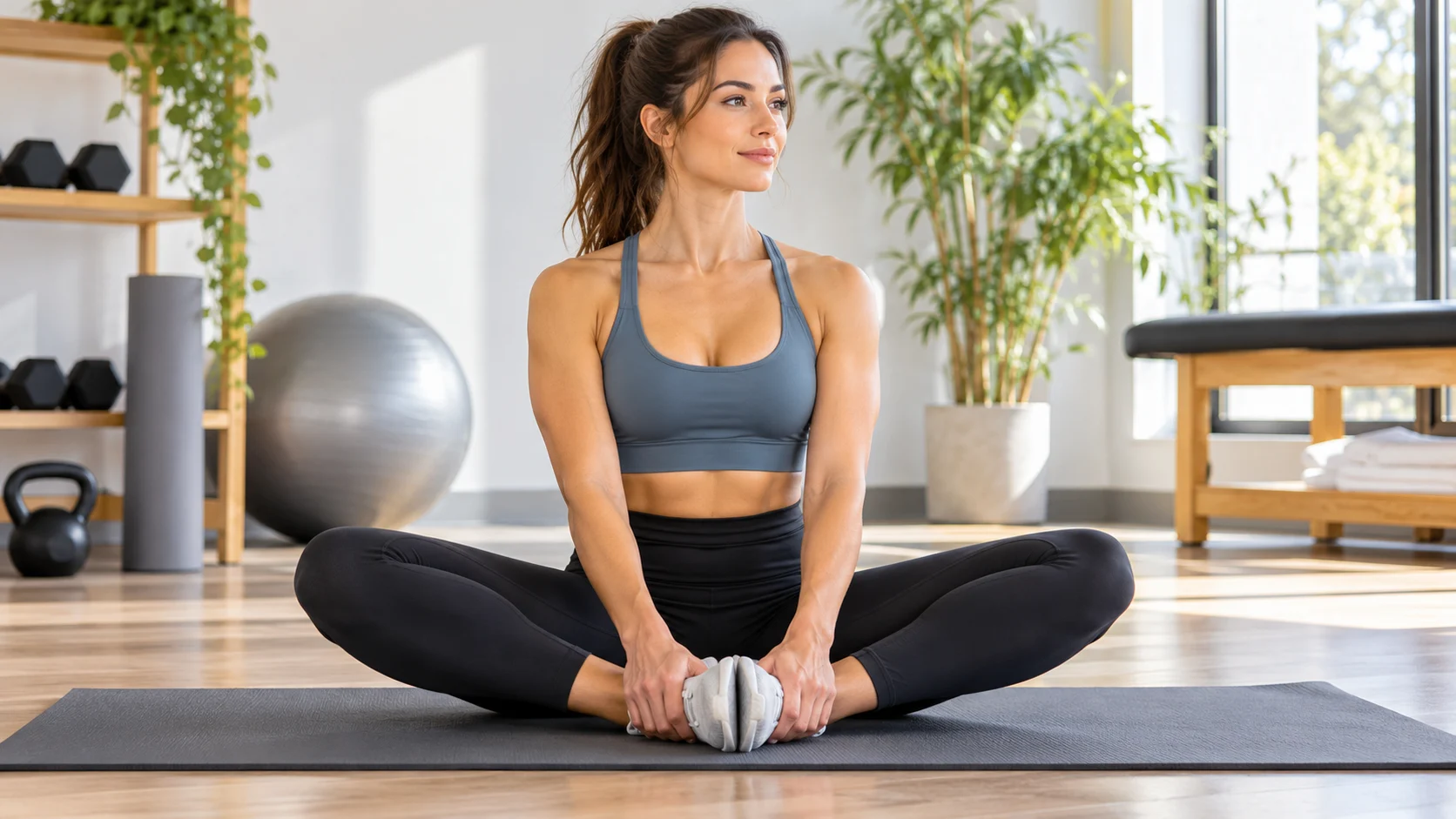
Sit on the floor and bring the soles of your feet together while allowing your knees to fall outward. Hold your ankles or feet and sit as tall as feels comfortable. Keep the movement relaxed and allow gravity to lower the knees naturally rather than pressing them forcefully toward the floor.
You should feel a gentle stretch through the inner thighs and groin. If sitting upright is difficult, move your feet farther away from the body or sit on a folded towel or cushion. This can reduce strain through the hips and lower back while allowing you to maintain a more comfortable position.
Hold the stretch while breathing slowly and avoiding bouncing. You can maintain the position for a short period, relax, and repeat if it feels useful. If the stretch creates sharp pain in the hip, knee, or groin, stop and try a different variation instead of forcing the butterfly position.
How to Do a Standing Groin Stretch
Start with your feet wider than shoulder-width apart and keep both feet facing mostly forward. Shift your body weight toward one side by bending that knee while keeping the opposite leg straighter. You should begin to feel a stretch along the inner thigh of the straighter leg as your hips move sideways.
Keep your chest comfortably upright and avoid allowing the bent knee to collapse far inward. The foot of the straight leg can remain flat, although small adjustments may make the position feel more natural. Move only as far as you can maintain control without sharp discomfort or excessive pressure in the knee.
Return to the center slowly before stretching the opposite side. This variation works well as a dynamic movement before activity when you move gently between sides instead of holding a deep position. It can also be performed more slowly after exercise when the goal is relaxed flexibility work.
How Long Should You Hold a Groin Stretch?
The ideal duration depends on your purpose and how your body responds. For general flexibility work, many people find that holding a comfortable stretch for roughly 15 to 30 seconds is manageable. Longer holds are not automatically better, especially if your posture begins to change or the sensation becomes increasingly uncomfortable.
Before exercise, dynamic groin movements may be more practical than long static holds. Controlled lateral lunges, leg swings, or gentle side-to-side shifts can prepare the hips for activity while keeping the muscles moving. Static stretching is often better suited to separate mobility sessions or after activity when performance demands are lower.
Consistency matters more than one very long session. A few comfortable stretches performed several times each week can gradually improve mobility without creating excessive irritation. If your groin feels significantly more painful after stretching, reduce the intensity, duration, or frequency rather than assuming the discomfort is necessary for progress.
When Should You Stretch Your Groin?
Groin stretching can be performed during a mobility routine, after exercise, or at another time when the muscles feel warm and comfortable. If you have been sitting for hours, begin with gentle walking or easy hip movements before attempting deeper stretches. Warm tissues generally feel more comfortable than trying to force flexibility immediately after being inactive.
Before sports, focus on dynamic movements that resemble the activity you are about to perform. Side lunges, controlled leg swings, marching, and gradual direction changes can prepare the adductors for faster movement. This approach helps combine mobility with coordination rather than relying only on passive stretching before explosive activity.
After training, slower stretches can be used if they help you relax and restore comfortable movement. Stretching is optional rather than mandatory after every workout, so choose it based on how your body feels. Recovery also depends on sleep, nutrition, hydration, workload management, and adequate time between demanding sessions.
Common Groin Stretching Mistakes
One common mistake is forcing the stretch because you believe greater discomfort means greater benefit. Muscles and tendons do not need to be pushed aggressively to improve flexibility. An intense stretch can cause guarding or irritation, making it harder to relax and potentially leaving the groin more sensitive afterward.
Bouncing is another mistake that can make stretching harder to control. Rapid movements take you in and out of the end range before you have time to assess how the tissue feels. Slow, deliberate motion allows you to stop before discomfort becomes sharp and makes it easier to maintain a stable position.
People also sometimes stretch through pain from a recent groin injury. If the muscle has been strained, aggressive stretching may place additional stress on healing tissue. Early rehabilitation often focuses on comfortable movement and gradual strengthening before deeper flexibility work is reintroduced based on symptoms and recovery progress.
Groin Stretching and Hip Mobility
Hip mobility involves more than the ability to stretch the inner thigh. The hip must move through flexion, extension, rotation, abduction, and adduction during everyday activity. Groin stretching can support one part of this movement system, but balanced mobility usually requires working through several directions rather than focusing exclusively on one muscle group.
Strength is equally important because the hips need control throughout their available range of motion. Someone may be very flexible but struggle to stabilize the legs during running, squatting, or changing direction. Combining stretching with exercises such as split squats, lateral lunges, step-ups, and controlled adductor strengthening can support both mobility and stability.
Trunk control can also influence how the hips feel during movement. Conditions affecting the abdominal wall, including diastasis recti, may require attention to breathing, pressure management, and core control alongside lower-body exercises. Looking at the whole movement system can be more useful than treating groin tightness in isolation.
Can Groin Stretches Help With Tight Inner Thighs?
Groin stretches can temporarily reduce the sensation of tightness in the inner thighs, particularly after sitting or repetitive lower-body activity. A gentle stretch may make the hips feel freer for a period afterward. However, persistent tightness does not always mean the muscles are physically too short or need increasingly intense stretching.
Muscles may also feel tight when they are fatigued, weak, irritated, or working harder than usual. In those cases, strengthening and training adjustments may be just as important as flexibility exercises. Adding light adductor strengthening can help the muscles tolerate greater loads and may improve confidence through wider ranges of movement.
If tightness appears repeatedly after the same activity, consider what is creating the demand. Sudden increases in running, sports, or lower-body training can make the groin feel overloaded. Adjusting volume and building strength gradually may provide better long-term results than repeatedly stretching the area without addressing the underlying workload.
Groin Stretching for Sports and Exercise
Sports involving rapid direction changes place substantial demands on the groin muscles. Soccer, basketball, tennis, hockey, and martial arts require the adductors to produce and absorb force while the body moves sideways. Mobility can be useful, but strength and progressive exposure to sport-specific movements are equally important for preparing the area.
A warm-up may include lateral lunges, side shuffles, controlled leg swings, and easy acceleration before moving to faster drills. Gradually increasing speed gives the muscles time to adapt to larger forces. Jumping directly from inactivity into intense cutting or kicking movements can challenge the groin more suddenly than necessary.
Static stretching can still be included in a general flexibility routine if it feels beneficial. However, do not expect stretching alone to prevent groin injuries. Training volume, fatigue, strength, movement control, previous injuries, and how quickly exercise intensity increases all influence how well the inner-thigh muscles tolerate sport.
When Groin Pain Needs More Than Stretching
Groin pain is different from ordinary muscle tightness. A sudden sharp sensation during sprinting, kicking, or changing direction may indicate a muscle or tendon strain. Stretching an acutely injured area aggressively can make symptoms worse, so reduce painful activity and avoid treating every groin problem as a simple flexibility issue.
Persistent groin pain can have several possible causes involving muscles, tendons, the hip joint, abdominal wall, or other structures. Symptoms that continue for weeks, repeatedly return, or interfere with walking and exercise deserve professional assessment. A physiotherapist or other qualified healthcare professional can examine movement, strength, and symptom patterns more closely.
Seek medical attention sooner if pain is severe, follows a major injury, or is accompanied by significant swelling, bruising, fever, a noticeable lump, testicular pain, or inability to walk normally. These symptoms may require a different type of evaluation and should not be managed only with home stretching.
Conclusion
A groin stretch can help improve inner-thigh flexibility and make hip movement feel more comfortable. Butterfly stretches, standing side stretches, and dynamic lateral movements are simple options that can fit into mobility or exercise routines. The stretch should create gentle tension rather than sharp pain or intense pressure.
For best results, combine stretching with lower-body strength, balance, and gradual training progression. Strong adductors, glutes, and surrounding hip muscles help control movement as well as create it. Stretching is most useful when it supports a broader exercise routine instead of becoming the only strategy for addressing stiffness.
If groin discomfort feels sharp, persists for weeks, or began after a sudden injury, deeper stretching may not be appropriate. Adjust your activity and seek professional guidance when symptoms are significant or worsening. Understanding whether you are dealing with simple tightness or an injury can help you choose safer next steps.
FAQs
What is the best stretch for a tight groin?
The butterfly stretch and standing lateral groin stretch are simple options for many people. Choose the variation that creates gentle inner-thigh tension without sharp pain, pinching, or uncomfortable joint pressure.
How often should I stretch my groin?
Groin stretches can be performed several times per week if they feel comfortable. Consistent, gentle sessions are usually more useful than occasional aggressive stretching that leaves the inner thighs sore or irritated.
Should groin stretching hurt?
No. A stretch may create mild or moderate pulling through the inner thigh, but sharp pain, burning, or strong pinching is a reason to reduce the range or stop the movement.
Can stretching fix a groin strain?
Stretching alone does not repair a groin strain and may irritate an acute injury. Recovery usually involves load management followed by gradually progressed movement and strengthening based on symptoms and injury severity.
Is groin stretching good before running?
Dynamic groin movements are generally more practical before running than long, intense static holds. Side lunges, leg swings, and easy mobility drills can help prepare the hips while keeping the muscles active.