
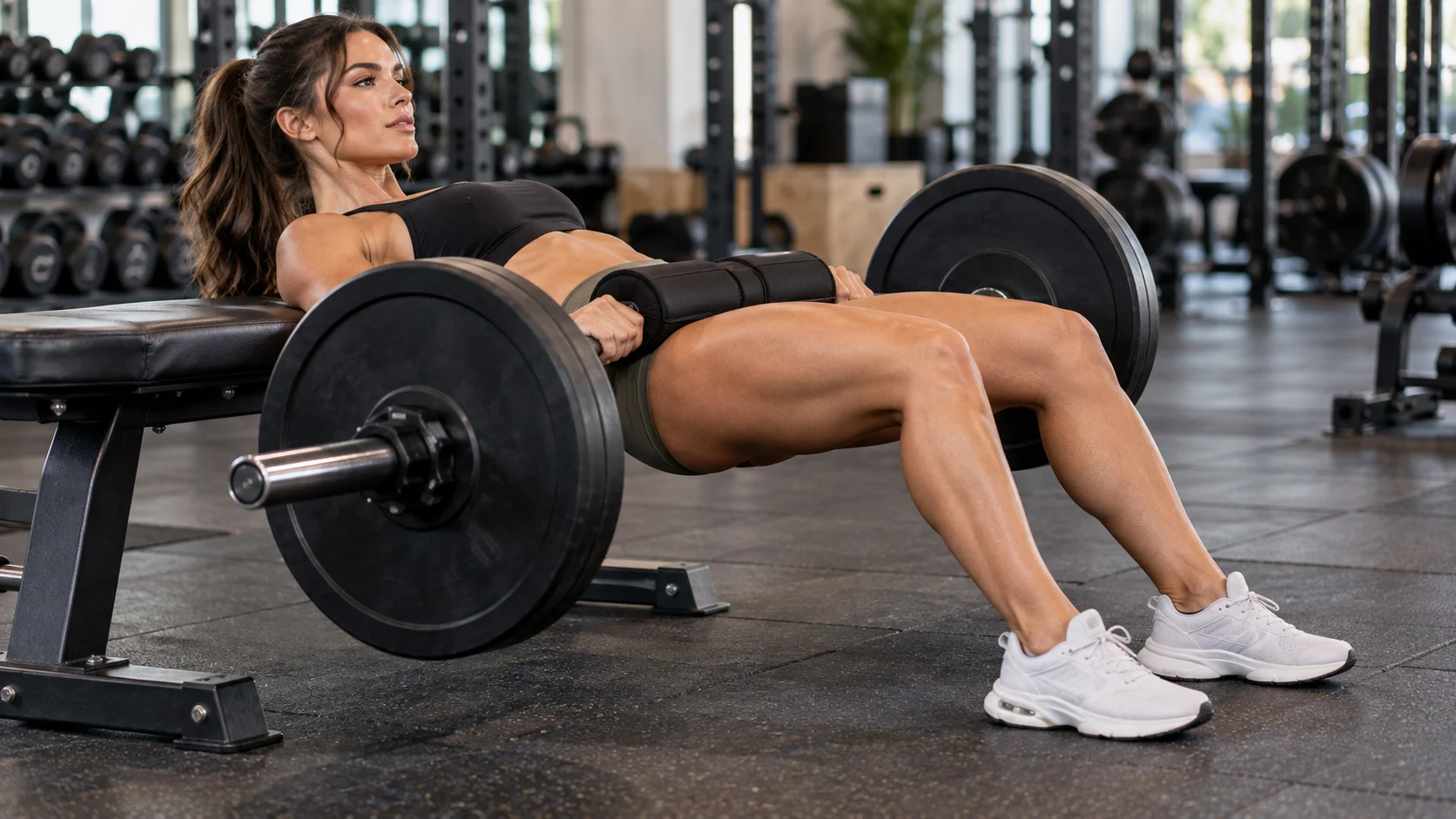
What Muscles Do Hip Thrusts Work?
Hip thrusts primarily work the gluteus maximus, the largest muscle in the buttocks and one of the main muscles responsible for hip extension. This muscle helps drive the hips forward from a bent position and plays an important role in walking, running, jumping, and lifting. Because hip thrusts emphasize hip extension, they are especially effective for targeting the glutes.
The exercise also involves the hamstrings and adductor magnus, which assist the glutes during hip extension. These muscles help control the movement as you lower the hips and contribute to force production as you press upward. The quadriceps may also contribute slightly, particularly when your foot position places the knees at a more flexed angle.
The core and spinal stabilizers work during hip thrusts as well, although they are not the primary target. They help keep the torso controlled and prevent excessive movement through the lower back. A well-performed hip thrust therefore trains the glutes most strongly while several supporting muscles help maintain stability and efficient movement.
The Gluteus Maximus Is the Main Muscle Worked
The gluteus maximus is the primary muscle responsible for producing force during the hip thrust. It becomes particularly active as the hips move toward full extension at the top of the exercise. This makes hip thrusts useful for people who want to strengthen the glutes without relying exclusively on squats, lunges, or other lower-body compound exercises.
Strong glutes contribute to many everyday and athletic movements. They help you rise from a seated position, climb stairs, accelerate during running, and generate force when jumping. Developing the gluteus maximus can therefore support both exercise performance and general lower-body strength rather than serving only an aesthetic purpose.
To maximize glute involvement, focus on driving through the feet and extending the hips without overextending the lower back. The movement should finish when the hips reach a strong, controlled position and the torso is roughly parallel to the floor. Pushing farther by arching the spine does not create better glute activation and may reduce movement quality.
Do Hip Thrusts Work the Hamstrings?
The hamstrings assist during hip thrusts because they also contribute to hip extension. These muscles run along the back of the thigh and work with the glutes to move the hips forward. However, the hamstrings are generally considered secondary contributors during the exercise rather than the main muscles doing the work.
Foot position can change how much the hamstrings contribute. Placing the feet too far away from the body may increase the feeling in the hamstrings while reducing the ability to fully engage the glutes. A more balanced setup usually involves positioning the feet so the shins are close to vertical at the top of the movement.
If your hamstrings consistently cramp during hip thrusts, the setup or load may need adjustment. Try reducing the weight and moving your feet slightly closer until the glutes feel more involved. Proper warm-up, adequate hydration, and gradual progression can also help reduce unnecessary muscle tension during lower-body training.
Do Hip Thrusts Work the Quads?
The quadriceps assist during hip thrusts because the knees remain bent throughout the movement. Their involvement is lower than what you would usually experience during squats, leg presses, or lunges, but they still contribute to maintaining the leg position. How much you feel them can depend on foot placement, range of motion, and individual biomechanics.
When the feet are positioned very close to the hips, knee flexion increases and the quadriceps may become more involved. This can make the exercise feel less glute-dominant for some people. Moving the feet slightly farther forward may reduce quad dominance while helping you find a stronger hip-extension position.
The goal is not to eliminate the quadriceps completely because multiple muscles naturally work together during compound movements. Instead, aim for a setup where the glutes perform most of the work while the quads and hamstrings assist. Good technique is more important than trying to isolate one muscle perfectly during every repetition.
How the Adductors Help During Hip Thrusts
The adductor muscles are located along the inner thigh and help control several hip movements. The adductor magnus, in particular, can contribute significantly to hip extension depending on joint position. This means it may assist the gluteus maximus as the hips rise during a properly performed hip thrust.
These muscles also help stabilize the legs and pelvis during the exercise. If the knees collapse inward excessively, the movement may become less controlled and the load may shift unevenly. Maintaining a comfortable knee position throughout the repetition allows the hips and surrounding muscles to work more efficiently.
Using a resistance band around the thighs is sometimes helpful for reminding people to maintain knee alignment, although it is not necessary for everyone. The band should not force you into an exaggerated position. The goal is simply to keep the legs controlled while the glutes and other hip muscles produce the main movement.
How the Core Supports Hip Thrusts
Your core muscles help stabilize the trunk during hip thrusts. The abdominal muscles, obliques, and deeper stabilizers work together to keep the rib cage and pelvis controlled as the hips move. Without adequate trunk control, the lower back may arch excessively near the top of the repetition.
A light abdominal brace can improve technique by helping keep the spine in a comfortable position. Think about bringing the ribs slightly toward the pelvis instead of lifting the chest aggressively. This creates a stronger base from which the glutes can produce force while reducing unnecessary movement through the lumbar spine.
Core stability becomes even more important as resistance increases. Heavy barbell hip thrusts create substantial force through the pelvis, making trunk control essential for maintaining form. If your lower back becomes the dominant area of effort, reduce the load and focus on controlled pelvic movement before progressing again.
Benefits of Hip Thrusts for Strength and Performance
Hip thrusts can improve glute strength because they allow the hips to work against resistance through a controlled range of motion. Stronger glutes may support movements such as sprinting, jumping, lifting, and climbing stairs. The exercise can be loaded progressively, making it useful for both beginners and experienced lifters.
Another benefit is that hip thrusts place less emphasis on knee movement than many squat-based exercises. This can make them a useful addition for people who want to train hip extension alongside squats, lunges, or step-ups. They should not necessarily replace those exercises, but they can complement a balanced lower-body program.
Hip thrusts are also easy to progress using barbells, dumbbells, resistance bands, or machines. Beginners can start with bodyweight variations before gradually increasing resistance. Because the exercise is relatively simple to scale, it can remain useful across different stages of a strength-training program.
Hip Thrusts vs. Glute Bridges
Hip thrusts and glute bridges both target the glutes, but the setup and range of motion are different. During a glute bridge, the shoulders remain on the floor, while hip thrusts elevate the upper back on a bench. This elevated position usually allows the hips to travel through a greater range of motion.
Hip thrusts are often easier to load heavily because the bench position creates more space for movement and external resistance. A barbell or machine can be used to increase difficulty substantially. Glute bridges are usually simpler and may be more suitable for beginners, warm-ups, or home workouts without much equipment.
Both exercises can be valuable, and choosing between them depends on your goals and comfort. Glute bridges can help you learn basic hip extension, while hip thrusts may provide more progression options. Many strength programs use both exercises at different times rather than treating one as universally better than the other.
How to Perform Hip Thrusts With Proper Form
Begin by sitting on the floor with your upper back against the edge of a stable bench. Position your feet roughly hip-width apart and bend your knees comfortably. If you are using a barbell, place padding between the bar and your hips to prevent uncomfortable pressure during the exercise.
Drive through your feet and squeeze the glutes as you raise the hips. Keep your chin slightly tucked and avoid throwing your head backward. At the top, aim for a straight line from the shoulders through the hips while keeping the ribs controlled rather than allowing the lower back to arch excessively.
Lower the hips slowly until you feel a comfortable stretch through the glutes, then repeat. Control both the lifting and lowering portions instead of bouncing through the movement. A smooth tempo improves technique and helps you maintain consistent tension throughout the exercise.
Common Hip Thrust Mistakes to Avoid
One common mistake is hyperextending the lower back at the top of the movement. This often happens when people try to push the hips higher after reaching full extension. Instead of creating more glute tension, the extra movement comes from the lumbar spine and may increase discomfort or reduce the quality of the exercise.
Another mistake is using too much weight before mastering proper form. Excessive resistance can encourage shortened range of motion, bouncing, or poor pelvic control. Start with a load that allows you to complete each repetition smoothly and increase resistance gradually as your technique improves.
Incorrect foot placement can also change which muscles feel most active. Feet that are too close may increase quadriceps involvement, while feet that are too far away may shift more work toward the hamstrings. Experiment with small adjustments until you can reach full hip extension while keeping the shins relatively vertical at the top.
How Often Should You Do Hip Thrusts?
Most people can train hip thrusts two or three times per week depending on their overall strength program. The ideal frequency depends on training experience, total volume, recovery, and how many other glute-focused exercises you perform. More frequent training is not always better if the muscles do not have enough time to recover.
Beginners may start with two sessions per week using moderate resistance and controlled repetitions. More experienced lifters might use different rep ranges across multiple sessions, such as heavier sets one day and lighter, higher-repetition work another day. This provides variety while still allowing progressive overload.
Recovery should guide your training frequency as much as the calendar. If your glutes remain extremely sore or performance drops from session to session, reduce volume or allow more recovery time. For additional recovery ideas, these sore muscle relief tips can help you manage post-workout discomfort sensibly.
Best Practices for Getting More From Hip Thrusts
Use progressive overload rather than simply repeating the same weight every week. You can gradually increase resistance, repetitions, sets, or control while keeping good technique. Progress does not have to happen during every workout, and smaller increases are often easier to manage while maintaining consistent form.
Include hip thrusts within a balanced lower-body program rather than relying on them as your only glute exercise. Squats, lunges, step-ups, Romanian deadlifts, and other movements challenge the hips in different ways. Combining exercises can help build strength through multiple movement patterns and support more complete lower-body development.
Finally, focus on quality repetitions instead of chasing a specific number at all costs. Pause briefly at the top if it helps you feel the glutes working, then lower under control. Consistent technique, appropriate resistance, and adequate recovery will usually produce better long-term results than lifting heavier weight with poor movement.
Conclusion
Hip thrusts primarily work the gluteus maximus, making them one of the most direct exercises for training hip extension. The hamstrings, adductor magnus, quadriceps, and core also contribute as supporting muscles. Together, these muscles help stabilize the pelvis and produce controlled movement throughout each repetition.
The exercise can improve glute strength, lower-body power, and general movement performance when performed correctly. Proper foot placement, trunk control, and gradual resistance progression are important for keeping the movement focused on the hips rather than the lower back. Beginners can start with bodyweight or lighter variations before progressing.
For best results, include hip thrusts as part of a balanced strength program alongside squats, lunges, deadlifts, and other lower-body exercises. Train consistently, recover adequately, and avoid sacrificing technique for heavier weight. With the right approach, hip thrusts can be a practical and effective way to build stronger glutes.
FAQs
What is the main muscle worked during hip thrusts?
The gluteus maximus is the primary muscle worked during hip thrusts. It produces most of the force needed to extend the hips, while the hamstrings, adductors, quads, and core provide support.
Do hip thrusts work the hamstrings?
Yes, the hamstrings assist with hip extension during hip thrusts. However, they usually work as secondary muscles, while the gluteus maximus remains the primary target of the exercise.
Do hip thrusts build bigger glutes?
Hip thrusts can support glute growth when combined with progressive resistance, adequate training volume, proper nutrition, and recovery. They are most effective when included as part of a balanced lower-body strength program.
Are hip thrusts better than squats for glutes?
Both exercises can strengthen the glutes but use different movement patterns. Hip thrusts emphasize hip extension, while squats train the glutes alongside the quadriceps and other lower-body muscles through a larger overall movement.
How many hip thrusts should I do?
A common starting point is two to four sets of roughly eight to fifteen repetitions, depending on your training goals and resistance level. Choose a range that allows you to maintain proper form.